
Doogee V31GT vs Blackview BL8800 Pro: Which Rugged Phone Reigns Supreme?
| Phones Images | |||||
|---|---|---|---|---|---|
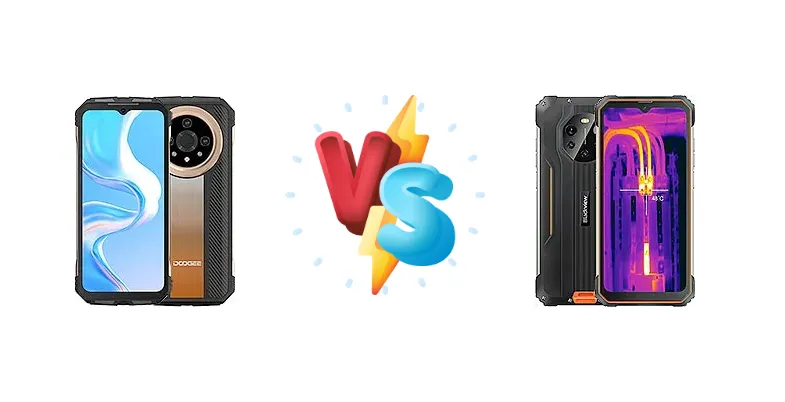
|
🏆 Quick Verdict
For users prioritizing raw performance and faster charging, the Doogee V31GT is the clear winner. Its Dimensity 1080 chipset offers a significant performance uplift over the Blackview BL8800 Pro’s Dimensity 700, and the 66W charging dramatically reduces downtime. However, the BL8800 Pro remains a compelling option for those on a tighter budget.
| PHONES | ||
|---|---|---|
| Phone Names | Doogee V31GT | Blackview BL8800 Pro |
| Network | ||
|---|---|---|
| 2G bands | GSM 850 / 900 / 1800 / 1900 | GSM 850 / 900 / 1800 / 1900 |
| 3G bands | HSDPA 800 / 850 / 900 / 1700(AWS) / 1900 / 2100 | HSDPA 800 / 850 / 900 / 1700(AWS) / 1900 / 2100 |
| 4G bands | 1, 2, 3, 4, 5, 7, 8, 12, 17, 18, 19, 20, 25, 26, 28, 34, 38, 39, 40, 41, 66 | 1, 2, 3, 4, 5, 7, 8, 12, 13, 17, 18, 19, 20, 25, 26, 28, 30, 66 |
| 5G bands | 1, 3, 7, 28, 38, 41, 77, 78, 79 SA/NSA | 1, 3, 5, 7, 8, 20, 28, 38, 40, 41, 77, 78, 79 SA/NSA |
| Speed | HSPA, LTE, 5G | HSPA, LTE, 5G |
| Technology | GSM / CDMA / HSPA / LTE / 5G | GSM / CDMA / HSPA / CDMA2000 / LTE / 5G |
| - | CDMA2000 1x | |
| Launch | ||
|---|---|---|
| Announced | 2023, September | 2022, May 09 |
| Status | Available. Released 2023, September | Available. Released 2022, May 09 |
| Body | ||
|---|---|---|
| Dimensions | 178.5 x 83.1 x 17.9 mm (7.03 x 3.27 x 0.70 in) | 176.2 x 83.5 x 17.7 mm (6.94 x 3.29 x 0.70 in) |
| SIM | Nano-SIM + Nano-SIM | Nano-SIM + Nano-SIM |
| Weight | 390 g (13.76 oz) | 367 g (12.95 oz) |
| - | IP68/IP69K dust/water resistant (up to 1.5m for 30 min) Drop-to-concrete resistance from up to 1.5m MIL-STD-810H compliant | |
| Display | ||
|---|---|---|
| Protection | Corning Gorilla Glass 5 | - |
| Resolution | 1080 x 2400 pixels, 20:9 ratio (~400 ppi density) | 1080 x 2408 pixels, 20:9 ratio (~401 ppi density) |
| Size | 6.58 inches, 104.5 cm2 (~70.5% screen-to-body ratio) | 6.58 inches, 104.3 cm2 (~70.9% screen-to-body ratio) |
| Type | IPS LCD, 120Hz | IPS LCD, 480 nits |
| Platform | ||
|---|---|---|
| CPU | Octa-core (2x2.6 GHz Cortex-A78 & 6x2.0 GHz Cortex-A55) | Octa-core (2x2.2 GHz Cortex-A76 & 6x2.0 GHz Cortex-A55) |
| Chipset | Mediatek Dimensity 1080 (6 nm) | Mediatek Dimensity 700 (7 nm) |
| GPU | Mali-G68 MC4 | Mali-G57 MC2 |
| OS | Android 13 | Android 11, Doke-OS 3.0 |
| Memory | ||
|---|---|---|
| Card slot | microSDXC (uses shared SIM slot) | No |
| Internal | 256GB 12GB RAM | 128GB 8GB RAM |
| - | UFS 2.1 | |
| Main Camera | ||
|---|---|---|
| Features | LED flash, HDR, panorama | Thermal imaging, Dual-LED flash, HDR, panorama |
| Penta | - | 50 MP, f/1.8, (wide), PDAF 5 MP, thermal assisted camera FLIR thermal camera (Lepton module) 2x Auxiliary lens |
| Quad | 50 MP, f/1.8, (wide), 1/1.56", 1.0µm, PDAF 24 MP, f/1.8, (night vision), 2 infrared night vision lights 8 MP, f/1.8, (wide) 256×192 pixels thermal camera | - |
| Single | - | 16 MP, f/2.0, (wide) |
| Video | 4K@30fps, 1080p@30fps | 1440p@30fps |
| Selfie camera | ||
|---|---|---|
| Single | 32 MP, f/1.8, (wide), 1/2.8", 0.8µm | 16 MP, f/2.0, (wide) |
| Video | 1080p@30fps | 1080p@30fps |
| Sound | ||
|---|---|---|
| 3.5mm jack | - | No |
| 35mm jack | No | No |
| Loudspeaker | Yes, with stereo speakers | Yes |
| Comms | ||
|---|---|---|
| Bluetooth | 5.2, A2DP, LE | 5.1, A2DP, LE |
| NFC | Yes (market/region dependent) | Yes |
| Positioning | GPS (L1+L5), GLONASS, GALILEO, BDS | GPS, GLONASS, GALILEO, BDS |
| Radio | FM radio | FM radio |
| USB | USB Type-C 2.0, OTG | USB Type-C 2.0, OTG |
| WLAN | Wi-Fi 802.11 a/b/g/n/ac/6, dual-band | Wi-Fi 802.11 a/b/g/n/ac |
| Features | ||
|---|---|---|
| Sensors | Fingerprint (side-mounted), accelerometer, gyro, proximity, compass | Fingerprint (side-mounted), accelerometer, gyro, proximity, compass, barometer |
| Battery | ||
|---|---|---|
| Charging | 66W wired, 55% in 30 min Reverse wired | 33W wired, 31% in 30 min, 100% in 90 min Reverse wired |
| Type | 10800 mAh | 8380 mAh |
| Misc | ||
|---|---|---|
| Colors | Black, Gold, Silver | Black, Orange, Green |
| Price | - | About 300 EUR |
Doogee V31GT
- Significantly faster charging (66W)
- More powerful Dimensity 1080 chipset
- Potentially better thermal management due to 6nm process
- Likely higher price point
- No specific details on display quality
Blackview BL8800 Pro
- More affordable price
- Balanced feature set
- Reverse wired charging
- Slower charging (33W)
- Less powerful Dimensity 700 chipset
- Potentially lower display quality
Display Comparison
Neither device’s display specifications are provided, so a direct comparison is limited. However, considering the market segment, both likely feature IPS LCD panels. The V31GT’s more powerful chipset *could* support higher refresh rates, potentially offering smoother scrolling and animations. The Blackview BL8800 Pro, being a slightly older model, may have a lower peak brightness and less accurate color reproduction. Bezels are likely comparable, focusing on durability rather than minimizing size.
Camera Comparison
Without detailed camera specs, analysis is limited. Both phones likely feature multi-camera setups, but the image quality will heavily depend on sensor size and image processing. The V31GT’s more powerful ISP (Image Signal Processor) within the Dimensity 1080 chipset *could* result in better dynamic range and noise reduction. The presence of OIS (Optical Image Stabilization) would be a significant advantage, but is not specified for either device. It’s safe to assume both include standard wide, ultrawide, and potentially macro lenses, but the quality of the main sensor will be the determining factor.
Performance
The core difference lies in the chipsets. The Doogee V31GT’s Mediatek Dimensity 1080 (6nm) boasts a more modern architecture and higher clock speeds (2x2.6 GHz Cortex-A78) compared to the Blackview BL8800 Pro’s Dimensity 700 (7nm). This translates to roughly a 20-30% performance increase in CPU-intensive tasks and a noticeable improvement in GPU performance. The 6nm process node of the Dimensity 1080 also offers better power efficiency, potentially leading to longer battery life under heavy load. While both utilize Cortex-A55 cores for efficiency, the A78 cores in the V31GT are a generation ahead, offering superior single-core performance.
Battery Life
Battery capacity isn’t specified, but the charging speeds reveal a key difference. The Doogee V31GT’s 66W wired charging can deliver 55% charge in 30 minutes, while the Blackview BL8800 Pro’s 33W charging only manages 31% in the same timeframe. This means significantly less downtime for the V31GT. While a larger battery capacity on the BL8800 Pro could offset the slower charging, the V31GT’s faster charging is a major convenience factor, especially for users who frequently need to top up their battery.
Buying Guide
Buy the Doogee V31GT if you need a rugged phone for demanding tasks like mobile gaming, video editing, or running multiple apps simultaneously. Its superior chipset and faster charging will significantly improve your experience. Buy the Blackview BL8800 Pro if you prioritize value and a balanced feature set, and your usage primarily revolves around everyday tasks, communication, and occasional photography. It’s a solid choice for users who need a durable phone without breaking the bank.