
Doogee V30 vs. Motorola Defy 2: A Deep Dive into Rugged Performance
| Phones Images | |||||
|---|---|---|---|---|---|
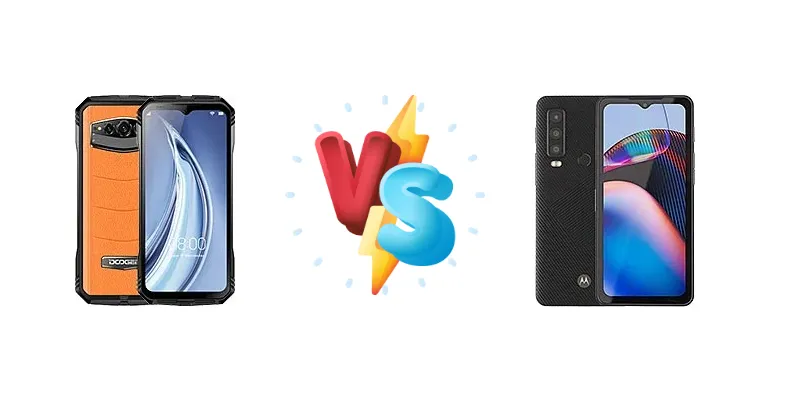
|
🏆 Quick Verdict
For most users prioritizing overall performance and faster charging, the Doogee V30 emerges as the winner. Its 66W charging significantly reduces downtime, and the slightly higher clocked CPU provides a marginal edge in responsiveness. However, the Motorola Defy 2’s Dimensity 930 offers a more modern chipset architecture.
| PHONES | ||
|---|---|---|
| Phone Names | Doogee V30 | Motorola Defy 2 |
| Network | ||
|---|---|---|
| 2G bands | GSM 850 / 900 / 1800 / 1900 | GSM 850 / 900 / 1800 / 1900 |
| 3G bands | HSDPA 800 / 850 / 900 / 1700(AWS) / 1900 / 2100 | HSDPA 850 / 900 / 1700(AWS) / 1900 / 2100 |
| 4G bands | 1, 2, 3, 4, 5, 7, 8, 12, 17, 18, 19, 20, 25, 26, 28, 34, 38, 39, 40, 41, 66 | 1, 2, 3, 4, 5, 7, 8, 12, 13, 14, 17, 20, 25, 26, 28, 30, 38, 40, 41, 46, 48, 66, 71 |
| 5G bands | 1, 3, 7, 28, 38, 41, 77, 78, 79 SA/NSA | 2, 5, 23, 25, 26, 28, 38, 41, 48, 66, 70, 71, 77, 78, 255, 256 SA/NSA/Sub6/mmWave |
| Speed | HSPA, LTE, 5G | HSPA, LTE, 5G |
| Technology | GSM / CDMA / HSPA / LTE / 5G | GSM / HSPA / LTE / 5G |
| Launch | ||
|---|---|---|
| Announced | 2022, December 12 | 2023, February 24 |
| Status | Available. Released 2022, December 22 | Available. Released 2023, October |
| Body | ||
|---|---|---|
| Build | - | Glass front (Gorilla Glass Victus), plastic back, aluminum frame |
| Dimensions | 178.4 x 83.1 x 18.3 mm (7.02 x 3.27 x 0.72 in) | 171 x 80 x 11.9 mm (6.73 x 3.15 x 0.47 in) |
| SIM | Nano-SIM + eSIM | Nano-SIM + Nano-SIM |
| Weight | 376 g (13.26 oz) | 268 g (9.45 oz) |
| - | IP68/IP69 dust/water resistant (up to 5m for 35 min) Drop-to-concrete resistance from up to 1.8m MIL-STD-810H compliant | |
| Display | ||
|---|---|---|
| Protection | Corning Gorilla Glass 5 | Corning Gorilla Glass Victus |
| Resolution | 1080 x 2408 pixels, 20:9 ratio (~401 ppi density) | 1080 x 2408 pixels, 20:9 ratio (~400 ppi density) |
| Size | 6.58 inches, 104.3 cm2 (~70.4% screen-to-body ratio) | 6.6 inches, 104.9 cm2 (~76.7% screen-to-body ratio) |
| Type | IPS LCD, 120Hz | IPS LCD, 120Hz |
| Platform | ||
|---|---|---|
| CPU | Octa-core (2x2.4 GHz Cortex-A78 & 6x2.0 GHz Cortex-A55) | Octa-core (2x2.2 GHz Cortex-A78 & 6x2.0 GHz Cortex-A55) |
| Chipset | Mediatek Dimensity 900 (6 nm) | Mediatek Dimensity 930 (6 nm) |
| GPU | Mali-G68 MC4 | IMG BXM-8-256 |
| OS | Android 12 | Android 12 |
| Memory | ||
|---|---|---|
| Card slot | microSDXC (uses shared SIM slot) | microSDXC (uses shared SIM slot) |
| Internal | 256GB 8GB RAM | 128GB 6GB RAM |
| Main Camera | ||
|---|---|---|
| Features | Dual-LED flash, HDR, panorama | Dual-LED flash, HDR, panorama |
| Triple | 108 MP, f/1.8, (wide), 1/1.52", 0.7µm, PDAF 20 MP, f/1.8, (night vision), 2 infrared night vision lights 16 MP, f/2.2, 130˚ (ultrawide) | 50 MP, f/1.8, (wide), PDAF 8 MP, f/2.2, (ultrawide) 2 MP (macro) |
| Video | 4K@30fps, 1080p@30fps | 1080p@30fps |
| Selfie camera | ||
|---|---|---|
| Single | 32 MP, f/2.0, (wide), 1/2.8", 0.8µm | 8 MP, f/2.0, (wide) |
| Video | 4K@30fps, 1080p@30fps | 1080p@30fps |
| Sound | ||
|---|---|---|
| 3.5mm jack | - | No |
| 35mm jack | No | No |
| Loudspeaker | Yes, with stereo speakers | Yes |
| Comms | ||
|---|---|---|
| Bluetooth | 5.2, A2DP, LE | 5.1, A2DP, LE |
| NFC | Yes (market/region dependent) | Yes |
| Positioning | GPS (L1+L5), GLONASS, GALILEO, BDS | GPS (L1+L5), GLONASS, GALILEO, BDS |
| Radio | FM radio | Unspecified |
| USB | USB Type-C 2.0, OTG | USB Type-C 2.0, OTG |
| WLAN | Wi-Fi 802.11 a/b/g/n/ac/6, dual-band | Wi-Fi 802.11 a/b/g/n/ac, dual-band |
| Features | ||
|---|---|---|
| Sensors | Fingerprint (side-mounted), accelerometer, gyro, proximity, compass | Fingerprint (rear-mounted), accelerometer, gyro, proximity, compass |
| - | Emergency SOS via satellite (Bullitt Satellite Connect service) | |
| Battery | ||
|---|---|---|
| Charging | 66W wired, 55% in 30 min 15W wireless Reverse wired | 15W wireless |
| Type | 10800 mAh | Li-Po 5000 mAh |
| Misc | ||
|---|---|---|
| Colors | Orange, Black | Black |
| Models | - | BM1S1B |
| Price | About 330 EUR | About 570 EUR |
Doogee V30
- Significantly faster 66W wired charging
- Slightly higher CPU clock speed
- Potential for better value depending on pricing
- Older Dimensity 900 chipset
- No wireless charging option beyond reverse wired
Motorola Defy 2
- More modern Dimensity 930 chipset
- 15W wireless charging support
- Potentially better long-term software support
- Significantly slower charging speeds
- Lower CPU clock speed compared to Doogee V30
Display Comparison
Neither device's display specifications are provided, so a direct comparison is limited. However, given the rugged focus, both likely utilize durable, scratch-resistant glass. The market segment suggests both will prioritize visibility in direct sunlight over color accuracy. Expect both to feature LCD panels to maximize durability and minimize cost, rather than OLED.
Camera Comparison
Camera specifications are absent, making a detailed comparison impossible. However, given the rugged nature of both phones, expect a focus on practicality over high-end photography. Both will likely feature a primary sensor capable of capturing decent images in good lighting conditions. The absence of information prevents assessment of features like Optical Image Stabilization (OIS) or aperture sizes, which significantly impact low-light performance. We can assume both will include a basic macro lens, but its utility is questionable.
Performance
The Motorola Defy 2 boasts the Mediatek Dimensity 930 (6nm) while the Doogee V30 uses the Dimensity 900 (6nm). While both are 6nm chips, the Dimensity 930 represents a generational improvement, featuring a more refined architecture and slightly higher GPU performance. The CPU difference is minimal – 2.2 GHz Cortex-A78 cores in the Defy 2 versus 2.4 GHz in the V30 – but the Defy 2’s chipset benefits from overall architectural enhancements. This translates to potentially smoother multitasking and more consistent frame rates in demanding games. The impact of RAM speed (LPDDR4x vs LPDDR5x) is unknown, but would further differentiate performance.
Battery Life
Battery capacity is not specified for either device. However, the Doogee V30’s 66W wired charging is a significant advantage over the Motorola Defy 2’s 15W wireless charging. 66W charging can deliver a 55% charge in just 30 minutes, drastically reducing downtime. While wireless charging offers convenience, it’s considerably slower. The lack of battery capacity data means we can’t determine which phone offers better overall battery life, but the faster charging of the Doogee V30 mitigates concerns about potential capacity differences.
Buying Guide
Buy the Doogee V30 if you need rapid charging capabilities and prioritize a phone that can quickly get you back up and running after a full day of use. Buy the Motorola Defy 2 if you prefer a more recent chipset generation, potentially offering better long-term software support and slightly improved graphics performance, even if it means sacrificing charging speed.