
Doogee V20 Pro vs. Cat S75: A Deep Dive into Rugged Smartphone Performance
| Phones Images | |||||
|---|---|---|---|---|---|
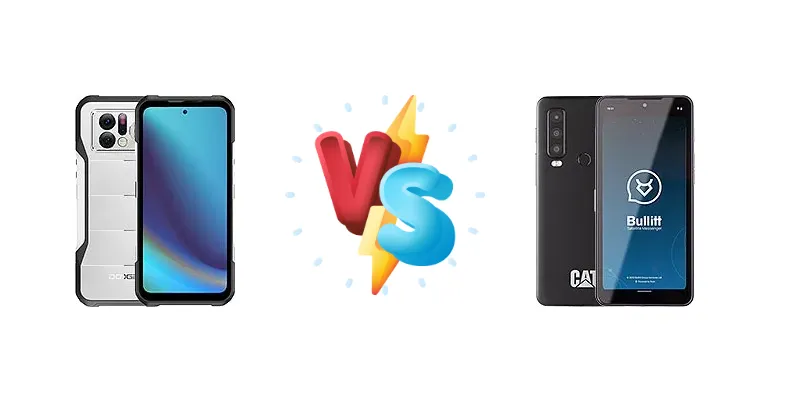
|
🏆 Quick Verdict
For most users prioritizing raw performance and future-proofing, the Cat S75 is the better choice thanks to its superior Dimensity 930 chipset. However, the Doogee V20 Pro offers a compelling value proposition for those on a tighter budget who still need a robust device.
| PHONES | ||
|---|---|---|
| Phone Names | Doogee V20 Pro | Cat S75 |
| Network | ||
|---|---|---|
| 2G bands | GSM 850 / 900 / 1800 / 1900 | GSM 850 / 900 / 1800 / 1900 |
| 3G bands | HSDPA 800 / 850 / 900 / 1700(AWS) / 1900 / 2100 | HSDPA 850 / 900 / 1700(AWS) / 1900 / 2100 |
| 4G bands | 1, 2, 3, 4, 5, 7, 8, 12, 13, 17, 18, 19, 20, 25, 26, 28, 34, 38, 39, 40, 41, 66 | 1, 2, 3, 4, 5, 7, 8, 20, 28, 32, 38, 39, 40, 41 |
| 5G bands | 1, 3, 5, 7, 8, 20, 28, 38, 40, 41, 77, 78, 79 | 1, 2, 3, 5, 7, 8, 20, 23, 28, 38, 40, 41, 75, 77, 78, 255, 256 SA/NSA/Sub6/mmWave |
| Speed | HSPA, LTE, 5G | HSPA, LTE, 5G |
| Technology | GSM / CDMA / HSPA / LTE / 5G | GSM / HSPA / LTE / 5G |
| Launch | ||
|---|---|---|
| Announced | 2023, May 28 | 2023, February 24 |
| Status | Available. Released 2023, June 01 | Available. Released 2023, July |
| Body | ||
|---|---|---|
| Build | - | Glass front (Gorilla Glass Victus), plastic back, aluminum frame |
| Dimensions | 170.5 x 81.2 x 14 mm (6.71 x 3.20 x 0.55 in) | 171 x 80 x 11.9 mm (6.73 x 3.15 x 0.47 in) |
| SIM | Nano-SIM + Nano-SIM | Nano-SIM + Nano-SIM |
| Weight | 296 g (10.44 oz) | 268 g (9.45 oz) |
| - | IP68/IP69 dust/water resistant (up to 5m for 35 min) Drop-to-concrete resistance from up to 1.8m MIL-STD-810H compliant | |
| Display | ||
|---|---|---|
| Protection | Corning Gorilla Glass 5 | Corning Gorilla Glass Victus |
| Resolution | 1080 x 2400 pixels, 20:9 ratio (~409 ppi density) | 1080 x 2408 pixels, 20:9 ratio (~400 ppi density) |
| Size | 6.43 inches, 99.8 cm2 (~72.1% screen-to-body ratio) | 6.6 inches, 104.9 cm2 (~76.7% screen-to-body ratio) |
| Type | AMOLED, 500 nits (peak) | IPS LCD, 120Hz |
| Platform | ||
|---|---|---|
| CPU | Octa-core (2x2.2 GHz Cortex-A76 & 6x2.0 GHz Cortex-A55) | Octa-core (2x2.2 GHz Cortex-A78 & 6x2.0 GHz Cortex-A55) |
| Chipset | Mediatek Dimensity 700 (7 nm) | Mediatek Dimensity 930 (6 nm) |
| GPU | Mali-G57 MC2 | IMG BXM-8-256 |
| OS | Android 12 | Android 12 |
| Memory | ||
|---|---|---|
| Card slot | microSDXC (uses shared SIM slot) | microSDXC (uses shared SIM slot) |
| Internal | 256GB 12GB RAM | 128GB 6GB RAM |
| Main Camera | ||
|---|---|---|
| Features | Dual-LED flash, HDR, panorama | Dual-LED flash, HDR, panorama |
| Single | - | 8 MP, f/2.0, (wide) |
| Triple | 64 MP, f/1.8, (wide), PDAF, OIS 8 MP, f/1.8, (wide) 24 MP, f/1.8, (night vision), 2 infrared night vision lights | 50 MP, f/1.8, (wide), PDAF 8 MP, f/2.2, (ultrawide) 2 MP (macro) |
| Video | 1440p, 1080p | 1080p@30fps |
| Selfie camera | ||
|---|---|---|
| Single | 16 MP, f/2.0, (wide) | 8 MP, f/2.0, (wide) |
| Video | 1440p, 1080p | 1080p@30fps |
| Sound | ||
|---|---|---|
| 3.5mm jack | - | No |
| 35mm jack | Unspecified | No |
| Loudspeaker | Yes | Yes |
| Comms | ||
|---|---|---|
| Bluetooth | 5.1, A2DP, LE | 5.1, A2DP, LE |
| NFC | Yes | Yes |
| Positioning | GPS, GLONASS, BDS, GALILEO | GPS (L1+L5), GALILEO, GLONASS, BDS |
| Radio | FM radio | Unspecified |
| USB | USB Type-C 2.0, OTG | USB Type-C 2.0, OTG |
| WLAN | Wi-Fi 802.11 a/b/g/n/ac, dual-band | Wi-Fi 802.11 a/b/g/n/ac, dual-band |
| Features | ||
|---|---|---|
| Sensors | Fingerprint (side-mounted), accelerometer, gyro, proximity, compass | Fingerprint (rear-mounted), accelerometer, gyro, proximity, compass |
| - | Emergency SOS via satellite (Bullitt Satellite Connect service) | |
| Battery | ||
|---|---|---|
| Charging | 33W wired Reverse wired | 15W wireless |
| Type | 6000 mAh | Li-Po 5000 mAh |
| Misc | ||
|---|---|---|
| Colors | Black, Silver, Orange, Blue | Black |
| Models | - | BM1S1B |
| Price | About 460 EUR | About 600 EUR |
Doogee V20 Pro
- Faster Wired Charging (33W)
- Reverse Wired Charging
- More Affordable Price Point
- Less Powerful Chipset (Dimensity 700)
- Potentially Lower Image Quality
Cat S75
- More Powerful Chipset (Dimensity 930)
- Wireless Charging Convenience
- Potentially Better Camera Performance
- Slower Charging Speed (15W Wireless)
- Higher Price
Display Comparison
Neither device's display specifications are provided, so a direct comparison is limited. However, given the Cat S75's positioning, it likely features a higher-quality panel with better color accuracy and potentially higher peak brightness. Rugged phones often prioritize durability over display excellence, so expect both to have practical, if not spectacular, screens. Bezels are likely to be substantial on both to contribute to drop protection.
Camera Comparison
Without detailed camera specs, a precise comparison is difficult. However, the chipset difference suggests the Cat S75 will have a more capable image signal processor (ISP), leading to better image processing, noise reduction, and dynamic range. The Dimensity 930 supports higher resolution sensors and faster capture rates. While both phones likely feature multiple cameras, the S75’s ISP will likely extract more detail and produce more refined images. The presence or absence of Optical Image Stabilization (OIS) would be a key differentiator, but is unknown.
Performance
The Cat S75’s Mediatek Dimensity 930 (6nm) represents a significant leap over the Doogee V20 Pro’s Dimensity 700 (7nm). The 6nm process node inherently offers better power efficiency and thermal characteristics. More importantly, the Dimensity 930 utilizes Cortex-A78 cores, which are architecturally superior to the Cortex-A76 cores in the V20 Pro, resulting in noticeably faster single-core performance. This translates to snappier app launches and smoother multitasking. While both CPUs have 6x Cortex-A55 efficiency cores, the overall system performance will favor the Cat S75, particularly in sustained workloads. The V20 Pro will be adequate for everyday tasks, but the S75 will handle demanding games and applications with greater ease.
Battery Life
The Doogee V20 Pro’s 33W wired charging is a clear advantage over the Cat S75’s 15W wireless charging. While wireless charging offers convenience, it’s significantly slower. A full charge on the V20 Pro will take considerably less time. Battery capacity is not specified for either device, but the more efficient Dimensity 930 in the S75 may offset a potentially smaller battery size. The V20 Pro’s reverse wired charging is a useful feature for topping up accessories, absent on the S75.
Buying Guide
Buy the Doogee V20 Pro if you need a highly durable phone with fast charging at the lowest possible price point, and aren't heavily reliant on demanding applications. Buy the Cat S75 if you prioritize smoother multitasking, better gaming performance, and the convenience of wireless charging, and are willing to pay a premium for those features.