
Doogee V Max Plus vs. Blackview BV9200: A Deep Dive into Rugged Smartphone Performance
| Phones Images | |||||
|---|---|---|---|---|---|
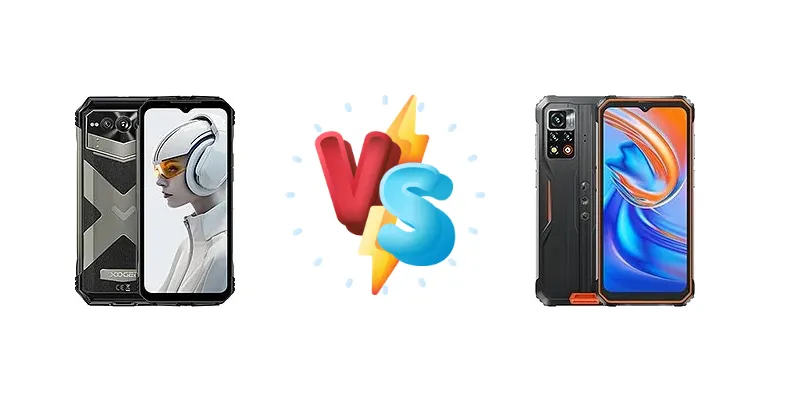
|
🏆 Quick Verdict
For users prioritizing sustained performance and long-term battery health, the Doogee V Max Plus is the clear winner. Its Dimensity 7050 chipset offers a significant performance advantage over the Blackview BV9200’s Helio G96, and its impressive 1300 charge cycles promise longevity. However, the BV9200’s 66W wired and 30W wireless charging are compelling features for those who value convenience.
| PHONES | ||
|---|---|---|
| Phone Names | Doogee V Max Plus | Blackview BV9200 |
| Network | ||
|---|---|---|
| 2G bands | GSM 850 / 900 / 1800 / 1900 | GSM 850 / 900 / 1800 / 1900 |
| 3G bands | HSDPA 800 / 850 / 900 / 1700(AWS) / 1900 / 2100 | HSDPA 850 / 900 / 1700(AWS) / 1900 / 2100 |
| 4G bands | 1, 2, 3, 4, 5, 7, 8, 12, 17, 18, 19, 20, 25, 26, 28, 34, 38, 39, 40, 41, 66 | 1, 2, 3, 4, 5, 7, 8, 12, 13, 17, 18, 19, 20, 25, 26, 28, 34, 38, 39, 40, 41, 66 |
| 5G bands | 1, 3, 7, 28, 38, 41, 77, 78, 79 SA/NSA | - |
| Speed | HSPA, LTE, 5G | HSPA, LTE |
| Technology | GSM / CDMA / HSPA / LTE / 5G | GSM / CDMA / HSPA / LTE |
| - | CDMA 800 / 1900 | |
| Launch | ||
|---|---|---|
| Announced | 2024, August | 2022, December 28 |
| Status | Available. Released 2024, August | Available. Released 2023, January 09 |
| Body | ||
|---|---|---|
| Dimensions | 178.5 x 83.1 x 26.3 mm (7.03 x 3.27 x 1.04 in) | 174.5 x 81.8 x 13.6 mm (6.87 x 3.22 x 0.54 in) |
| SIM | Nano-SIM + Nano-SIM | Nano-SIM + Nano-SIM |
| Weight | - | 310 g (10.93 oz) |
| - | IP68/IP69K dust/water resistant (up to 1.5m for 30 min) Drop-to-concrete resistance from up to 1.8m MIL-STD-810H compliant | |
| Display | ||
|---|---|---|
| Protection | Corning Gorilla Glass 5, Mohs level 6 | Corning Gorilla Glass 5 |
| Resolution | 1080 x 2408 pixels, 20:9 ratio (~401 ppi density) | 1080 x 2408 pixels, 20:9 ratio (~400 ppi density) |
| Size | 6.58 inches, 104.3 cm2 (~70.3% screen-to-body ratio) | 6.6 inches, 104.9 cm2 (~73.5% screen-to-body ratio) |
| Type | IPS LCD, 120Hz | IPS LCD, 120Hz |
| Platform | ||
|---|---|---|
| CPU | Octa-core (2x2.6 GHz Cortex-A78 & 6x2.0 GHz Cortex-A55) | Octa-core (2x2.05 GHz Cortex-A76 & 6x2.0 GHz Cortex-A55) |
| Chipset | Mediatek Dimensity 7050 (6 nm) | Mediatek MT6781 Helio G96 (12 nm) |
| GPU | Mali-G68 MC4 | Mali-G52 MC2 |
| OS | Android 14 | Android 12, Doke-OS 3.1 |
| Memory | ||
|---|---|---|
| Card slot | microSDXC (uses shared SIM slot) | microSDXC (dedicated slot) |
| Internal | 512GB 16GB RAM | 256GB 8GB RAM |
| - | UFS 2.1 | |
| Main Camera | ||
|---|---|---|
| Features | Dual-LED flash, HDR, panorama | LED flash, HDR, panorama |
| Single | - | 16 MP, (wide), 1/3", 1.0µm |
| Triple | 200 MP, f/1.8, (wide), 1/1.4", 0.56µm, PDAF 20 MP, f/1.8, (night vision), 2 infrared night vision lights 8 MP, f/2.2, 125˚ (ultrawide) | 50 MP, f/1.8, (wide), 1/2.76", 0.64µm, PDAF 8 MP, f/1.8, 120˚, (ultrawide), AF Auxiliary lens |
| Video | 4K@30fps, 1080p@30fps | 1440p@30fps, 1080p@30fps |
| Selfie camera | ||
|---|---|---|
| Single | 32 MP, f/1.8, (wide), 1/2.8", 0.8µm | 16 MP, f/2.0, (wide), 1/3", 1.0µm |
| Video | 1440p, 1080p | 1080p |
| Sound | ||
|---|---|---|
| 3.5mm jack | - | No |
| 35mm jack | No | No |
| Loudspeaker | Yes, with stereo speakers | Yes, with dual speakers |
| Comms | ||
|---|---|---|
| Bluetooth | 5.2, A2DP, LE | 5.2, A2DP, LE |
| NFC | Yes (market/region dependent) | Yes |
| Positioning | GPS (L1+L5), GLONASS, GALILEO, BDS | GPS, GLONASS, GALILEO, BDS |
| Radio | FM radio | FM radio |
| USB | USB Type-C 2.0, OTG | USB Type-C, OTG |
| WLAN | Wi-Fi 802.11 a/b/g/n/ac/6, dual-band | Wi-Fi 802.11 a/b/g/n/ac, dual-band |
| Features | ||
|---|---|---|
| Sensors | Fingerprint (side-mounted), accelerometer, gyro, proximity, compass | Fingerprint (side-mounted), accelerometer, gyro, proximity, compass, barometer |
| Battery | ||
|---|---|---|
| Charging | 33W wired Reverse wired | 66W wired 30W wireless |
| Type | 22000 mAh | 5000 mAh |
| Misc | ||
|---|---|---|
| Colors | Obsidian Black, Pewter Gray | Black, Orange, Green |
| Price | About 500 EUR | About 200 EUR |
| EU LABEL | ||
|---|---|---|
| Battery | 146:58h endurance, 1300 cycles | - |
| Energy | Class D | - |
| Free fall | Class A (270 falls) | - |
| Repairability | Class C | - |
Doogee V Max Plus
- Superior processing power with Dimensity 7050
- Exceptional battery endurance (146:58h)
- Long-lasting battery health (1300 charge cycles)
- Slower charging speed (33W)
- Display specifications are unknown
Blackview BV9200
- Fast 66W wired and 30W wireless charging
- Bright display (481 nits)
- High contrast ratio (1423:1)
- Less powerful Helio G96 chipset
- Lower overall performance
Display Comparison
The Blackview BV9200 boasts a measured peak brightness of 481 nits and a 1423:1 contrast ratio, suggesting good outdoor visibility and image quality. While the Doogee V Max Plus’s display specifications are not provided, the BV9200’s numbers indicate a strong advantage in direct sunlight. The contrast ratio on the BV9200 will deliver richer blacks and more vibrant colors. Without comparable data for the V Max Plus, it’s difficult to assess its color accuracy or panel technology, but the BV9200 sets a high bar for display performance in this segment.
Camera Comparison
Neither device’s camera specifications are detailed enough to draw definitive conclusions. However, given the market positioning of these phones, it’s likely both feature capable main sensors. Without knowing sensor sizes, apertures, or image processing algorithms, a direct comparison is impossible. The presence of a 2MP macro camera on the BV9200 is a common, but often underwhelming, feature in this price range. Focusing on the primary sensor’s capabilities will be crucial for assessing real-world image quality.
Performance
The Doogee V Max Plus’s Mediatek Dimensity 7050 (6nm) chipset represents a substantial leap in performance over the Blackview BV9200’s Helio G96 (12nm). The Dimensity 7050 utilizes more efficient Cortex-A78 cores clocked at 2.6 GHz, compared to the BV9200’s 2.05 GHz Cortex-A76 cores. This translates to faster application loading times, smoother multitasking, and improved gaming performance. The 6nm process node of the Dimensity 7050 also contributes to better thermal efficiency, reducing the likelihood of performance throttling during prolonged use. The BV9200’s Helio G96 is a capable mid-range chip, but it simply cannot compete with the processing power of the Dimensity 7050.
Battery Life
The Doogee V Max Plus shines with an impressive 146:58h endurance rating and a remarkable 1300 charge cycles, indicating exceptional battery life and longevity. While the Blackview BV9200 doesn’t disclose endurance, it compensates with significantly faster charging: 66W wired and 30W wireless. The V Max Plus is limited to 33W wired charging. This means the BV9200 can replenish its battery much quicker, offering convenience for users who frequently need to top up. However, the V Max Plus’s superior endurance and extended battery lifespan provide a long-term advantage.
Buying Guide
Buy the Doogee V Max Plus if you need a rugged phone capable of handling demanding tasks like gaming, video editing, or running resource-intensive applications. Its superior chipset and battery endurance make it ideal for extended use in the field. Buy the Blackview BV9200 if you prioritize fast and versatile charging options, and a brighter display for outdoor visibility, even if it means sacrificing some raw processing power.