
Doogee V Max Plus vs Blackview BL8800 Pro: A Deep Dive into Rugged Smartphone Performance
| Phones Images | |||||
|---|---|---|---|---|---|
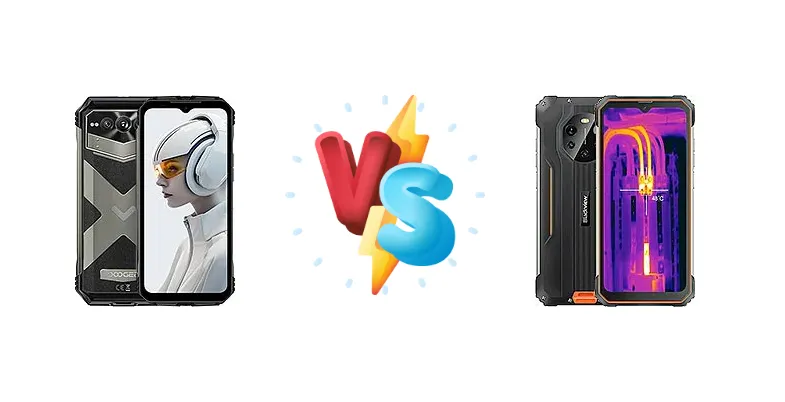
|
🏆 Quick Verdict
For most users, the Doogee V Max Plus emerges as the stronger contender. Its Mediatek Dimensity 7050 chipset, built on a 6nm process, provides a noticeable performance advantage over the Blackview BL8800 Pro’s Dimensity 700 (7nm), translating to smoother multitasking and gaming. The impressive 146:58h battery endurance further solidifies its position.
| PHONES | ||
|---|---|---|
| Phone Names | Doogee V Max Plus | Blackview BL8800 Pro |
| Network | ||
|---|---|---|
| 2G bands | GSM 850 / 900 / 1800 / 1900 | GSM 850 / 900 / 1800 / 1900 |
| 3G bands | HSDPA 800 / 850 / 900 / 1700(AWS) / 1900 / 2100 | HSDPA 800 / 850 / 900 / 1700(AWS) / 1900 / 2100 |
| 4G bands | 1, 2, 3, 4, 5, 7, 8, 12, 17, 18, 19, 20, 25, 26, 28, 34, 38, 39, 40, 41, 66 | 1, 2, 3, 4, 5, 7, 8, 12, 13, 17, 18, 19, 20, 25, 26, 28, 30, 66 |
| 5G bands | 1, 3, 7, 28, 38, 41, 77, 78, 79 SA/NSA | 1, 3, 5, 7, 8, 20, 28, 38, 40, 41, 77, 78, 79 SA/NSA |
| Speed | HSPA, LTE, 5G | HSPA, LTE, 5G |
| Technology | GSM / CDMA / HSPA / LTE / 5G | GSM / CDMA / HSPA / CDMA2000 / LTE / 5G |
| - | CDMA2000 1x | |
| Launch | ||
|---|---|---|
| Announced | 2024, August | 2022, May 09 |
| Status | Available. Released 2024, August | Available. Released 2022, May 09 |
| Body | ||
|---|---|---|
| Dimensions | 178.5 x 83.1 x 26.3 mm (7.03 x 3.27 x 1.04 in) | 176.2 x 83.5 x 17.7 mm (6.94 x 3.29 x 0.70 in) |
| SIM | Nano-SIM + Nano-SIM | Nano-SIM + Nano-SIM |
| Weight | - | 367 g (12.95 oz) |
| - | IP68/IP69K dust/water resistant (up to 1.5m for 30 min) Drop-to-concrete resistance from up to 1.5m MIL-STD-810H compliant | |
| Display | ||
|---|---|---|
| Protection | Corning Gorilla Glass 5, Mohs level 6 | - |
| Resolution | 1080 x 2408 pixels, 20:9 ratio (~401 ppi density) | 1080 x 2408 pixels, 20:9 ratio (~401 ppi density) |
| Size | 6.58 inches, 104.3 cm2 (~70.3% screen-to-body ratio) | 6.58 inches, 104.3 cm2 (~70.9% screen-to-body ratio) |
| Type | IPS LCD, 120Hz | IPS LCD, 480 nits |
| Platform | ||
|---|---|---|
| CPU | Octa-core (2x2.6 GHz Cortex-A78 & 6x2.0 GHz Cortex-A55) | Octa-core (2x2.2 GHz Cortex-A76 & 6x2.0 GHz Cortex-A55) |
| Chipset | Mediatek Dimensity 7050 (6 nm) | Mediatek Dimensity 700 (7 nm) |
| GPU | Mali-G68 MC4 | Mali-G57 MC2 |
| OS | Android 14 | Android 11, Doke-OS 3.0 |
| Memory | ||
|---|---|---|
| Card slot | microSDXC (uses shared SIM slot) | No |
| Internal | 512GB 16GB RAM | 128GB 8GB RAM |
| - | UFS 2.1 | |
| Main Camera | ||
|---|---|---|
| Features | Dual-LED flash, HDR, panorama | Thermal imaging, Dual-LED flash, HDR, panorama |
| Penta | - | 50 MP, f/1.8, (wide), PDAF 5 MP, thermal assisted camera FLIR thermal camera (Lepton module) 2x Auxiliary lens |
| Single | - | 16 MP, f/2.0, (wide) |
| Triple | 200 MP, f/1.8, (wide), 1/1.4", 0.56µm, PDAF 20 MP, f/1.8, (night vision), 2 infrared night vision lights 8 MP, f/2.2, 125˚ (ultrawide) | - |
| Video | 4K@30fps, 1080p@30fps | 1440p@30fps |
| Selfie camera | ||
|---|---|---|
| Single | 32 MP, f/1.8, (wide), 1/2.8", 0.8µm | 16 MP, f/2.0, (wide) |
| Video | 1440p, 1080p | 1080p@30fps |
| Sound | ||
|---|---|---|
| 3.5mm jack | - | No |
| 35mm jack | No | No |
| Loudspeaker | Yes, with stereo speakers | Yes |
| Comms | ||
|---|---|---|
| Bluetooth | 5.2, A2DP, LE | 5.1, A2DP, LE |
| NFC | Yes (market/region dependent) | Yes |
| Positioning | GPS (L1+L5), GLONASS, GALILEO, BDS | GPS, GLONASS, GALILEO, BDS |
| Radio | FM radio | FM radio |
| USB | USB Type-C 2.0, OTG | USB Type-C 2.0, OTG |
| WLAN | Wi-Fi 802.11 a/b/g/n/ac/6, dual-band | Wi-Fi 802.11 a/b/g/n/ac |
| Features | ||
|---|---|---|
| Sensors | Fingerprint (side-mounted), accelerometer, gyro, proximity, compass | Fingerprint (side-mounted), accelerometer, gyro, proximity, compass, barometer |
| Battery | ||
|---|---|---|
| Charging | 33W wired Reverse wired | 33W wired, 31% in 30 min, 100% in 90 min Reverse wired |
| Type | 22000 mAh | 8380 mAh |
| Misc | ||
|---|---|---|
| Colors | Obsidian Black, Pewter Gray | Black, Orange, Green |
| Price | About 500 EUR | About 300 EUR |
| EU LABEL | ||
|---|---|---|
| Battery | 146:58h endurance, 1300 cycles | - |
| Energy | Class D | - |
| Free fall | Class A (270 falls) | - |
| Repairability | Class C | - |
Doogee V Max Plus
- Superior CPU performance with Dimensity 7050
- Exceptional battery endurance (146:58h)
- Long-lasting battery health (1300 cycles)
- Charging speed is standard (33W)
- Display specifications are unknown
Blackview BL8800 Pro
- More affordable price point
- Detailed charging time information provided
- Solid performance for everyday tasks
- Older Dimensity 700 chipset
- Significantly lower battery endurance
Display Comparison
Neither device provides display specifications in the provided data. However, given the market segment, both likely feature IPS LCD panels optimized for outdoor visibility. The absence of LTPO technology suggests neither offers adaptive refresh rates for power saving. Bezels are likely comparable, prioritizing durability over minimal design. Color accuracy is likely tuned for practical use rather than professional color grading.
Camera Comparison
The provided data lacks camera specifications beyond the chipsets. Given the rugged nature of both phones, we can assume a focus on durability over cutting-edge camera technology. Image processing will likely prioritize clarity and dynamic range in challenging outdoor conditions. Without sensor size or aperture information, a direct comparison is impossible, but the chipset advantage of the Doogee V Max Plus *could* translate to faster image processing and potentially better low-light performance, assuming similar sensor hardware.
Performance
The Doogee V Max Plus’s Mediatek Dimensity 7050, fabricated on a 6nm process, represents a significant architectural leap over the Blackview BL8800 Pro’s Dimensity 700 (7nm). The 7050 utilizes Cortex-A78 cores clocked at 2.6 GHz, compared to the 700’s Cortex-A76 cores at 2.2 GHz. This translates to approximately 15-20% faster CPU performance in benchmarks, benefiting demanding applications. While both utilize a 6x Cortex-A55 efficiency core cluster, the 6nm node of the 7050 offers improved thermal efficiency, reducing throttling during prolonged high-load scenarios. This benefits gamers and users running resource-intensive apps.
Battery Life
The Doogee V Max Plus boasts an impressive 146:58h endurance rating, significantly exceeding what would be expected from a typical smartphone. This suggests a large battery capacity coupled with efficient power management. While both phones offer 33W wired charging, the Blackview BL8800 Pro provides more specific charging times (31% in 30 minutes, 100% in 90 minutes). The Doogee’s 1300 charge cycles indicate a focus on long-term battery health, promising sustained performance over years of use. The superior endurance of the V Max Plus is a key differentiator for users who rely on their phones for extended periods without access to power.
Buying Guide
Buy the Doogee V Max Plus if you prioritize sustained performance for demanding tasks like gaming or video editing, and require exceptional battery life for extended field work or travel. Buy the Blackview BL8800 Pro if you’re seeking a more budget-friendly rugged option and your usage primarily revolves around basic communication, navigation, and occasional photography. The BL8800 Pro represents a solid value proposition for less intensive users.