
Doogee Tab G6+ vs Samsung Galaxy Tab A8: A Deep Dive into Budget Tablet Performance
| Phones Images | |||||
|---|---|---|---|---|---|
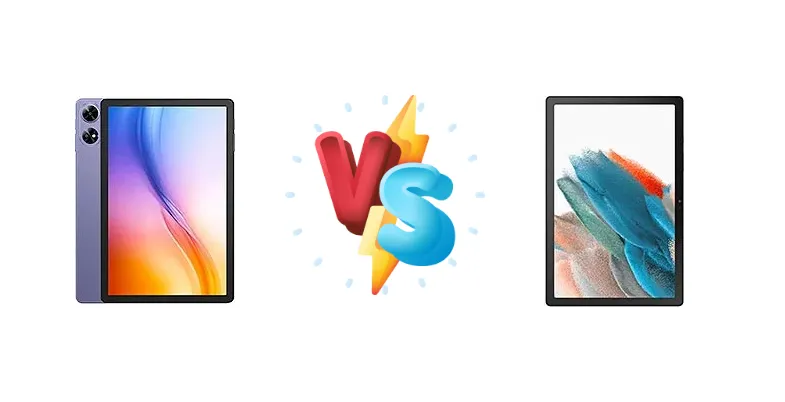
|
🏆 Quick Verdict
For users prioritizing exceptional battery life and sustained performance under load, the Doogee Tab G6+ emerges as the winner. Its Unisoc T7280 chipset, coupled with an impressive 88:26h endurance rating, provides a clear advantage over the Samsung Galaxy Tab A8, despite the latter's brand recognition.
| PHONES | ||
|---|---|---|
| Phone Names | Doogee Tab G6+ | Samsung Galaxy Tab A8 10.5 (2021) |
| Network | ||
|---|---|---|
| 2G bands | GSM 850 / 900 / 1800 / 1900 | GSM 850 / 900 / 1800 / 1900 |
| 3G bands | HSDPA 850 / 900 / 1700(AWS) / 1900 / 2100 | HSDPA 850 / 900 / 1700(AWS) / 1900 / 2100 |
| 4G bands | 1, 2, 3, 4, 5, 7, 8, 18, 19, 20, 25, 26, 28, 34, 38, 39, 40, 41, 66 | 1, 2, 3, 4, 5, 7, 8, 12, 17, 20, 28, 38, 40, 41, 66 |
| Speed | HSPA, LTE | HSPA, LTE - cellular model only |
| Technology | GSM / HSPA / LTE | GSM / HSPA / LTE |
| Launch | ||
|---|---|---|
| Announced | 2025, May | 2021, December 15 |
| Status | Available. Released 2025, May | Available. Released 2022, January 17 |
| Body | ||
|---|---|---|
| Dimensions | 256.9 x 168.4 x 8.3 mm (10.11 x 6.63 x 0.33 in) | 246.8 x 161.9 x 6.9 mm (9.72 x 6.37 x 0.27 in) |
| SIM | Nano-SIM + Nano-SIM | Nano-SIM (cellular model only) |
| Weight | 528 g (1.16 lb) | 508 g (1.12 lb) |
| Display | ||
|---|---|---|
| Protection | Mohs level 6 | - |
| Resolution | 1200 x 1920 pixels, 16:10 ratio (~206 ppi density) | 1200 x 1920 pixels, 16:10 ratio (~216 ppi density) |
| Size | 11.0 inches, 350.9 cm2 (~81.1% screen-to-body ratio) | 10.5 inches, 319.7 cm2 (~80.0% screen-to-body ratio) |
| Type | IPS LCD, 90Hz | TFT LCD |
| Platform | ||
|---|---|---|
| CPU | Octa-core (2x2.2 GHz Cortex-A75 & 6x1.8 GHz Cortex-A55) | Octa-core (2x2.0 GHz Cortex-A75 & 6x2.0 GHz Cortex-A55) |
| Chipset | Unisoc T7280 (12 nm) | Unisoc Tiger T618 (12 nm) |
| GPU | Mali-G57 MP1 | Mali G52 MP2 |
| OS | Android 15 | Android 11, upgradable to Android 14, One UI 6 |
| Memory | ||
|---|---|---|
| Card slot | microSDXC (uses shared SIM slot) | microSDXC (dedicated slot) |
| Internal | 256GB 8GB RAM | 32GB 2GB RAM, 32GB 3GB RAM, 64GB 2GB RAM, 64GB 3GB RAM, 64GB 4GB RAM, 128GB 3GB RAM, 128GB 4GB RAM |
| Main Camera | ||
|---|---|---|
| Features | LED flash | - |
| Single | 13 MP | 8 MP, AF |
| Video | 1080p@30fps | 1080p@30fps |
| Selfie camera | ||
|---|---|---|
| Single | 5 MP | 5 MP |
| Video | Yes | 1080p@30fps |
| Sound | ||
|---|---|---|
| 3.5mm jack | - | Yes |
| 35mm jack | Yes | Yes |
| Loudspeaker | Yes, with stereo speakers | Yes, with stereo speakers (4 speakers) |
| Comms | ||
|---|---|---|
| Bluetooth | 5.0, A2DP, LE | 5.0, A2DP, LE |
| NFC | No | No |
| Positioning | GPS, GALILEO, GLONASS, BDS | GPS, GLONASS, BDS, GALILEO, QZSS - cellular model only |
| Radio | No | No |
| USB | USB Type-C | USB Type-C 2.0 |
| WLAN | Wi-Fi 802.11 a/b/g/n/ac, dual-band | Wi-Fi 802.11 a/b/g/n/ac, dual-band, Wi-Fi Direct |
| Features | ||
|---|---|---|
| Sensors | Accelerometer | Accelerometer, gyro, proximity, compass |
| Battery | ||
|---|---|---|
| Charging | 18W wired | 15W wired |
| Type | 8000 mAh | Li-Po 7040 mAh |
| Misc | ||
|---|---|---|
| Colors | Black, Gray, Purple | Gray, Silver, Pink Gold |
| Models | - | SM-X200, SM-X205 |
| Price | About 200 EUR | About 230 EUR |
| SAR EU | - | 0.92 W/kg (body) |
| EU LABEL | ||
|---|---|---|
| Battery | 88:26h endurance, 1000 cycles | - |
| Energy | Class F | - |
| Free fall | Class E (52 falls) | - |
| Repairability | Class B | - |
Doogee Tab G6+
- Exceptional battery life (88:26h endurance)
- Slightly faster CPU clock speeds
- 1000 charge cycle claim suggests long-term battery health
- Less established brand reputation
- Detailed display specs are unknown
Samsung Galaxy Tab A8 10.5 (2021)
- Well-known and trusted brand (Samsung)
- Potentially better software optimization
- Wider ecosystem of accessories
- Lower battery endurance (estimated)
- Slightly slower CPU clock speeds
Display Comparison
Both tablets utilize 12nm process technology, suggesting similar power efficiency in display operation. However, detailed display specs (resolution, panel type, brightness) are missing. Given the price point, both likely employ IPS LCD panels. Samsung typically offers better color calibration, but without specific data, it's difficult to quantify. The bezel size is also unknown, but a key differentiator for user experience.
Camera Comparison
Camera performance is unlikely to be a deciding factor for either tablet, given their target market. Detailed camera specs are unavailable, but it's safe to assume both feature basic camera setups suitable for casual snapshots. Without sensor size or aperture information, a meaningful comparison is impossible. Focusing on the core functionality of these tablets – content consumption and light productivity – is more relevant.
Performance
The core performance difference lies in the CPU configuration. While both utilize octa-core CPUs with 2x Cortex-A75 and 6x Cortex-A55 cores, the Doogee Tab G6+ boasts a slightly higher clock speed on the A75 cores (2.2 GHz vs 2.0 GHz). This, combined with the Unisoc T7280 chipset, suggests a marginal performance advantage in CPU-intensive tasks. The Unisoc Tiger T618 in the Tab A8 is a capable chip, but the G6+'s configuration hints at better responsiveness. The impact on real-world applications will depend on RAM and storage speeds, which are currently unknown.
Battery Life
The Doogee Tab G6+ truly shines in battery endurance, achieving a remarkable 88:26h rating. This is a significant advantage over what we'd expect from the Samsung Galaxy Tab A8, which lacks a published endurance figure. While the Tab A8 charges at 15W, the G6+ supports 18W charging. However, the difference in charging speed is less critical given the G6+'s exceptional battery life; users will likely need to charge it less frequently. The Doogee also claims 1000 charge cycles, suggesting long-term battery health.
Buying Guide
Buy the Doogee Tab G6+ if you need a tablet that can reliably last through long workdays, travel, or extended entertainment sessions without frequent charging. It’s ideal for students, field workers, or anyone who values longevity. Buy the Samsung Galaxy Tab A8 10.5 (2021) if you prefer a tablet from a well-established brand with a polished software experience and a wider ecosystem of accessories, and are willing to compromise slightly on battery endurance.