
Doogee T40 vs. Ulefone Power Armor 13: A Deep Dive into Rugged Smartphone Endurance
| Phones Images | |||||
|---|---|---|---|---|---|
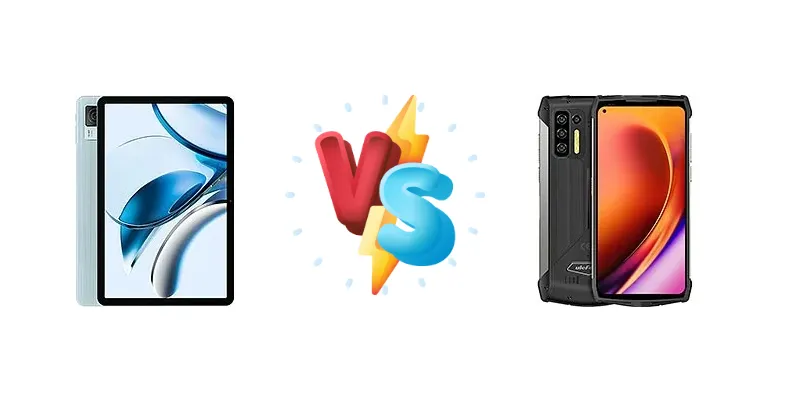
|
🏆 Quick Verdict
For users prioritizing maximum uptime and long-term battery health, the Doogee T40 is the clear winner. Its exceptional 78:25h endurance rating and 1100 charge cycles significantly outperform the Ulefone Power Armor 13. However, the Power Armor 13’s 33W charging and brighter screen make it a compelling alternative for those valuing convenience and visibility.
| PHONES | ||
|---|---|---|
| Phone Names | Doogee T40 | Ulefone Power Armor 13 |
| Network | ||
|---|---|---|
| 2G bands | GSM 850 / 900 / 1800 / 1900 | GSM 850 / 900 / 1800 / 1900 |
| 3G bands | HSDPA 850 / 900 / 1700(AWS) / 1900 / 2100 | HSDPA 850 / 900 / 1700(AWS) / 1900 / 2100 |
| 4G bands | 1, 2, 3, 4, 5, 7, 8, 12, 17, 20, 25, 26, 28, 34, 38, 39, 40, 41, 66 | 1, 2, 3, 4, 5, 7, 8, 12, 13, 17, 18, 19, 20, 25, 26, 28, 38, 40, 66 |
| Speed | HSPA, LTE | HSPA 42.2/11.5 Mbps, LTE Cat12 600/150 Mbps |
| Technology | GSM / HSPA / LTE | GSM / HSPA / LTE |
| Launch | ||
|---|---|---|
| Announced | 2024, September | 2021, July 22 |
| Status | Available. Released 2024, September | Available. Released 2021, July 26 |
| Body | ||
|---|---|---|
| Build | Glass front, aluminum alloy frame, aluminum alloy back | - |
| Dimensions | 256.5 x 168 x 7.6 mm (10.10 x 6.61 x 0.30 in) | 183.7 x 85.4 x 20.8 mm (7.23 x 3.36 x 0.82 in) |
| SIM | Nano-SIM + Nano-SIM | Nano-SIM + Nano-SIM |
| Weight | 530 g (1.17 lb) | 492 g (1.08 lb) |
| - | IP68 dust/water resistant (up to 1.5m for 30 min) Drop-to-concrete resistance from up to 1.2m MIL-STD-810G compliant | |
| Display | ||
|---|---|---|
| Protection | Mohs level 6 | Corning Gorilla Glass 3 |
| Resolution | 1600 x 2560 pixels, 16:10 ratio (~274 ppi density) | 1080 x 2400 pixels, 20:9 ratio (~386 ppi density) |
| Size | 11.0 inches, 350.9 cm2 (~81.4% screen-to-body ratio) | 6.81 inches, 112.0 cm2 (~71.4% screen-to-body ratio) |
| Type | IPS LCD | IPS LCD |
| Platform | ||
|---|---|---|
| CPU | Octa-core (2x2.2 GHz Cortex-A76 & 6x2.0 GHz Cortex-A55) | Octa-core (2x2.05 GHz Cortex-A76 & 6x2.0 GHz Cortex-A55) |
| Chipset | Mediatek Helio G99 (6 nm) | Mediatek MT6785V/CD Helio G95 (12 nm) |
| GPU | Mali-G57 MC2 | Mali-G76 MC4 |
| OS | Android 14 | Android 11 |
| Memory | ||
|---|---|---|
| Card slot | microSDXC (uses shared SIM slot) | microSDXC (uses shared SIM slot) |
| Internal | 512GB 8GB RAM | 256GB 8GB RAM |
| Main Camera | ||
|---|---|---|
| Features | LED flash | Quad-LED flash, HDR, panorama |
| Penta | - | 48 MP, f/1.8, 26mm (wide), 1/2.0", 0.8µm, PDAF 8 MP, f/2.2, (ultrawide) 2 MP (macro) Auxiliary lens |
| Single | 16 MP | - |
| Video | 1440p@30fps, 1080p@30fps | 4K@30fps, 1080p@30fps |
| Selfie camera | ||
|---|---|---|
| Features | - | HDR, panorama |
| Single | 8 MP | 16 MP, f/2.2 |
| Video | 1080p@30fps | 1080p@30fps |
| Sound | ||
|---|---|---|
| 3.5mm jack | - | Yes |
| 35mm jack | Yes | Yes |
| Loudspeaker | Yes, with stereo speakers (4 speakers) | Yes |
| Comms | ||
|---|---|---|
| Bluetooth | 5.0, A2DP, LE | 5.0, A2DP, LE |
| NFC | No | Yes |
| Positioning | GPS, GLONASS, GALILEO, BDS | GPS, GLONASS, GALILEO, BDS |
| Radio | FM radio | FM radio, RDS, recording |
| USB | USB Type-C 2.0, OTG, accessory connector | - |
| WLAN | Yes | Wi-Fi 802.11 a/b/g/n/ac, dual-band |
| Features | ||
|---|---|---|
| Sensors | Accelerometer, proximity | Fingerprint (side-mounted), accelerometer, gyro, proximity, compass, baroceptor, coulombmeter |
| - | Infrared distance measure (error range: 1~20m, ±10mm; 20~40m, ±25mm) | |
| Battery | ||
|---|---|---|
| Charging | 18W wired Reverse wired | 33W wired 15W wireless 5W reverse wireless |
| Type | 8580 mAh | Li-Po 13200 mAh |
| Misc | ||
|---|---|---|
| Colors | Black, Gray, Blue | Black |
| Price | About 320 EUR | About 300 EUR |
| Tests | ||
|---|---|---|
| Battery life | - | Endurance rating 296h |
| Camera | - | Photo / Video |
| Display | - | Contrast ratio: 1306:1 (nominal) |
| Loudspeaker | - | -28.3 LUFS (Average) |
| Performance | - | AnTuTu: 294194 (v8), 351678 (v9) GeekBench: 1610 (v5.1) GFXBench: 18fps (ES 3.1 onscreen) |
| EU LABEL | ||
|---|---|---|
| Battery | 78:25h endurance, 1100 cycles | - |
| Energy | Class G | - |
| Free fall | Class E (52 falls) | - |
| Repairability | Class B | - |
Doogee T40
- Exceptional battery life (78:25h endurance)
- Long-term battery health (1100 charge cycles)
- More efficient chipset (Helio G99, 6nm)
- Slower charging speed (18W)
- Limited display information (brightness unknown)
Ulefone Power Armor 13
- Faster charging (33W wired, 15W wireless)
- Brighter display (401 nits)
- Reverse wireless charging
- Significantly shorter battery life (296h endurance)
- Less efficient chipset (Helio G95, 12nm)
- Lower long-term battery health (cycles unknown)
Display Comparison
The Ulefone Power Armor 13 boasts a measurable 401 nits of peak brightness, a significant advantage over the Doogee T40 (brightness data unavailable). Both displays share a 1306:1 contrast ratio, suggesting similar color depth and black levels. However, without further data on panel technology (LTPO, AMOLED, IPS) for the T40, the Power Armor 13’s higher brightness provides a clearer viewing experience in direct sunlight, crucial for outdoor use. The lack of display specs for the T40 is a notable omission.
Camera Comparison
Both phones list 'Photo / Video' capabilities, but lack specific details regarding sensor size, aperture, or image stabilization. This makes a direct comparison difficult. Without further information, it’s safe to assume both offer adequate, but not exceptional, camera performance for their price point. The absence of details suggests neither phone is targeting photography enthusiasts. We can expect similar performance in good lighting conditions, but low-light performance is likely to be a weakness on both.
Performance
Both devices utilize MediaTek Helio G-series chipsets, but with key differences. The Doogee T40’s Helio G99 (6nm) benefits from a more efficient manufacturing process compared to the Ulefone Power Armor 13’s Helio G95 (12nm). This 6nm node translates to improved thermal efficiency and potentially less throttling under sustained load. While both CPUs feature the same core configuration (2x2.2 GHz Cortex-A76 & 6x2.0 GHz Cortex-A55 for the T40 vs 2x2.05 GHz Cortex-A76 & 6x2.0 GHz Cortex-A55 for the Power Armor 13), the G99’s architecture offers a slight performance edge. The T40 is likely to maintain higher frame rates for longer periods during gaming.
Battery Life
The Doogee T40’s standout feature is its incredible 78:25h endurance rating, dwarfing the Ulefone Power Armor 13’s 296h (equivalent to roughly 12:14h). This difference is substantial, indicating the T40 can last significantly longer between charges. While the Power Armor 13 compensates with 33W wired charging, 15W wireless, and 5W reverse wireless, the T40’s 18W wired and reverse wired charging is slower. However, the T40’s impressive 1100 charge cycles suggest superior long-term battery health, meaning it will retain capacity for a longer period than the Power Armor 13.
Buying Guide
Buy the Doogee T40 if you need a phone that can genuinely last for days on a single charge, especially in situations where access to power is limited. This is ideal for extended camping trips, fieldwork, or emergency preparedness. Buy the Ulefone Power Armor 13 if you prefer quicker top-ups with its 33W wired and 15W wireless charging, and if a brighter, more vibrant display is important for outdoor visibility, despite the shorter overall battery life.