
Doogee T40 vs. Samsung Galaxy XCover 5: A Rugged Showdown
| Phones Images | |||||
|---|---|---|---|---|---|
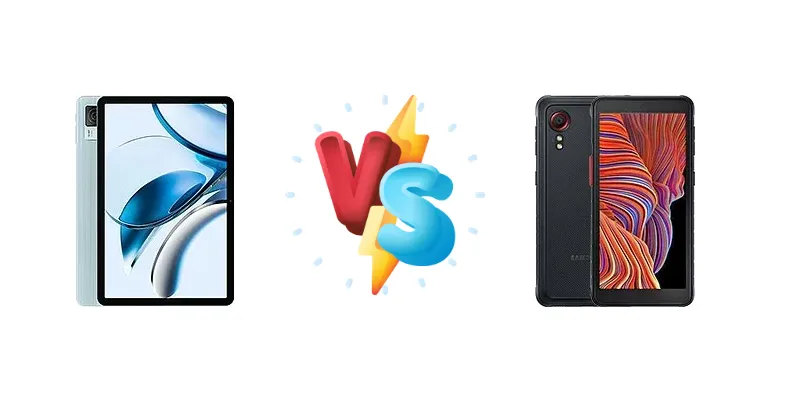
|
🏆 Quick Verdict
For the average user prioritizing battery life and sustained performance under load, the Doogee T40 emerges as the winner. Its Mediatek Helio G99 chipset and exceptional 78:25h endurance outweigh the Samsung Galaxy XCover 5’s brand recognition and ecosystem integration.
| PHONES | ||
|---|---|---|
| Phone Names | Doogee T40 | Samsung Galaxy XCover 5 |
| Network | ||
|---|---|---|
| 2G bands | GSM 850 / 900 / 1800 / 1900 | GSM 850 / 900 / 1800 / 1900 |
| 3G bands | HSDPA 850 / 900 / 1700(AWS) / 1900 / 2100 | HSDPA 850 / 900 / 1700(AWS) / 1900 / 2100 |
| 4G bands | 1, 2, 3, 4, 5, 7, 8, 12, 17, 20, 25, 26, 28, 34, 38, 39, 40, 41, 66 | 1, 2, 3, 4, 5, 7, 8, 12, 17, 20, 26, 28, 38, 40, 41, 66 |
| Speed | HSPA, LTE | HSPA, LTE |
| Technology | GSM / HSPA / LTE | GSM / HSPA / LTE |
| Launch | ||
|---|---|---|
| Announced | 2024, September | 2021, March 04 |
| Status | Available. Released 2024, September | Available. Released 2021, March 12 |
| Body | ||
|---|---|---|
| Build | Glass front, aluminum alloy frame, aluminum alloy back | - |
| Dimensions | 256.5 x 168 x 7.6 mm (10.10 x 6.61 x 0.30 in) | 147.1 x 71.6 x 9.2 mm (5.79 x 2.82 x 0.36 in) |
| SIM | Nano-SIM + Nano-SIM | · Nano-SIM· Nano-SIM + Nano-SIM |
| Weight | 530 g (1.17 lb) | 172 g (6.07 oz) |
| - | IP68 dust/water resistant (up to 1.5m for 30 min) MIL-STD-810H compliant | |
| Display | ||
|---|---|---|
| Protection | Mohs level 6 | - |
| Resolution | 1600 x 2560 pixels, 16:10 ratio (~274 ppi density) | 720 x 1480 pixels, 18.5:9 ratio (~311 ppi density) |
| Size | 11.0 inches, 350.9 cm2 (~81.4% screen-to-body ratio) | 5.3 inches, 71.3 cm2 (~67.7% screen-to-body ratio) |
| Type | IPS LCD | PLS LCD |
| Platform | ||
|---|---|---|
| CPU | Octa-core (2x2.2 GHz Cortex-A76 & 6x2.0 GHz Cortex-A55) | Octa-core (4x2.0 GHz Cortex-A55 & 4x2.0 GHz Cortex-A55) |
| Chipset | Mediatek Helio G99 (6 nm) | Exynos 850 (8 nm) |
| GPU | Mali-G57 MC2 | Mali-G52 |
| OS | Android 14 | Android 11, upgradable to Android 14, One UI 6.1 |
| Memory | ||
|---|---|---|
| Card slot | microSDXC (uses shared SIM slot) | microSDXC (dedicated slot) |
| Internal | 512GB 8GB RAM | 64GB 4GB RAM |
| - | eMMC 5.1 | |
| Main Camera | ||
|---|---|---|
| Features | LED flash | Dual LED flash, HDR, panorama |
| Single | 16 MP | 16 MP, f/1.8, PDAF |
| Video | 1440p@30fps, 1080p@30fps | 1080p@30fps |
| Selfie camera | ||
|---|---|---|
| Single | 8 MP | 5 MP, f/2.2 |
| Video | 1080p@30fps | - |
| Sound | ||
|---|---|---|
| 3.5mm jack | - | Yes |
| 35mm jack | Yes | Yes |
| Loudspeaker | Yes, with stereo speakers (4 speakers) | Yes |
| Comms | ||
|---|---|---|
| Bluetooth | 5.0, A2DP, LE | 5.0, A2DP, LE |
| NFC | No | Yes |
| Positioning | GPS, GLONASS, GALILEO, BDS | GPS, GLONASS, GALILEO, BDS |
| Radio | FM radio | Unspecified |
| USB | USB Type-C 2.0, OTG, accessory connector | USB Type-C 2.0, charging connector pins |
| WLAN | Yes | Wi-Fi 802.11 a/b/g/n/ac, dual-band, Wi-Fi Direct |
| Features | ||
|---|---|---|
| Sensors | Accelerometer, proximity | Accelerometer, gyro, proximity, compass |
| Battery | ||
|---|---|---|
| Charging | 18W wired Reverse wired | 15W wired |
| Type | 8580 mAh | Li-Ion 3000 mAh, removable |
| Misc | ||
|---|---|---|
| Colors | Black, Gray, Blue | Black |
| Models | - | SM-G525F, SM-G525F/DS, SM-G525N |
| Price | About 320 EUR | £ 61.49 / € 74.89 |
| SAR EU | - | 0.70 W/kg (head) 1.27 W/kg (body) |
| EU LABEL | ||
|---|---|---|
| Battery | 78:25h endurance, 1100 cycles | - |
| Energy | Class G | - |
| Free fall | Class E (52 falls) | - |
| Repairability | Class B | - |
Doogee T40
- Exceptional battery life (78:25h endurance)
- More powerful and efficient Mediatek Helio G99 chipset
- Reverse wired charging for accessory top-ups
- High battery cycle count (1100 cycles)
- Less established brand reputation
- Potentially less frequent software updates
Samsung Galaxy XCover 5
- Samsung ecosystem integration
- Established brand with reliable software support
- Ruggedized design for durability
- Potentially better build quality
- Less powerful Exynos 850 chipset
- Slower charging speed (15W)
- Significantly shorter battery life
Display Comparison
Neither device boasts a cutting-edge display. Details are missing, but both likely utilize LCD panels given their rugged focus. The emphasis is on visibility in direct sunlight and durability, not color accuracy or high refresh rates. The lack of detailed display specs suggests a cost-saving measure on both sides, prioritizing robustness over visual fidelity. Expect adequate, but not exceptional, viewing experiences.
Camera Comparison
Camera details are sparse, but the focus is unlikely to be photography. Both phones likely feature basic camera setups geared towards documentation rather than artistic expression. Without sensor size or aperture information, it’s difficult to make a definitive judgment. The absence of high-resolution sensors suggests a pragmatic approach to cost and durability. Expect acceptable image quality in good lighting conditions, but limited performance in low light.
Performance
The core difference lies in the chipsets. The Doogee T40’s Mediatek Helio G99 (6nm) offers a more modern architecture than the Samsung Galaxy XCover 5’s Exynos 850 (8nm). The G99’s Cortex-A76 cores at 2.2 GHz provide a significant performance boost over the XCover 5’s all-Cortex-A55 configuration, especially in single-core tasks. While both are octa-core, the G99’s architecture translates to faster application loading and smoother multitasking. The 8nm process of the Exynos 850 may lead to more thermal throttling under sustained load compared to the 6nm G99, impacting long gaming sessions or demanding applications. The G99 is designed for gaming, while the Exynos 850 is more focused on efficiency.
Battery Life
The Doogee T40’s battery endurance of 78:25h is a standout feature, significantly exceeding what’s typically found in smartphones. This is likely due to the efficient Helio G99 chipset and a larger battery capacity (details missing, but implied). The Samsung Galaxy XCover 5’s 15W charging is slower than the T40’s 18W wired charging, meaning longer recharge times. The T40 also offers reverse wired charging, a useful feature for topping up accessories in the field. The T40’s reported 1100 battery cycles suggest exceptional longevity, promising years of reliable performance.
Buying Guide
Buy the Doogee T40 if you need a phone that can genuinely last for days on a single charge, and you frequently use power-intensive applications in the field. It’s ideal for construction workers, delivery drivers, or anyone who needs a reliable device without constant access to a charger. Buy the Samsung Galaxy XCover 5 if you prefer the Samsung ecosystem, value a more established brand with guaranteed software updates, and prioritize a slightly more refined user experience over ultimate battery endurance.