
Doogee T40 vs Motorola Defy (2021): A Deep Dive into Rugged Smartphone Choices
| Phones Images | |||||
|---|---|---|---|---|---|
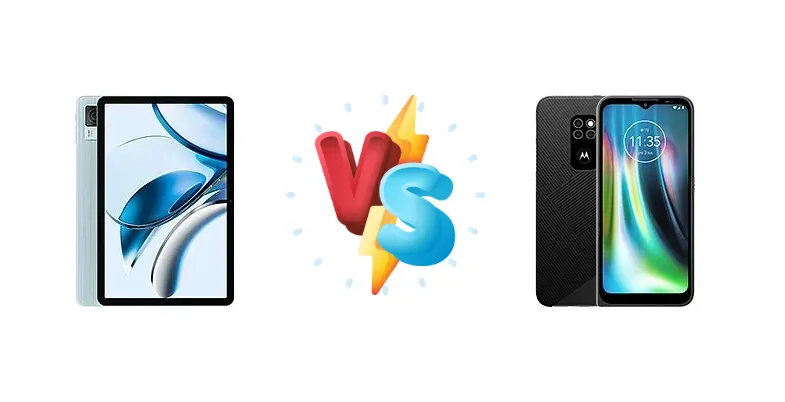
|
🏆 Quick Verdict
For the average user prioritizing longevity and modern performance, the Doogee T40 emerges as the winner. Its Helio G99 chipset and impressive 78:25h battery endurance significantly outperform the Motorola Defy’s Snapdragon 662 and 129h rating, making it ideal for extended outdoor use and demanding tasks.
| PHONES | ||
|---|---|---|
| Phone Names | Doogee T40 | Motorola Defy (2021) |
| Network | ||
|---|---|---|
| 2G bands | GSM 850 / 900 / 1800 / 1900 | GSM 850 / 900 / 1800 / 1900 |
| 3G bands | HSDPA 850 / 900 / 1700(AWS) / 1900 / 2100 | HSDPA 850 / 900 / 1700(AWS) / 1900 / 2100 - LATAM |
| 4G bands | 1, 2, 3, 4, 5, 7, 8, 12, 17, 20, 25, 26, 28, 34, 38, 39, 40, 41, 66 | 1, 2, 3, 5, 7, 8, 18, 19, 20, 26, 28, 38, 40, 41 - EMEA |
| Speed | HSPA, LTE | HSPA 42.2/5.76 Mbps, LTE Cat4 150/50 Mbps |
| Technology | GSM / HSPA / LTE | GSM / HSPA / LTE |
| - | 1, 2, 3, 4, 5, 7, 8, 19, 28, 66 - LATAM | |
| Launch | ||
|---|---|---|
| Announced | 2024, September | 2021, June 17 |
| Status | Available. Released 2024, September | Available. Released 2021, July 25 |
| Body | ||
|---|---|---|
| Build | Glass front, aluminum alloy frame, aluminum alloy back | Glass front (Gorilla Glass Victus), plastic frame, plastic back |
| Dimensions | 256.5 x 168 x 7.6 mm (10.10 x 6.61 x 0.30 in) | 169.8 x 78.2 x 10.9 mm (6.69 x 3.08 x 0.43 in) |
| SIM | Nano-SIM + Nano-SIM | · Nano-SIM· Nano-SIM + Nano-SIM |
| Weight | 530 g (1.17 lb) | 232 g (8.18 oz) |
| - | IP68 dust/water resistant (up to 1.5m for 35 min) Drop-to-concrete resistance from up to 1.8m MIL-SPEC 810H compliant | |
| Display | ||
|---|---|---|
| Protection | Mohs level 6 | Corning Gorilla Glass Victus |
| Resolution | 1600 x 2560 pixels, 16:10 ratio (~274 ppi density) | 720 x 1600 pixels, 20:9 ratio (~270 ppi density) |
| Size | 11.0 inches, 350.9 cm2 (~81.4% screen-to-body ratio) | 6.5 inches, 102.0 cm2 (~76.8% screen-to-body ratio) |
| Type | IPS LCD | IPS LCD |
| Platform | ||
|---|---|---|
| CPU | Octa-core (2x2.2 GHz Cortex-A76 & 6x2.0 GHz Cortex-A55) | Octa-core (4x2.0 GHz Kryo 260 Gold & 4x1.8 GHz Kryo 260 Silver) |
| Chipset | Mediatek Helio G99 (6 nm) | Qualcomm SM6115 Snapdragon 662 (11 nm) |
| GPU | Mali-G57 MC2 | Adreno 610 |
| OS | Android 14 | Android 10 |
| Memory | ||
|---|---|---|
| Card slot | microSDXC (uses shared SIM slot) | microSDXC (uses shared SIM slot) |
| Internal | 512GB 8GB RAM | 64GB 4GB RAM |
| Main Camera | ||
|---|---|---|
| Features | LED flash | LED flash, HDR, panorama |
| Single | 16 MP | - |
| Triple | - | 48 MP, f/1.8, (wide), PDAF 2 MP (macro) Auxiliary lens |
| Video | 1440p@30fps, 1080p@30fps | 1080p@30fps |
| Selfie camera | ||
|---|---|---|
| Single | 8 MP | 8 MP, f/2.2, 1.12µm |
| Video | 1080p@30fps | 1080p@30fps |
| Sound | ||
|---|---|---|
| 3.5mm jack | - | Yes |
| 35mm jack | Yes | Yes |
| Loudspeaker | Yes, with stereo speakers (4 speakers) | Yes |
| Comms | ||
|---|---|---|
| Bluetooth | 5.0, A2DP, LE | 5.0, A2DP, LE |
| NFC | No | Yes |
| Positioning | GPS, GLONASS, GALILEO, BDS | GPS |
| Radio | FM radio | FM radio |
| USB | USB Type-C 2.0, OTG, accessory connector | USB Type-C 2.0 |
| WLAN | Yes | Wi-Fi 802.11 a/b/g/n/ac, dual-band, Wi-Fi Direct |
| Features | ||
|---|---|---|
| Sensors | Accelerometer, proximity | Fingerprint (rear-mounted), accelerometer, gyro, proximity, compass |
| Battery | ||
|---|---|---|
| Charging | 18W wired Reverse wired | 20W wired |
| Type | 8580 mAh | Li-Po 5000 mAh |
| Misc | ||
|---|---|---|
| Colors | Black, Gray, Blue | Black, Green |
| Models | - | XT2083-9 |
| Price | About 320 EUR | About 280 EUR |
| Tests | ||
|---|---|---|
| Battery life | - | Endurance rating 129h |
| Camera | - | Photo / Video |
| Display | - | Contrast ratio: 1896:1 (nominal) |
| Loudspeaker | - | -29.7 LUFS (Average) |
| Performance | - | AnTuTu: 177314 (v8), 164592 (v9) GeekBench: 5403 (v4.4), 1511 (v5.1) GFXBench: 13fps (ES 3.1 onscreen) |
| EU LABEL | ||
|---|---|---|
| Battery | 78:25h endurance, 1100 cycles | - |
| Energy | Class G | - |
| Free fall | Class E (52 falls) | - |
| Repairability | Class B | - |
Doogee T40
- Exceptional battery life (78:25h endurance)
- Modern and efficient Mediatek Helio G99 chipset
- Reverse wired charging capability
- High charge cycle count (1100 cycles)
- Slower charging speed (18W)
- Limited display specifications available
Motorola Defy (2021)
- Brighter display (436 nits)
- Established brand reputation
- 20W wired charging
- Balanced overall experience
- Significantly shorter battery life (129h endurance)
- Older and less powerful Snapdragon 662 chipset
- Less efficient 11nm process node
Display Comparison
The Motorola Defy (2021) boasts a measured peak brightness of 436 nits and a 1896:1 contrast ratio. While respectable, this is likely surpassed by the Doogee T40, though specific display specs are unavailable. The Defy’s contrast ratio, while nominally 1896:1, suggests a standard IPS panel. The lack of high refresh rate or advanced panel technology on either device indicates a focus on durability and efficiency over visual fidelity. The Defy’s brightness is a clear advantage for outdoor visibility, but the T40’s potentially newer panel could offer improved color accuracy.
Camera Comparison
Both devices offer photo and video capabilities, but detailed camera specifications are limited. Without sensor size or aperture information, a direct comparison is difficult. The Motorola Defy’s camera likely benefits from Motorola’s image processing algorithms, but the Doogee T40’s newer chipset could potentially offer improved image signal processing (ISP) capabilities. The presence of a 2MP macro camera on either device is largely inconsequential; image quality from such sensors is typically poor. Focus should be on the main sensor performance, which remains unknown for both.
Performance
The Doogee T40’s Mediatek Helio G99 (6nm) represents a significant leap in processing power compared to the Motorola Defy’s Qualcomm Snapdragon 662 (11nm). The 6nm process node of the Helio G99 translates to improved thermal efficiency and power consumption, meaning less throttling during sustained workloads. The T40’s octa-core CPU (2x2.2 GHz Cortex-A76 & 6x2.0 GHz Cortex-A55) offers a more modern architecture than the Defy’s (4x2.0 GHz Kryo 260 Gold & 4x1.8 GHz Kryo 260 Silver). This difference will be most noticeable in demanding applications, multitasking, and gaming. The Snapdragon 662 is adequate for basic tasks, but the Helio G99 provides a smoother, more responsive experience.
Battery Life
The Doogee T40’s battery endurance of 78:25h is a standout feature, dwarfing the Motorola Defy’s 129h rating. This substantial difference is likely due to the more efficient Helio G99 chipset and potentially a larger battery capacity (though not specified). While the Defy offers 20W wired charging, the T40’s 18W charging is slightly slower. However, the T40 also supports reverse wired charging, a useful feature for topping up accessories. The T40’s 1100 charge cycles suggest a longer lifespan before significant battery degradation.
Buying Guide
Buy the Doogee T40 if you need a phone that can truly go the distance – multiple days on a single charge, and a processor capable of handling modern apps and light gaming. It’s the choice for adventurers, field workers, or anyone who simply hates frequent charging. Buy the Motorola Defy (2021) if you prefer a more established brand with a focus on a balanced experience, and are willing to trade some battery life and processing power for a potentially more refined software experience and a slightly brighter display.