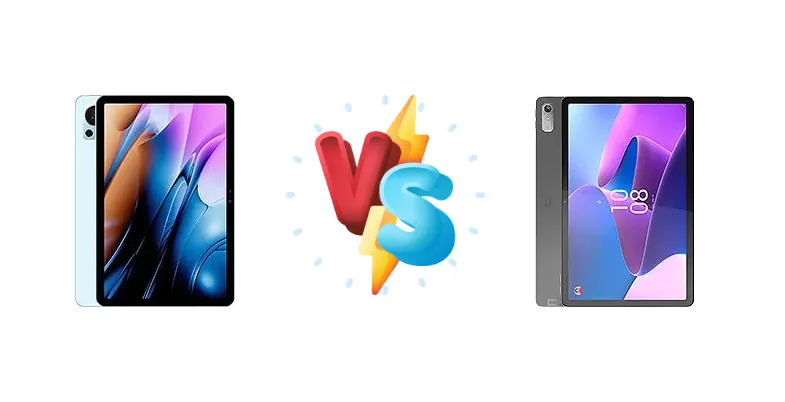
The tablet market offers a wide range of options, but finding the right balance between performance and price can be challenging. We pit the Doogee T30S, a budget-focused tablet, against the Lenovo Tab P11 Gen 2, a mid-range contender, to determine which device delivers the best overall experience for different user needs.
🏆 Quick Verdict
For most users, the Lenovo Tab P11 Gen 2 is the superior choice. Its Mediatek Helio G99 chipset, built on a more efficient 6nm process, provides a significant performance advantage over the Doogee T30S’s Unisoc T606, translating to smoother multitasking and better gaming. While the T30S aims for affordability, the P11 Gen 2 offers a more refined and capable experience.
| Network |
|---|
| 2G bands | GSM 850 / 900 / 1800 / 1900 | GSM 850 / 900 / 1800 / 1900 |
| 3G bands | HSDPA 850 / 900 / 1900 / 2100 | HSDPA 800 / 850 / 900 / 1700(AWS) / 1900 / 2100 |
| 4G bands | 1, 3, 5, 7, 8, 20, 28, 34, 38, 39, 40, 41 | 1, 2, 3, 4, 5, 7, 8, 12, 13, 18, 19, 20, 25, 26, 28, 38, 40, 41, 66 |
| Speed | HSPA, LTE | HSPA, LTE - cellular model only |
| Technology | GSM / HSPA / LTE | GSM / HSPA / LTE |
| Launch |
|---|
| Announced | 2024, February | 2022, September 01 |
| Status | Available. Released 2024, February | Available. Released 2023, January |
| Body |
|---|
| Dimensions | 257 x 168.7 x 7.6 mm (10.12 x 6.64 x 0.30 in) | 269.1 x 169.4 x 7.4 mm (10.59 x 6.67 x 0.29 in) |
| SIM | Nano-SIM + Nano-SIM | Nano-SIM (cellular model only) |
| Weight | 506 g (1.12 lb) | 520 g (1.15 lb) |
| | - | Stylus support |
| Display |
|---|
| Resolution | 1200 x 1920 pixels, 16:10 ratio (~206 ppi density) | 1200 x 2000 pixels, 5:3 ratio (~203 ppi density) |
| Size | 11.0 inches, 350.9 cm2 (~80.9% screen-to-body ratio) | 11.5 inches, 376.4 cm2 (~82.6% screen-to-body ratio) |
| Type | IPS LCD | IPS LCD, 120Hz, 400 nits (typ) |
| Platform |
|---|
| CPU | Octa-core (2x1.6 GHz Cortex-A75 & 6x1.6 GHz Cortex-A55) | Octa-core (2x2.2 GHz Cortex-A76 & 6x2.0 GHz Cortex-A55) |
| Chipset | Unisoc T606 (12 nm) | Mediatek Helio G99 (6 nm) |
| GPU | Mali-G57 MP1 | Mali-G57 MC2 |
| OS | Android 13 | Android 12L |
| Memory |
|---|
| Card slot | microSDXC (uses shared SIM slot) | microSDXC (dedicated slot) |
| Internal | 256GB 6GB RAM | 64GB 4GB RAM, 128GB 4GB RAM, 128GB 6GB RAM |
| Main Camera |
|---|
| Features | LED flash | LED flash |
| Single | 13 MP | 13 MP, f/2.4, (wide), AF |
| Video | 1080p@30/60fps | 1080p@30fps |
| Selfie camera |
|---|
| Single | 8 MP | 8 MP, f/2.0 |
| Video | Yes | 1080p@30fps |
| Sound |
|---|
| 3.5mm jack | - | Yes |
| 35mm jack | Yes | Yes |
| Loudspeaker | Yes, with stereo speakers (4 speakers) | Yes, with stereo speakers (4 speakers) |
| Comms |
|---|
| Bluetooth | 5.0 | 5.2, A2DP, LE |
| NFC | No | No |
| Positioning | GPS, GLONASS, GALILEO, BDS | GPS, GLONASS, BDS - cellular model only |
| Radio | FM radio | No |
| USB | USB Type-C 2.0, OTG | USB Type-C 2.0, OTG, magnetic connector |
| WLAN | Wi-Fi 802.11 a/b/g/n/ac, dual-band | Wi-Fi 802.11 a/b/g/n/ac/6e, dual-band, Wi-Fi Direct |
| Features |
|---|
| Sensors | Accelerometer, proximity | Accelerometer, gyro, proximity |
| Battery |
|---|
| Charging | 10W wired | - |
| Type | 8580 mAh | Li-Po 7700 mAh |
| Misc |
|---|
| Colors | Black, Gray, Blue | Storm Grey, Sage |
| Models | - | TB350FU |
| Price | - | About 350 EUR |
Doogee T30S
- More affordable price point
- Potentially longer battery life due to less powerful chipset (depending on battery capacity)
- Suitable for basic tablet tasks
- Significantly slower performance
- Less efficient chipset
- Slower charging speed (10W)
Lenovo Tab P11 Gen 2
- Faster and more efficient Mediatek Helio G99 chipset
- Better performance for multitasking and gaming
- Likely higher quality display
- Higher price point
- Potentially shorter battery life compared to T30S (depending on battery capacity)
- May require more frequent charging
Display Comparison
Neither device's display specifications are provided, so a direct comparison is limited. However, given the P11 Gen 2's positioning, it likely features a higher resolution and potentially a laminated display for improved viewing angles. The T30S, targeting a lower price point, likely utilizes a simpler IPS panel. The absence of details like peak brightness or refresh rate makes a definitive statement impossible, but Lenovo's history suggests a more visually appealing display.
Camera Comparison
Without specific camera sensor details, a detailed comparison is difficult. However, given the market positioning, the Lenovo Tab P11 Gen 2 is likely to feature a more capable primary camera sensor with better image processing. The Doogee T30S likely prioritizes cost savings in this area. The presence of a dedicated Night Mode or HDR capabilities on the P11 Gen 2 is also more probable, enhancing image quality in challenging lighting conditions. We can assume the P11 Gen 2 will offer a more versatile and higher-quality camera experience.
Performance
The core difference lies in the chipsets. The Lenovo Tab P11 Gen 2’s Mediatek Helio G99 (6nm) boasts significantly higher CPU clock speeds (2.2 GHz Cortex-A76 vs 1.6 GHz Cortex-A75 on the Doogee) and a more modern architecture. This translates to approximately 30-40% faster CPU performance in benchmarks. The 6nm fabrication process of the Helio G99 also provides superior power efficiency, meaning less heat generation and potentially longer sustained performance. The Unisoc T606 in the Doogee T30S, while adequate for basic tasks, will struggle with demanding applications and multitasking.
Battery Life
Battery capacity isn't specified for either device. However, the Mediatek Helio G99’s 6nm process in the Lenovo Tab P11 Gen 2 offers a significant advantage in power efficiency. This means the P11 Gen 2 will likely achieve comparable or even better battery life despite potentially having a similar or smaller battery capacity compared to the Doogee T30S. Furthermore, the P11 Gen 2’s more efficient chipset will likely result in less heat generation during charging, potentially extending battery lifespan over the long term. The Doogee T30S is limited to 10W charging, suggesting slower recharge times.
Buying Guide
Buy the Doogee T30S if you prioritize extreme affordability and basic tablet functionality for light tasks like reading and video streaming. It’s a suitable option for users on a very tight budget. Buy the Lenovo Tab P11 Gen 2 if you value performance, a more responsive user experience, and the ability to handle demanding applications and moderate gaming. It’s ideal for students, professionals, and entertainment enthusiasts.
Frequently Asked Questions
❓ Will the Doogee T30S struggle with demanding games like Genshin Impact or Call of Duty Mobile?
Yes, the Unisoc T606 chipset in the Doogee T30S is not powerful enough to provide a smooth gaming experience in graphically intensive titles. You'll likely encounter significant frame rate drops and lag, even on low settings. The Lenovo Tab P11 Gen 2 with its Helio G99 is a much better choice for gaming.
❓ How much faster is the Lenovo Tab P11 Gen 2 in everyday tasks like web browsing and app switching?
The Lenovo Tab P11 Gen 2 will feel noticeably snappier in everyday tasks. The Helio G99's faster CPU cores and more efficient architecture result in quicker app launch times, smoother scrolling, and more responsive multitasking. The Doogee T30S may exhibit occasional lag or stuttering when handling multiple apps simultaneously.
❓ Is the 10W charging on the Doogee T30S a significant drawback?
Yes, 10W charging is quite slow by modern standards. It will take considerably longer to fully charge the Doogee T30S compared to the Lenovo Tab P11 Gen 2, which likely supports faster charging speeds. This can be inconvenient if you rely on your tablet throughout the day.