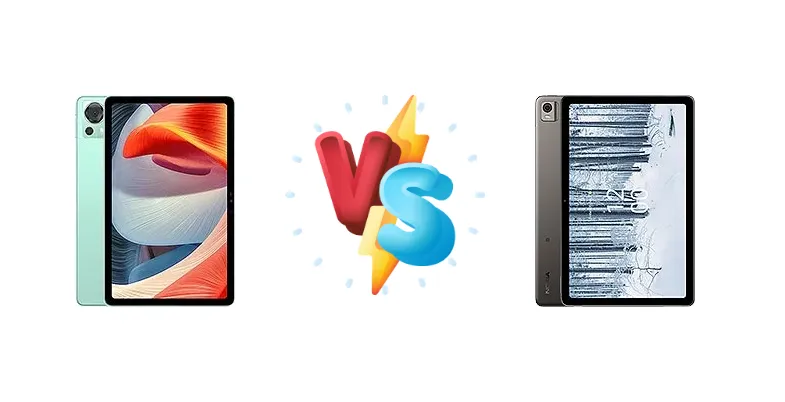
The Doogee T20 and Nokia T21 represent compelling options in the increasingly competitive budget tablet space. Both leverage Unisoc Tiger chipsets, but subtle differences in CPU clock speeds and charging capabilities could sway your decision. This comparison dissects these nuances to determine which tablet delivers the best value for your money.
🏆 Quick Verdict
For users prioritizing raw processing power, the Doogee T20 edges out the Nokia T21 thanks to its slightly faster Cortex-A75 cores. However, the Nokia T21’s inclusion of PD3.0 charging offers broader compatibility and potentially faster real-world charging speeds, making it a strong contender for those valuing convenience.
| Network |
|---|
| 2G bands | GSM 850 / 900 / 1800 / 1900 | GSM 850 / 900 / 1800 / 1900 |
| 3G bands | HSDPA 850 / 900 / 1900 / 2100 | HSDPA 850 / 900 / 1700(AWS) / 1900 / 2100 - US, LATAM |
| 4G bands | 1, 3, 5, 7, 8, 20, 34, 38, 39, 40, 41 | 1, 2, 3, 4, 5, 7, 8, 12, 13, 17, 20, 28, 40, 66 - US, LATAM |
| Speed | HSPA, LTE | HSPA, LTE - cellular model only |
| Technology | GSM / HSPA / LTE | GSM / HSPA / LTE |
| | - | 1, 3, 5, 7, 8, 20, 28, 38, 40, 41 - International |
| Launch |
|---|
| Announced | 2022, December 22 | 2022, September 01 |
| Status | Available. Released 2022, December 22 | Available. Released 2022, September 01 |
| Body |
|---|
| Build | - | Glass front, aluminum back |
| Dimensions | 245.8 x 155.6 x 7.9 mm (9.68 x 6.13 x 0.31 in) | 247.5 x 157.3 x 7.5 mm (9.74 x 6.19 x 0.30 in) |
| SIM | Nano-SIM + Nano-SIM | Nano-SIM (cellular model only) |
| Weight | 478 g (1.05 lb) | 466 g (1.03 lb) |
| | - | Splash resistant
Stylus support |
| Display |
|---|
| Protection | - | Scratch-resistant glass |
| Resolution | 1200 x 2000 pixels, 5:3 ratio (~224 ppi density) | 1200 x 2000 pixels, 5:3 ratio (~224 ppi density) |
| Size | 10.4 inches, 307.9 cm2 (~80.5% screen-to-body ratio) | 10.4 inches, 307.9 cm2 (~79.1% screen-to-body ratio) |
| Type | IPS LCD, 320 nits (peak) | IPS LCD, 360 nits (typ) |
| Platform |
|---|
| CPU | Octa-core (2x2.0 GHz Cortex-A75 & 6x1.8 GHz Cortex-A55) | Octa-core (2x1.8 GHz Cortex-A75 & 6x1.8 GHz Cortex-A55) |
| Chipset | Unisoc Tiger T616 (12 nm) | Unisoc Tiger T612 (12 nm) |
| GPU | Mali-G57 MP1 | Mali-G57 |
| OS | Android 12 | Android 12, upgradable to Android 13 |
| Memory |
|---|
| Card slot | microSDXC (uses shared SIM slot) | microSDXC (dedicated slot) |
| Internal | 256GB 8GB RAM | 64GB 4GB RAM, 128GB 4GB RAM |
| | - | eMMC 5.1 |
| Main Camera |
|---|
| Features | LED flash, HDR, panorama | LED flash |
| Single | 16 MP, 1/3.0", 1.0µm | 8 MP, AF |
| Video | 1440p@30fps, 1080p@30fps | 1080p@30fps |
| Selfie camera |
|---|
| Single | 8 MP | 8 MP |
| Video | 1080p@30fps | Yes |
| Sound |
|---|
| 3.5mm jack | - | Yes |
| 35mm jack | No | Yes |
| Loudspeaker | Yes, with stereo speakers (4 speakers) | Yes, with stereo speakers |
| Comms |
|---|
| Bluetooth | 5.0, A2DP, LE | 5.0, A2DP, LE |
| NFC | No | Yes (Wi-Fi/LTE model only / TA-1521) |
| Positioning | GPS, GLONASS, GALILEO, BDS | GPS - cellular model only |
| Radio | FM radio | FM radio |
| USB | USB Type-C 2.0, OTG, accessory connector | USB Type-C 2.0, OTG |
| WLAN | Wi-Fi 802.11 a/b/g/n/ac, dual-band | Wi-Fi 802.11 a/b/g/n/ac, dual-band |
| Features |
|---|
| Sensors | Accelerometer, proximity (accessories only) | Accelerometer, proximity |
| Battery |
|---|
| Charging | 18W wired, 50% in 60 min | 18W wired, PD3.0 |
| Type | 8300 mAh | Li-Po 8200 mAh |
| Misc |
|---|
| Colors | Gray, Blue, Green, Pink, Purple | Charcoal Grey |
| Models | - | TA-1495, TA-1521, TA-1505, TA-1487 |
| Price | About 200 EUR | About 240 EUR |
| SAR | - | 1.19 W/kg (body) |
| SAR EU | - | 1.56 W/kg (body) |
Doogee T20
- Slightly faster CPU performance due to higher clocked Cortex-A75 cores.
- Potentially better multitasking capabilities.
- Competitive price point within the budget tablet market.
- Lacks PD3.0 charging, limiting charger compatibility.
- Limited information available regarding display quality.
Nokia T21
- PD3.0 charging for faster and more versatile charging.
- Nokia’s reputation for software updates and support.
- Wider charger compatibility.
- Slightly slower CPU performance compared to the Doogee T20.
- Limited information available regarding display quality.
Display Comparison
Neither Doogee nor Nokia provide display specifications beyond the tablet size. Assuming both utilize IPS LCD panels common in this price bracket, the visual experience will likely be similar. The absence of details like peak brightness (nits) or color gamut coverage makes a direct comparison impossible. Users should expect standard viewing angles and color reproduction for everyday tasks.
Camera Comparison
Given the budget nature of both tablets, camera performance is unlikely to be a deciding factor. Details regarding sensor size and image processing are unavailable. It’s safe to assume both tablets feature basic camera setups suitable for casual snapshots and video calls, but not for serious photography. Focusing on megapixel counts alone would be misleading without knowing sensor size and lens quality.
Performance
The core difference lies in the chipsets: the Doogee T20 features the Unisoc Tiger T616 with 2x2.0 GHz Cortex-A75 cores and 6x1.8 GHz Cortex-A55 cores, while the Nokia T21 uses the T612 with 2x1.8 GHz Cortex-A75 cores and 6x1.8 GHz Cortex-A55 cores. The 200 MHz clock speed advantage of the T20’s A75 cores translates to a measurable, though not dramatic, performance boost in CPU-intensive tasks. Both utilize a 12nm process, suggesting similar thermal characteristics. The impact will be most noticeable in app loading times and smoother multitasking, benefiting users who frequently switch between applications.
Battery Life
Both tablets offer 18W wired charging. However, the Nokia T21 supports PD3.0 (Power Delivery 3.0), a significant advantage. PD3.0 allows for negotiation between the charger and the tablet to deliver optimal voltage and current, potentially resulting in faster charging times and compatibility with a wider range of USB-C chargers, including those for laptops and smartphones. While both claim a 50% charge in 60 minutes, the Nokia T21 is more likely to achieve this consistently with compatible chargers.
Buying Guide
Buy the Doogee T20 if you frequently engage in multitasking, light gaming, or need a tablet for productivity tasks where CPU performance is key. Buy the Nokia T21 if you prioritize charging flexibility and compatibility with a wider range of power adapters, or if you value the Nokia brand’s reputation for software support and updates within the budget segment.
Frequently Asked Questions
❓ Will the Nokia T21 charge faster with my existing USB-C laptop charger?
The Nokia T21’s PD3.0 support significantly increases the likelihood of faster charging with a compatible USB-C laptop charger. PD3.0 allows the tablet and charger to negotiate the optimal power delivery, potentially exceeding the charging speed of a standard 18W charger.
❓ Is the performance difference between the Unisoc T616 and T612 noticeable in everyday use?
The performance difference is subtle but present. The Doogee T20’s T616, with its faster Cortex-A75 cores, will offer a smoother experience when multitasking or running demanding apps. However, for basic tasks like web browsing and video playback, the difference will be minimal.
❓ Do either of these tablets support stylus input?
Neither Doogee nor Nokia explicitly advertise stylus support for these models. Given their budget positioning, stylus compatibility is unlikely without third-party solutions.