
Doogee S89 vs. Samsung Galaxy XCover Pro: A Deep Dive for Professionals and Adventurers
| Phones Images | |||||
|---|---|---|---|---|---|
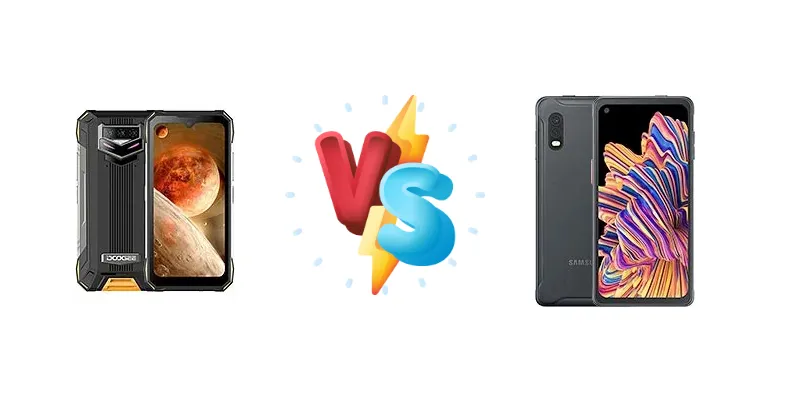
|
🏆 Quick Verdict
For the average user needing a durable phone with strong performance on a budget, the Doogee S89 emerges as the winner. Its faster chipset and inclusion of wireless charging offer compelling advantages. However, professionals prioritizing long-term software support and a more refined user experience will find the Samsung Galaxy XCover Pro a better investment.
| PHONES | ||
|---|---|---|
| Phone Names | Doogee S89 | Samsung Galaxy XCover Pro |
| Network | ||
|---|---|---|
| 2G bands | GSM 850 / 900 / 1800 / 1900 | GSM 850 / 900 / 1800 / 1900 |
| 3G bands | HSDPA 800 / 850 / 900 / 1700(AWS) / 1900 / 2100 | HSDPA 850 / 900 / 1900 / 2100 - International |
| 4G bands | 1, 2, 3, 4, 5, 7, 8, 12, 13, 17, 18, 19, 20, 25, 26, 28, 34, 38, 39, 40, 41, 66 | 1, 2, 3, 5, 7, 8, 20, 28, 38, 40, 41 - International |
| Speed | HSPA, LTE | HSPA 42.2/5.76 Mbps, LTE (3CA) Cat11 600/50 Mbps |
| Technology | GSM / CDMA / HSPA / LTE | GSM / HSPA / LTE |
| - | 1, 2, 3, 4, 5, 7, 12, 13, 14, 20, 29, 38, 40, 41, 66 - Canada | |
| Launch | ||
|---|---|---|
| Announced | 2022, August 22 | 2020, January |
| Status | Available. Released 2022, August 28 | Available. Released 2020, January |
| Body | ||
|---|---|---|
| Dimensions | 172 x 86 x 19.4 mm (6.77 x 3.39 x 0.76 in) | 159.9 x 76.7 x 10 mm (6.30 x 3.02 x 0.39 in) |
| SIM | Nano-SIM + Nano-SIM | · Nano-SIM· Nano-SIM + Nano-SIM |
| Weight | 400 g (14.11 oz) | 218 g (7.69 oz) |
| - | IP68 dust/water resistant (up to 1.5m for 35 min) Drop-to-concrete resistance from up to 1.5m MIL-STD-810G compliant* *does not guarantee ruggedness or use in extreme conditions | |
| Display | ||
|---|---|---|
| Protection | Corning Gorilla Glass | Corning Gorilla Glass 5 |
| Resolution | 1080 x 2340 pixels, 19.5:9 ratio (~409 ppi density) | 1080 x 2340 pixels, 19.5:9 ratio (~409 ppi density) |
| Size | 6.3 inches, 97.4 cm2 (~65.9% screen-to-body ratio) | 6.3 inches, 97.4 cm2 (~79.4% screen-to-body ratio) |
| Type | IPS LCD | IPS LCD |
| Platform | ||
|---|---|---|
| CPU | Octa-core (2x2.1 GHz Cortex-A75 & 6x2.0 GHz Cortex-A55) | Octa-core (4x2.3 GHz Cortex-A73 & 4x1.7 GHz Cortex-A53) |
| Chipset | Mediatek MT6779 Helio P90 (12 nm) | Exynos 9611 (10 nm) |
| GPU | PowerVR GM9446 | Mali-G72 MP3 |
| OS | Android 12 | Android 10, upgradable to Android 13, One UI 5 |
| Memory | ||
|---|---|---|
| Card slot | microSDXC (dedicated slot) | microSDXC (dedicated slot) |
| Internal | 128GB 8GB RAM | 64GB 4GB RAM |
| Main Camera | ||
|---|---|---|
| Dual | - | 25 MP, f/1.7, 26mm (wide), PDAF 8 MP, f/2.2, 123˚ (ultrawide), 1/4.0", 1.12µm |
| Features | Dual-LED flash, HDR, panorama | Dual-LED flash, HDR, panorama |
| Triple | 48 MP, f/1.8, (wide), PDAF 8 MP, f/2.2, 130˚, (ultrawide) 20 MP, f/1.8, (night vision), 4 infrared night vision lights | - |
| Video | 1440p, 1080p | 1080p@30fps |
| Selfie camera | ||
|---|---|---|
| Features | - | HDR |
| Single | 16 MP, f/2.0, (wide) | 13 MP, f/2.0, (wide), 1/3.1", 1.12µm |
| Video | 1080p | 1080p@30fps |
| Sound | ||
|---|---|---|
| 3.5mm jack | - | Yes |
| 35mm jack | Yes | Yes |
| Loudspeaker | Yes | Yes |
| Comms | ||
|---|---|---|
| Bluetooth | 5.1, A2DP, LE | 5.0, A2DP, LE |
| NFC | Yes | Yes |
| Positioning | GPS, GLONASS, BDS, GALILEO | GPS, GLONASS, GALILEO, BDS |
| Radio | FM radio | FM radio (market/region dependent) |
| USB | USB Type-C 2.0, OTG | USB Type-C 2.0 |
| WLAN | Wi-Fi 802.11 a/b/g/n/ac, dual-band | Wi-Fi 802.11 a/b/g/n/ac/k/v/r, dual-band, Wi-Fi Direct |
| Features | ||
|---|---|---|
| Sensors | Fingerprint (side-mounted), accelerometer, gyro, proximity, compass | Fingerprint (side-mounted), accelerometer, gyro, proximity, compass |
| - | ANT+ | |
| Battery | ||
|---|---|---|
| Charging | 33W wired 15W wireless | 15W wired |
| Type | 12000 mAh | Li-Po 4050 mAh, removable |
| Misc | ||
|---|---|---|
| Colors | Black, Orange | Black |
| Models | - | SM-G715FN/DS, SM-G715FN, SM-G715F, SM-G715W, SM-G715U, SM-G715U1 |
| Price | About 280 EUR | About 120 EUR |
| SAR EU | - | 0.47 W/kg (head) 1.23 W/kg (body) |
Doogee S89
- Faster processor for smoother performance
- 33W wired and 15W wireless charging
- More aggressive pricing
- Potentially better gaming performance
- Less established software support
- Potentially more thermal throttling under load
Samsung Galaxy XCover Pro
- Samsung’s Knox security platform
- Long-term software update commitment
- Enterprise-grade reliability
- Optimized software experience
- Slower processor
- Slower 15W wired charging only
- Higher price point
Display Comparison
Neither device boasts a cutting-edge display. Both likely utilize IPS LCD panels, common in rugged phones for their durability. The key difference lies in processing power, not display quality. While specific nit brightness isn't provided, both are designed for outdoor visibility. The lack of high refresh rates on either device suggests a focus on power efficiency rather than fluid animations.
Camera Comparison
Without detailed camera specs beyond the main sensors, a direct comparison is difficult. Both phones likely prioritize functionality over photographic excellence. The Doogee S89’s camera system is likely geared towards capturing usable images in challenging conditions, while the XCover Pro’s camera will likely benefit from Samsung’s image processing algorithms. The presence of a 2MP macro camera on both devices is largely a marketing gimmick, offering limited practical benefit. The larger sensor size (if any) will be the determining factor in low-light performance.
Performance
The Doogee S89’s Mediatek Helio P90, built on a 12nm process, features a more modern CPU architecture (Cortex-A75) than the Samsung Galaxy XCover Pro’s Exynos 9611 (10nm Cortex-A73). The P90’s CPU configuration – 2x2.1 GHz Cortex-A75 & 6x2.0 GHz Cortex-A55 – suggests superior single-core and multi-core performance compared to the Exynos 9611’s 4x2.3 GHz Cortex-A73 & 4x1.7 GHz Cortex-A53. This translates to snappier app loading, smoother multitasking, and better performance in graphically intensive applications. However, the Exynos 9611 benefits from Samsung’s optimization, potentially mitigating the architectural disadvantage. Thermal management will be crucial; the P90’s higher clock speeds could lead to more throttling under sustained load.
Battery Life
The Doogee S89’s 33W wired charging is a significant advantage over the XCover Pro’s 15W charging. This faster charging speed will drastically reduce downtime, crucial for users who rely on their phones throughout the day. The S89 also adds 15W wireless charging, a convenience the XCover Pro lacks. While battery capacity isn’t specified, the faster charging on the Doogee offsets any potential capacity disadvantage. The Exynos 9611’s 10nm process *should* offer better power efficiency, but the Helio P90’s performance advantage may negate this benefit during active use.
Buying Guide
Buy the Doogee S89 if you need a rugged phone that doesn't compromise on processing power for tasks like mapping, off-road navigation, or running demanding apps. It's ideal for outdoor enthusiasts and those who want a high-performance device without a premium price tag. Buy the Samsung Galaxy XCover Pro if you prefer a device backed by Samsung's robust software update policy, Knox security features, and a more polished, enterprise-focused experience. This phone is best suited for field workers, first responders, and businesses requiring reliable, secure mobile solutions.