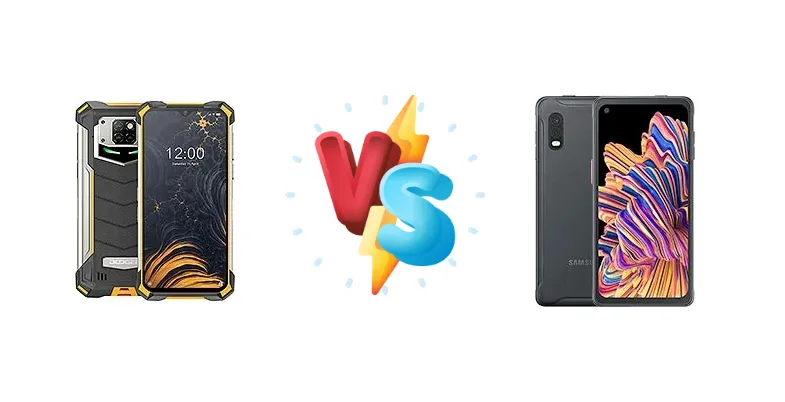
The rugged smartphone market caters to a specific need: durability. Both the Doogee S88 Plus and the Samsung Galaxy XCover Pro aim to deliver that, but they approach it with different chipsets and feature sets. This comparison dives deep into the core differences, helping you determine which device best suits your demanding lifestyle or work environment.
🏆 Quick Verdict
For most users prioritizing a balance of features and brand reliability, the Samsung Galaxy XCover Pro emerges as the better choice. While the Doogee S88 Plus offers compelling wireless charging capabilities, the Exynos 9611 provides a noticeable performance edge and a more refined software experience.
| Network |
|---|
| 2G bands | GSM 850 / 900 / 1800 / 1900 | GSM 850 / 900 / 1800 / 1900 |
| 3G bands | HSDPA 850 / 900 / 1700(AWS) / 1900 / 2100 | HSDPA 850 / 900 / 1900 / 2100 - International |
| 4G bands | 1, 2, 3, 4, 5, 7, 8, 12, 13, 17, 18, 19, 20, 25, 26, 28, 40, 66 | 1, 2, 3, 5, 7, 8, 20, 28, 38, 40, 41 - International |
| Speed | HSPA, LTE | HSPA 42.2/5.76 Mbps, LTE (3CA) Cat11 600/50 Mbps |
| Technology | GSM / HSPA / LTE | GSM / HSPA / LTE |
| | - | 1, 2, 3, 4, 5, 7, 12, 13, 14, 20, 29, 38, 40, 41, 66 - Canada |
| Launch |
|---|
| Announced | 2021, January 26 | 2020, January |
| Status | Available. Released 2021, February | Available. Released 2020, January |
| Body |
|---|
| Dimensions | 171.6 x 85.5 x 18.7 mm (6.76 x 3.37 x 0.74 in) | 159.9 x 76.7 x 10 mm (6.30 x 3.02 x 0.39 in) |
| SIM | Nano-SIM + Nano-SIM | · Nano-SIM· Nano-SIM + Nano-SIM |
| Weight | 372 g (13.12 oz) | 218 g (7.69 oz) |
| | - | IP68 dust/water resistant (up to 1.5m for 35 min)
Drop-to-concrete resistance from up to 1.5m
MIL-STD-810G compliant*
*does not guarantee ruggedness or use in extreme conditions |
| Display |
|---|
| Protection | Corning Gorilla Glass | Corning Gorilla Glass 5 |
| Resolution | 1080 x 2340 pixels, 19.5:9 ratio (~409 ppi density) | 1080 x 2340 pixels, 19.5:9 ratio (~409 ppi density) |
| Size | 6.3 inches, 97.4 cm2 (~66.4% screen-to-body ratio) | 6.3 inches, 97.4 cm2 (~79.4% screen-to-body ratio) |
| Type | IPS LCD | IPS LCD |
| Platform |
|---|
| CPU | Octa-core (4x2.1 GHz Cortex-A73 & 4x2.0 GHz Cortex-A53) | Octa-core (4x2.3 GHz Cortex-A73 & 4x1.7 GHz Cortex-A53) |
| Chipset | Mediatek MT6771 Helio P70 (12 nm) | Exynos 9611 (10 nm) |
| GPU | Mali-G72 MP3 | Mali-G72 MP3 |
| OS | Android 10 | Android 10, upgradable to Android 13, One UI 5 |
| Memory |
|---|
| Card slot | microSDXC (uses shared SIM slot) | microSDXC (dedicated slot) |
| Internal | 128GB 8GB RAM | 64GB 4GB RAM |
| Main Camera |
|---|
| Dual | - | 25 MP, f/1.7, 26mm (wide), PDAF
8 MP, f/2.2, 123˚ (ultrawide), 1/4.0", 1.12µm |
| Features | LED flash, HDR, panorama | Dual-LED flash, HDR, panorama |
| Triple | 48 MP, f/1.8, (wide), PDAF
8 MP, (telephoto)
8 MP, f/2.4, 130˚, (ultrawide) | - |
| Video | 1080p | 1080p@30fps |
| Selfie camera |
|---|
| Features | - | HDR |
| Single | 16 MP, f/2.0, (wide) | 13 MP, f/2.0, (wide), 1/3.1", 1.12µm |
| Video | 1080p | 1080p@30fps |
| Sound |
|---|
| 3.5mm jack | - | Yes |
| 35mm jack | Yes | Yes |
| Loudspeaker | Yes | Yes |
| Comms |
|---|
| Bluetooth | 4.2, A2DP | 5.0, A2DP, LE |
| NFC | Yes | Yes |
| Positioning | GPS, GLONASS, BDS, GALILEO | GPS, GLONASS, GALILEO, BDS |
| Radio | FM radio | FM radio (market/region dependent) |
| USB | USB Type-C 2.0, OTG | USB Type-C 2.0 |
| WLAN | Wi-Fi 802.11 b/g/n | Wi-Fi 802.11 a/b/g/n/ac/k/v/r, dual-band, Wi-Fi Direct |
| Features |
|---|
| Sensors | Fingerprint (side-mounted), accelerometer, gyro, proximity, compass | Fingerprint (side-mounted), accelerometer, gyro, proximity, compass |
| | - | ANT+ |
| Battery |
|---|
| Charging | 24W wired
10W wireless
5W Reverse wireless | 15W wired |
| Type | 10000 mAh | Li-Po 4050 mAh, removable |
| Misc |
|---|
| Colors | Black, Orange, Green | Black |
| Models | - | SM-G715FN/DS, SM-G715FN, SM-G715F, SM-G715W, SM-G715U, SM-G715U1 |
| Price | About 280 EUR | About 120 EUR |
| SAR EU | - | 0.47 W/kg (head) 1.23 W/kg (body) |
Doogee S88 Plus
- Wireless and Reverse Wireless Charging
- Potentially lower price point
- Rugged design with durable construction
- Less powerful processor
- Potentially less refined software experience
- Likely inferior camera image processing
Samsung Galaxy XCover Pro
- More powerful Exynos 9611 processor
- Samsung’s software ecosystem and support
- Potentially better camera image quality
- No wireless charging
- Slower wired charging speed
- Higher price point
Display Comparison
Neither device boasts a cutting-edge display. Both likely utilize IPS LCD panels, common in the rugged segment to prioritize durability over visual fidelity. The lack of detailed display specs necessitates focusing on the overall user experience; Samsung’s typically superior color calibration and brightness control likely provide a slightly more pleasant viewing experience, even if peak brightness is similar. Bezels are expected to be substantial on both to contribute to shock absorption.
Camera Comparison
Without detailed camera specs beyond the presence of sensors, a direct comparison is difficult. However, Samsung’s image processing algorithms are generally more refined, offering better dynamic range and color accuracy. The Doogee S88 Plus may rely on more basic image processing, potentially resulting in less detailed and vibrant photos. The inclusion of a 2MP macro camera on the Doogee is likely a marketing feature with limited real-world utility, as image quality will be significantly lower than the main sensor. Focusing on the main sensor’s quality and Samsung’s software optimization is key.
Performance
The Samsung Galaxy XCover Pro’s Exynos 9611, fabricated on a 10nm process, holds a clear advantage over the Doogee S88 Plus’s Mediatek Helio P70 (12nm). The Exynos features a slightly faster Cortex-A73 cluster (2.3 GHz vs 2.1 GHz) and a more efficient manufacturing process. This translates to better sustained performance under load and potentially improved thermal management. While both CPUs share the same Cortex-A53 efficiency cores, the Exynos’s overall architecture provides a more responsive experience for multitasking and demanding applications. The 12nm process of the Helio P70 will likely result in higher power consumption for similar tasks.
Battery Life
The Doogee S88 Plus distinguishes itself with 24W wired charging, 10W wireless charging, and 5W reverse wireless charging – features absent on the Samsung Galaxy XCover Pro, which is limited to 15W wired charging. While the battery capacity isn’t specified, the wireless charging capabilities of the Doogee are a significant advantage for users who need to top up their phone on the go without a cable. The slower charging speed of the XCover Pro may be a drawback for those who frequently need a quick power boost. The reverse wireless charging on the Doogee allows it to act as a portable power bank for smaller devices like earbuds.
Buying Guide
Buy the Doogee S88 Plus if you absolutely need wireless and reverse wireless charging in a rugged package and are comfortable with a less polished software experience. It’s ideal for users who frequently work in remote locations without easy access to power outlets. Buy the Samsung Galaxy XCover Pro if you prioritize a smoother user experience, a more powerful processor for multitasking and demanding apps, and the backing of Samsung’s software support and ecosystem. This phone is best for field workers and professionals who rely on consistent performance.
Frequently Asked Questions
❓ Does the Exynos 9611 in the Samsung Galaxy XCover Pro tend to overheat during prolonged use, like gaming or video recording?
The Exynos 9611 is known to throttle under sustained load, but its 10nm process and Samsung’s thermal management solutions generally prevent excessive overheating. While it won’t match the performance of flagship chips, it should handle moderate gaming sessions and video recording without shutting down. The Doogee’s Helio P70, being on a larger node, may experience similar throttling, potentially even more aggressively.
❓ How useful is the 2MP macro camera on the Doogee S88 Plus in real-world scenarios?
The 2MP macro camera on the Doogee S88 Plus is primarily a marketing feature. Due to its low resolution and small sensor size, image quality will be significantly lower than the main camera. While it can capture close-up shots, the resulting images will likely lack detail and sharpness, making it less practical for serious photography.
❓ Can the Samsung Galaxy XCover Pro handle demanding work applications like CAD viewers or remote desktop software?
The Exynos 9611 in the Samsung Galaxy XCover Pro is capable of running demanding work applications, but performance will depend on the complexity of the tasks. It can handle basic CAD viewing and remote desktop sessions, but may struggle with large or complex models. The 4GB of RAM (typical for this device) will be a limiting factor for heavy multitasking.
❓ Is the Doogee S88 Plus’s reverse wireless charging fast enough to significantly charge accessories like earbuds or a smartwatch?
The 5W reverse wireless charging on the Doogee S88 Plus is relatively slow. It’s sufficient for topping up small accessories like earbuds or a smartwatch, but don’t expect a rapid charge. It’s more of a convenience feature for emergency situations than a primary charging method.