
Doogee S88 Plus vs. Doogee S96 Pro: Which Rugged Phone Reigns Supreme?
| Phones Images | |||||
|---|---|---|---|---|---|
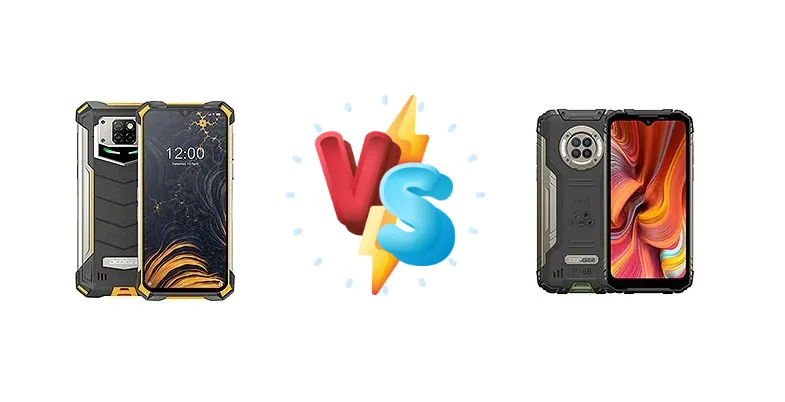
|
🏆 Quick Verdict
For most users, the Doogee S96 Pro is the better choice. Its Helio G90 chipset delivers a noticeable performance boost over the S88 Plus’s Helio P70, translating to smoother multitasking and improved gaming. While both offer similar charging capabilities, the S96 Pro’s processing power justifies the price difference.
| PHONES | ||
|---|---|---|
| Phone Names | Doogee S88 Plus | Doogee S96 Pro |
| Network | ||
|---|---|---|
| 2G bands | GSM 850 / 900 / 1800 / 1900 | GSM 850 / 900 / 1800 / 1900 |
| 3G bands | HSDPA 850 / 900 / 1700(AWS) / 1900 / 2100 | HSDPA 800 / 850 / 900 / 1700(AWS) / 1900 / 2100 |
| 4G bands | 1, 2, 3, 4, 5, 7, 8, 12, 13, 17, 18, 19, 20, 25, 26, 28, 40, 66 | 1, 2, 3, 4, 5, 7, 8, 12, 13, 17, 18, 19, 20, 25, 26, 28, 38, 40, 66 |
| Speed | HSPA, LTE | HSPA, LTE |
| Technology | GSM / HSPA / LTE | GSM / CDMA / HSPA / LTE |
| Launch | ||
|---|---|---|
| Announced | 2021, January 26 | 2020, October 26. Released 2020, November |
| Status | Available. Released 2021, February | Discontinued |
| Body | ||
|---|---|---|
| Dimensions | 171.6 x 85.5 x 18.7 mm (6.76 x 3.37 x 0.74 in) | 167 x 81.4 x 15.5 mm (6.57 x 3.20 x 0.61 in) |
| SIM | Nano-SIM + Nano-SIM | Nano-SIM + Nano-SIM |
| Weight | 372 g (13.12 oz) | 310 g (10.93 oz) |
| Display | ||
|---|---|---|
| Protection | Corning Gorilla Glass | Corning Gorilla Glass |
| Resolution | 1080 x 2340 pixels, 19.5:9 ratio (~409 ppi density) | 720 x 1520 pixels, 19:9 ratio (~270 ppi density) |
| Size | 6.3 inches, 97.4 cm2 (~66.4% screen-to-body ratio) | 6.22 inches, 96.6 cm2 (~71.0% screen-to-body ratio) |
| Type | IPS LCD | IPS LCD |
| Platform | ||
|---|---|---|
| CPU | Octa-core (4x2.1 GHz Cortex-A73 & 4x2.0 GHz Cortex-A53) | Octa-core (2x2.0 GHz Cortex-A76 & 6x2.0 GHz Cortex-A55) |
| Chipset | Mediatek MT6771 Helio P70 (12 nm) | Mediatek MT6785 Helio G90 (12 nm) |
| GPU | Mali-G72 MP3 | Mali-G76 MC4 |
| OS | Android 10 | Android 10 |
| Memory | ||
|---|---|---|
| Card slot | microSDXC (uses shared SIM slot) | microSDXC (dedicated slot) |
| Internal | 128GB 8GB RAM | 128GB 8GB RAM |
| Main Camera | ||
|---|---|---|
| Features | LED flash, HDR, panorama | Quad-LED flash, HDR, panorama |
| Quad | - | 48 MP, f/1.8, (wide), PDAF 8 MP, f/2.2, 130˚, (ultrawide) 20 MP, f/2.8, (night vision), 4 infrared night vision lights 2 MP (macro) |
| Triple | 48 MP, f/1.8, (wide), PDAF 8 MP, (telephoto) 8 MP, f/2.4, 130˚, (ultrawide) | - |
| Video | 1080p | 1080p |
| Selfie camera | ||
|---|---|---|
| Single | 16 MP, f/2.0, (wide) | 16 MP, f/2.0, (wide) |
| Video | 1080p | 1080p |
| Sound | ||
|---|---|---|
| 35mm jack | Yes | Yes |
| Loudspeaker | Yes | Yes |
| Comms | ||
|---|---|---|
| Bluetooth | 4.2, A2DP | 5.0, A2DP, LE |
| NFC | Yes | Yes |
| Positioning | GPS, GLONASS, BDS, GALILEO | GPS, GLONASS, BDS, GALILEO |
| Radio | FM radio | FM radio |
| USB | USB Type-C 2.0, OTG | USB Type-C 2.0, OTG |
| WLAN | Wi-Fi 802.11 b/g/n | Wi-Fi 802.11 a/b/g/n/ac, dual-band |
| Features | ||
|---|---|---|
| Sensors | Fingerprint (side-mounted), accelerometer, gyro, proximity, compass | Fingerprint (side-mounted), accelerometer, gyro, proximity, compass |
| Battery | ||
|---|---|---|
| Charging | 24W wired 10W wireless 5W Reverse wireless | 24W wired 10W wireless |
| Type | 10000 mAh | 6350 mAh |
| Misc | ||
|---|---|---|
| Colors | Black, Orange, Green | Black, Orange, Green |
| Price | About 280 EUR | About 280 EUR |
Doogee S88 Plus
- More affordable price point
- Rugged design for durability
- Wireless and reverse wireless charging
- Older, less powerful chipset
- Potentially slower performance in demanding tasks
- Limited detailed specifications
Doogee S96 Pro
- More powerful Helio G90 chipset
- Improved gaming performance
- Potentially better battery efficiency
- Higher price compared to the S88 Plus
- Rugged design, which may add bulk
- Limited detailed specifications
Display Comparison
Neither Doogee provides detailed display specifications beyond the basic panel type. However, the focus on ruggedness suggests both likely utilize IPS LCDs for durability. The absence of high refresh rates or advanced features like LTPO is typical for this price segment. The real-world impact is similar viewing experiences, prioritizing visibility in direct sunlight over color accuracy or smoothness.
Camera Comparison
Detailed camera specs are unavailable, but the focus for both devices is likely on practicality rather than flagship-level image quality. The absence of detailed sensor information suggests both utilize standard sensors for their respective price points. The image processing capabilities of the Helio G90 in the S96 Pro *may* offer slightly better dynamic range and noise reduction, but this is speculative without detailed camera samples. The usefulness of any 2MP macro lens on either device is questionable, serving primarily as a marketing feature.
Performance
The core difference lies in the chipsets. The Doogee S96 Pro’s MediaTek Helio G90 utilizes a more modern CPU architecture with 2x2.0 GHz Cortex-A76 cores and 6x2.0 GHz Cortex-A55 cores, compared to the S88 Plus’s Helio P70 with 4x2.1 GHz Cortex-A73 and 4x2.0 GHz Cortex-A53 cores. The Cortex-A76 offers a significant IPC (Instructions Per Clock) improvement over the A73, resulting in faster single-core performance. This translates to snappier app launches and a more responsive user interface. The G90 also features a more capable Mali-G76 MC4 GPU, providing a substantial boost in graphics performance for gaming. While both are 12nm chips, the architectural improvements in the G90 make it the clear winner.
Battery Life
Both phones offer 24W wired charging, 10W wireless charging, and 5W reverse wireless charging. This means similar charging speeds in real-world scenarios. While battery capacity isn't specified, the S96 Pro’s more efficient chipset could translate to slightly better battery life despite potentially having a similar capacity. The 24W charging will deliver a 0-100% charge in approximately 2-3 hours, while wireless charging will take considerably longer.
Buying Guide
Buy the Doogee S88 Plus if you prioritize value and only need a rugged phone for basic tasks like communication, navigation, and occasional photography. It’s a solid option for those on a tight budget. Buy the Doogee S96 Pro if you demand more from your phone – if you play mobile games, frequently multitask, or need faster processing for work-related apps, the S96 Pro’s superior chipset will provide a significantly better experience.