
Doogee S61 vs. Samsung Galaxy XCover Pro: A Deep Dive into Rugged Performance
| Phones Images | |||||
|---|---|---|---|---|---|
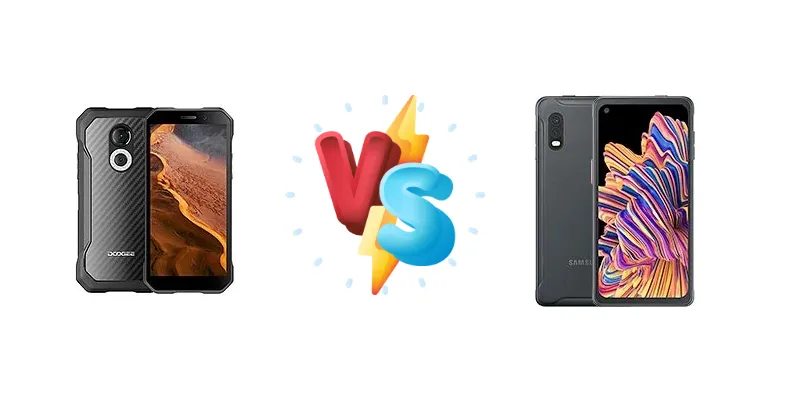
|
🏆 Quick Verdict
For users prioritizing a balance of affordability and acceptable performance, the Doogee S61 presents a compelling option. However, the Samsung Galaxy XCover Pro, with its more powerful Exynos 9611 chipset and faster charging, is the superior choice for those needing sustained performance and quicker power-ups, justifying its higher price point.
| PHONES | ||
|---|---|---|
| Phone Names | Doogee S61 | Samsung Galaxy XCover Pro |
| Network | ||
|---|---|---|
| 2G bands | GSM 850 / 900 / 1800 / 1900 | GSM 850 / 900 / 1800 / 1900 |
| 3G bands | HSDPA 850 / 900 / 1700(AWS) / 1900 / 2100 | HSDPA 850 / 900 / 1900 / 2100 - International |
| 4G bands | 1, 2, 3, 4, 5, 7, 8, 12, 13, 17, 18, 19, 20, 25, 26, 28, 34, 38, 39, 40, 41, 66 | 1, 2, 3, 5, 7, 8, 20, 28, 38, 40, 41 - International |
| Speed | HSPA, LTE | HSPA 42.2/5.76 Mbps, LTE (3CA) Cat11 600/50 Mbps |
| Technology | GSM / CDMA / HSPA / LTE | GSM / HSPA / LTE |
| - | 1, 2, 3, 4, 5, 7, 12, 13, 14, 20, 29, 38, 40, 41, 66 - Canada | |
| Launch | ||
|---|---|---|
| Announced | 2022, June 23 | 2020, January |
| Status | Available. Released 2022, July | Available. Released 2020, January |
| Body | ||
|---|---|---|
| Dimensions | 167.4 x 81.4 x 14.6 mm (6.59 x 3.20 x 0.57 in) | 159.9 x 76.7 x 10 mm (6.30 x 3.02 x 0.39 in) |
| SIM | Nano-SIM + Nano-SIM | · Nano-SIM· Nano-SIM + Nano-SIM |
| Weight | 266 g (9.38 oz) | 218 g (7.69 oz) |
| - | IP68 dust/water resistant (up to 1.5m for 35 min) Drop-to-concrete resistance from up to 1.5m MIL-STD-810G compliant* *does not guarantee ruggedness or use in extreme conditions | |
| Display | ||
|---|---|---|
| Protection | Corning Gorilla Glass | Corning Gorilla Glass 5 |
| Resolution | 720 x 1440 pixels, 18:9 ratio (~268 ppi density) | 1080 x 2340 pixels, 19.5:9 ratio (~409 ppi density) |
| Size | 6.0 inches, 92.9 cm2 (~68.2% screen-to-body ratio) | 6.3 inches, 97.4 cm2 (~79.4% screen-to-body ratio) |
| Type | IPS LCD | IPS LCD |
| Platform | ||
|---|---|---|
| CPU | Octa-core (4x2.3 GHz Cortex-A53 & 4x1.8 GHz Cortex-A53) | Octa-core (4x2.3 GHz Cortex-A73 & 4x1.7 GHz Cortex-A53) |
| Chipset | Mediatek MT6765G Helio G35 (12 nm) | Exynos 9611 (10 nm) |
| GPU | PowerVR GE8320 | Mali-G72 MP3 |
| OS | Android 12 | Android 10, upgradable to Android 13, One UI 5 |
| Memory | ||
|---|---|---|
| Card slot | microSDXC (dedicated slot) | microSDXC (dedicated slot) |
| Internal | 64GB 6GB RAM | 64GB 4GB RAM |
| Main Camera | ||
|---|---|---|
| Dual | 20 MP, f/1.8, (wide), PDAF 20 MP, f/1.8, (night vision), 4 infrared night vision lights | 25 MP, f/1.7, 26mm (wide), PDAF 8 MP, f/2.2, 123˚ (ultrawide), 1/4.0", 1.12µm |
| Features | Quad-LED flash, HDR, panorama | Dual-LED flash, HDR, panorama |
| Video | 1080p | 1080p@30fps |
| Selfie camera | ||
|---|---|---|
| Features | - | HDR |
| Single | 8 MP, f/2.0, (wide) | 13 MP, f/2.0, (wide), 1/3.1", 1.12µm |
| Video | 1080p | 1080p@30fps |
| Sound | ||
|---|---|---|
| 3.5mm jack | - | Yes |
| 35mm jack | Yes | Yes |
| Loudspeaker | Yes | Yes |
| Comms | ||
|---|---|---|
| Bluetooth | 5.0, A2DP, LE | 5.0, A2DP, LE |
| NFC | Yes | Yes |
| Positioning | GPS, GLONASS, GALILEO, BDS | GPS, GLONASS, GALILEO, BDS |
| Radio | FM radio | FM radio (market/region dependent) |
| USB | USB Type-C 2.0, OTG | USB Type-C 2.0 |
| WLAN | Wi-Fi 802.11 a/b/g/n/ac, dual-band | Wi-Fi 802.11 a/b/g/n/ac/k/v/r, dual-band, Wi-Fi Direct |
| Features | ||
|---|---|---|
| Sensors | Fingerprint (side-mounted), accelerometer, gyro, proximity, compass | Fingerprint (side-mounted), accelerometer, gyro, proximity, compass |
| - | ANT+ | |
| Battery | ||
|---|---|---|
| Charging | 10W wired | 15W wired |
| Type | 5180 mAh | Li-Po 4050 mAh, removable |
| Misc | ||
|---|---|---|
| Colors | Transparent, Wood Grain, Carbon Fiber, AG Frost | Black |
| Models | - | SM-G715FN/DS, SM-G715FN, SM-G715F, SM-G715W, SM-G715U, SM-G715U1 |
| Price | About 170 EUR | About 120 EUR |
| SAR EU | - | 0.47 W/kg (head) 1.23 W/kg (body) |
Doogee S61
- More affordable price point
- Rugged design for durability
- Acceptable performance for basic tasks
- Slower processor and less efficient architecture
- Slower 10W charging
- Likely lower quality camera system
Samsung Galaxy XCover Pro
- More powerful Exynos 9611 processor
- Faster 15W charging
- Potentially better camera image processing
- Higher price tag
- Still a relatively basic display
- May not offer significantly better battery life despite faster charging
Display Comparison
Neither device boasts a cutting-edge display. Details are missing, but both likely utilize IPS LCD panels given their market segment. The focus is on practicality and visibility in bright sunlight, rather than color accuracy. The absence of high refresh rates is expected. The real difference will be in peak brightness and outdoor legibility, which requires testing. Bezels are likely substantial on both to contribute to drop protection.
Camera Comparison
Camera performance is likely a secondary consideration for both phones. Details are limited, but the emphasis is on functionality rather than photographic excellence. The Doogee S61’s camera specs are unknown, while the XCover Pro likely features a standard setup for its class. The presence of a 2MP macro camera on either device is largely marketing fluff; image quality will be limited. The larger sensor size (if any) and wider aperture on the main sensor will be the key determinants of image quality, particularly in low-light conditions. Image processing algorithms will also play a role, and Samsung typically offers more refined software in this area.
Performance
The Samsung Galaxy XCover Pro holds a clear advantage in processing power. Its Exynos 9611, built on a 10nm process, features four Cortex-A73 cores clocked at 2.3GHz, significantly outperforming the Doogee S61’s Mediatek Helio G35. The G35 relies on four Cortex-A53 cores at 2.3GHz, which are less efficient and offer lower single-core performance. While both are octa-core, the architectural difference translates to smoother multitasking and faster app loading times on the Samsung. The 10nm process of the Exynos also suggests better thermal efficiency, potentially reducing throttling under sustained load. This benefits users running mapping apps, data collection software, or other processor-intensive tasks.
Battery Life
Battery life will depend heavily on usage patterns. While the exact mAh capacity of both devices is not provided, the charging speeds offer a clear distinction. The Samsung Galaxy XCover Pro’s 15W wired charging is 50% faster than the Doogee S61’s 10W charging. This means significantly less time tethered to a power outlet, a crucial benefit for users in the field. A larger battery capacity on the Doogee S61 could offset the slower charging, but the Exynos 9611’s greater efficiency may allow the XCover Pro to achieve comparable or even better real-world battery life despite a potentially smaller capacity.
Buying Guide
Buy the Doogee S61 if you need a highly affordable, genuinely rugged phone for basic tasks like communication, navigation, and occasional photography, and aren't concerned with demanding applications. Buy the Samsung Galaxy XCover Pro if you prefer a more refined user experience, faster processing speeds for multitasking and productivity apps, and the added convenience of 15W fast charging, even if it comes at a premium.