
Doogee S41 Pro vs Cubot KingKong 7: A Deep Dive into Rugged Performance
| Phones Images | |||||
|---|---|---|---|---|---|
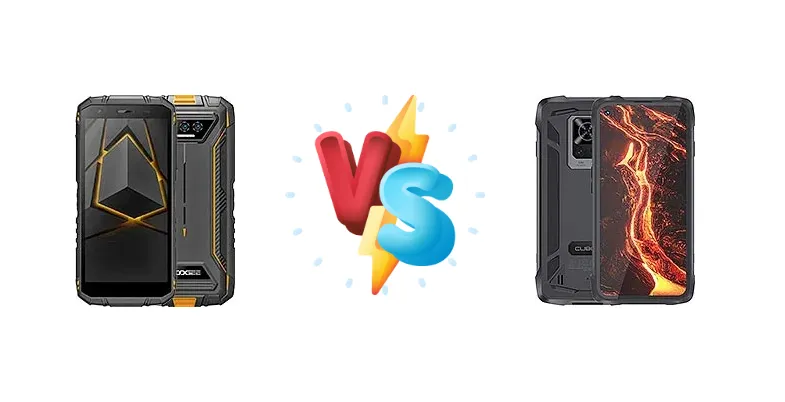
|
🏆 Quick Verdict
For the average user prioritizing responsiveness and multitasking, the Cubot KingKong 7 is the clear winner. Its Helio P60 chipset with octa-core processing provides a substantial performance advantage over the Doogee S41 Pro’s Helio A22. While the S41 Pro offers a functional experience, the KingKong 7 delivers a smoother, more capable user experience.
| PHONES | ||
|---|---|---|
| Phone Names | Doogee S41 Pro | Cubot KingKong 7 |
| Network | ||
|---|---|---|
| 2G bands | GSM 850 / 900 / 1800 / 1900 | GSM 850 / 900 / 1800 / 1900 |
| 3G bands | HSDPA 850 / 900 / 1700(AWS) / 1900 / 2100 | HSDPA 850 / 900 / 1700(AWS) / 1900 / 2100 |
| 4G bands | 1, 2, 3, 4, 5, 7, 8, 12, 13, 17, 18, 19, 20, 25, 26, 28, 38, 40, 41, 66 | 1, 2, 3, 4, 5, 7, 8, 12, 13, 17, 18, 19, 20, 25, 26, 28, 38, 40, 41, 66 |
| Speed | HSPA, LTE | HSPA, LTE |
| Technology | GSM / HSPA / LTE | GSM / CDMA / HSPA / LTE |
| Launch | ||
|---|---|---|
| Announced | 2023, September | 2022 |
| Status | Available. Released 2023, September | Available. Released 2022 |
| Body | ||
|---|---|---|
| Dimensions | 162.5 x 77.8 x 16.2 mm (6.40 x 3.06 x 0.64 in) | 166.8 x 83.5 x 14 mm (6.57 x 3.29 x 0.55 in) |
| SIM | Nano-SIM + Nano-SIM | Nano-SIM + Nano-SIM |
| Weight | 262 g (9.24 oz) | 267 g (9.42 oz) |
| Display | ||
|---|---|---|
| Protection | Corning Gorilla Glass | - |
| Resolution | 720 x 1440 pixels, 18:9 ratio (~293 ppi density) | 1080 x 2300 pixels (~400 ppi density) |
| Size | 5.5 inches, 78.1 cm2 (~61.7% screen-to-body ratio) | 6.36 inches, 100.4 cm2 (~72.1% screen-to-body ratio) |
| Type | IPS LCD | IPS LCD |
| Platform | ||
|---|---|---|
| CPU | Quad-core 2.0 GHz Cortex-A53 | Octa-core (4x2.0 GHz Cortex-A73 & 4x2.0 GHz Cortex-A53) |
| Chipset | Mediatek MT6761V/WAB Helio A22 (12 nm) | Mediatek MT6771V/CA Helio P60 (12 nm) |
| GPU | PowerVR GE8320 | Mali-G72 MP3 |
| OS | Android 12 | Android 11 |
| Memory | ||
|---|---|---|
| Card slot | microSDXC (uses shared SIM slot) | microSDXC (uses shared SIM slot) |
| Internal | 64GB 4GB RAM | 128GB 8GB RAM |
| Main Camera | ||
|---|---|---|
| Features | Quad-LED flash, HDR | LED flash |
| Triple | 13 MP, f/2.0, (wide), PDAF other unspecified cameras | 64 MP, (wide), AF 16 MP, (ultrawide) 5 MP (macro) |
| Video | 1080p | Yes |
| Selfie camera | ||
|---|---|---|
| Single | 8 MP, f/2.0, (wide) | 32 MP |
| Video | 1080p@30fps | Yes |
| Sound | ||
|---|---|---|
| 35mm jack | Yes | Unspecified |
| Loudspeaker | Yes | Yes |
| Comms | ||
|---|---|---|
| Bluetooth | 5.0, A2DP, LE | 4.2, A2DP |
| NFC | Yes (market/region dependent) | Yes |
| Positioning | GPS, GLONASS, GALILEO, BDS | GPS, GLONASS, BDS |
| Radio | FM radio | Unspecified |
| USB | USB Type-C 2.0, OTG | USB Type-C, OTG |
| WLAN | Wi-Fi 802.11 a/b/g/n/ac, dual-band | Wi-Fi 802.11 a/b/g/n |
| Features | ||
|---|---|---|
| Sensors | Accelerometer, proximity | Fingerprint (rear-mounted), accelerometer, gyro, proximity, compass |
| Battery | ||
|---|---|---|
| Type | 6300 mAh | 5000 mAh |
| Misc | ||
|---|---|---|
| Colors | Black, Orange, Green | Black |
Doogee S41 Pro
- Highly durable and ruggedized build
- Simple and easy-to-use interface
- Potentially lower price point
- Significantly weaker processor performance
- Limited multitasking capabilities
- May struggle with demanding apps
Cubot KingKong 7
- Much faster and more responsive performance
- Better multitasking capabilities
- More capable GPU for gaming
- Potentially slightly higher price
- Rugged build may not be significantly better than S41 Pro
- Battery life may be comparable despite more efficient chipset
Display Comparison
Neither device’s display specifications are provided, so a direct comparison is limited. However, given the target market, both likely utilize IPS LCD panels prioritizing durability over color accuracy. Expect moderate brightness levels suitable for outdoor visibility, but not exceptional HDR performance. Bezels are likely to be substantial on both models, reflecting the focus on drop protection rather than maximizing screen real estate. Without specific data, it's reasonable to assume similar display quality.
Camera Comparison
Without detailed camera specifications, a precise comparison is difficult. However, rugged phones in this price range often prioritize durability over camera quality. It’s likely both devices feature a primary camera and potentially a secondary depth or macro sensor. The image processing capabilities of the Helio P60 in the KingKong 7 *may* offer slightly better image quality due to its more powerful ISP (Image Signal Processor), but significant improvements shouldn’t be expected. The presence of Optical Image Stabilization (OIS) would be a major differentiator, but is unlikely on either device.
Performance
The core difference lies in the chipsets. The Doogee S41 Pro utilizes the Mediatek MT6761V/WAB Helio A22, a quad-core processor based on the Cortex-A53 architecture clocked at 2.0 GHz. This is an entry-level chipset designed for basic tasks. Conversely, the Cubot KingKong 7 features the Mediatek MT6771V/CA Helio P60, an octa-core processor combining four Cortex-A73 cores (2.0 GHz) and four Cortex-A53 cores (2.0 GHz). The A73 cores represent a significant architectural leap over the A53, offering substantially improved single-core and multi-core performance. This translates to faster app loading times, smoother multitasking, and a more responsive user interface on the KingKong 7. The Helio P60 also includes a more capable GPU, providing a better gaming experience.
Battery Life
Battery capacity isn’t specified for either device. However, rugged phones generally prioritize battery life due to their use in remote locations. The Helio P60 in the KingKong 7 is a more efficient chipset than the Helio A22, potentially leading to longer battery life despite potentially similar battery capacities. Charging wattage is also unknown, but faster charging would be a significant advantage for the KingKong 7, offsetting any potential capacity differences.
Buying Guide
Buy the Doogee S41 Pro if you need a basic, extremely durable phone for essential communication and infrequent app use – think construction workers needing a reliable call device. Buy the Cubot KingKong 7 if you prefer a rugged phone that can handle more demanding tasks like navigation, media consumption, and light gaming without significant lag or slowdowns. The KingKong 7 is for users who want a more versatile rugged device.