
Doogee S200 Max vs. Ulefone Armor 23 Ultra: A Rugged Smartphone Showdown
| Phones Images | |||||
|---|---|---|---|---|---|
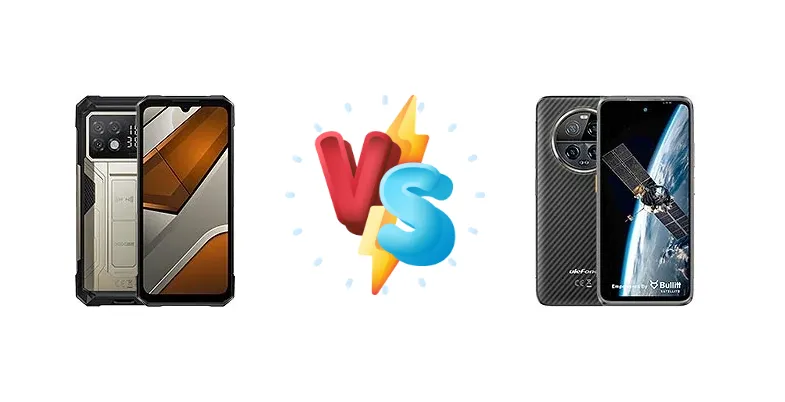
|
🏆 Quick Verdict
For users prioritizing longevity and sustained performance, the Doogee S200 Max emerges as the winner. Its exceptional 117:35h battery endurance and respectable Dimensity 7050 chipset provide a reliable experience. However, the Ulefone Armor 23 Ultra’s 120W charging is a game-changer for those who value speed.
| PHONES | ||
|---|---|---|
| Phone Names | Doogee S200 Max | Ulefone Armor 23 Ultra |
| Network | ||
|---|---|---|
| 2G bands | GSM 850 / 900 / 1800 / 1900 | GSM 850 / 900 / 1800 / 1900 |
| 3G bands | HSDPA 850 / 900 / 1700(AWS) / 1900 / 2100 | HSDPA 850 / 900 / 1700(AWS) / 1900 / 2100 |
| 4G bands | 1, 2, 3, 4, 5, 7, 8, 12, 17, 18, 19, 20, 25, 26, 28, 34, 38, 39, 40, 41, 66 | 1, 2, 3, 4, 5, 7, 8, 12, 13, 17, 18, 19, 20, 25, 26, 28, 34, 38, 39, 40, 41, 66, 71 |
| 5G bands | 1, 3, 7, 8, 28, 38, 41, 77, 78, 79 SA/NSA | 1, 2, 3, 5, 7, 8, 20, 25, 28, 38, 40, 41, 66, 71, 77, 78, 79 SA/NSA/Sub6 |
| Speed | HSPA, LTE, 5G | HSPA, LTE, 5G |
| Technology | GSM / HSPA / LTE / 5G | GSM / HSPA / LTE / 5G |
| Launch | ||
|---|---|---|
| Announced | 2025, August | 2023, December 21 |
| Status | Available. Released 2025, August | Available. Released 2023, December 21 |
| Body | ||
|---|---|---|
| Dimensions | 179.5 x 82.5 x 25.5 mm (7.07 x 3.25 x 1.00 in) | 177.4 x 81.5 x 12.8 mm (6.98 x 3.21 x 0.50 in) |
| SIM | Nano-SIM + Nano-SIM | Nano-SIM + Nano-SIM |
| Weight | 535 g (1.18 lb) | 332 g (11.71 oz) |
| Display | ||
|---|---|---|
| Protection | Mohs level 6 | Corning Gorilla Glass Victus, Mohs level 4 |
| Resolution | 1080 x 2400 pixels, 20:9 ratio (~392 ppi density) | 1080 x 2460 pixels (~396 ppi density) |
| Size | 6.72 inches, 109.0 cm2 (~73.6% screen-to-body ratio) | 6.78 inches, 109.2 cm2 (~75.5% screen-to-body ratio) |
| Type | IPS LCD, 120Hz | IPS LCD, 120Hz |
| Platform | ||
|---|---|---|
| CPU | Octa-core (2x2.6 GHz Cortex-A78 & 6x2.0 GHz Cortex-A55) | Octa-core (4x2.6 GHz Cortex-A78 & 4x2.0 GHz Cortex-A55) |
| Chipset | Mediatek Dimensity 7050 (6 nm) | Mediatek Dimensity 8020 (6 nm) |
| GPU | Mali-G68 MC4 | Mali-G77 MC9 |
| OS | Android 15 | Android 13 |
| Memory | ||
|---|---|---|
| Card slot | microSDXC (uses shared SIM slot) | microSDXC (dedicated slot) |
| Internal | 512GB 16GB RAM | 512GB 12GB RAM |
| Main Camera | ||
|---|---|---|
| Features | Dual-LED flash, HDR, panorama | Dual-LED flash, HDR, panorama |
| Quad | - | 50 MP, f/1.7, (wide), 1/1.31", 1.2µm, PDAF 8 MP, (telephoto), 3.2x optical zoom 50 MP, f/2.2, 117˚ (ultrawide) 64 MP, f/1.8, (night vision), 2 infrared night vision lights |
| Triple | 100 MP, f/1.9, (wide), 1/1.8", PDAF 20 MP, f/1.8, (night vision), infrared night vision light 2 MP (macro) | - |
| Video | 4K@30fps, 1080p@30fps, gyro-EIS | 4K@60fps, 1080p@30fps |
| Selfie camera | ||
|---|---|---|
| Single | 32 MP, f/2.3, (wide), 1/2.8" | 50 MP, f/2.3, (wide), 1.0µm |
| Video | 1080p@30fps | 1080p@30fps |
| Sound | ||
|---|---|---|
| 35mm jack | No | No |
| Loudspeaker | Yes | Yes |
| Comms | ||
|---|---|---|
| Bluetooth | 5.2, A2DP, LE | 5.1, A2DP, LE |
| Infrared port | - | Yes |
| NFC | Yes | Yes |
| Positioning | GPS, GLONASS, BDS, GALILEO | GPS (L1+L5), GLONASS, GALILEO, BDS, QZSS |
| Radio | FM radio | Wireless FM radio, RDS, recording |
| USB | USB Type-C 2.0, OTG | USB Type-C 3.1, OTG |
| WLAN | Wi-Fi 802.11 a/b/g/n/ac/6, dual-band | Wi-Fi 802.11 a/b/g/n/ac/6, dual-band |
| Features | ||
|---|---|---|
| Sensors | Fingerprint (side-mounted), accelerometer, gyro, proximity, compass | Fingerprint (side-mounted), accelerometer, proximity, compass, gyro, barometer |
| Battery | ||
|---|---|---|
| Charging | 66W wired 18W reverse wired | 120W wired, 60% in 10 min 50W wireless Reverse wireless |
| Type | 22000 mAh | Li-Po 5280 mAh |
| Misc | ||
|---|---|---|
| Colors | Gray, Gold | Elite Black, Umbra Orange |
| Price | $ 350.76 / £ 474.99 / € 429.99 | About 400 EUR |
| EU LABEL | ||
|---|---|---|
| Battery | 117:35h endurance, 1300 cycles | 47:51h endurance, 1000 cycles |
| Energy | Class E | Class B |
| Free fall | Class A (270 falls) | Class A (270 falls) |
| Repairability | Class C | Class C |
Doogee S200 Max
- Exceptional battery life (117:35h endurance)
- High battery cycle count (1300 cycles)
- Respectable 66W wired charging
- Less powerful chipset compared to the Ulefone
- Limited display information
Ulefone Armor 23 Ultra
- Blazing-fast 120W wired charging
- More powerful Dimensity 8020 chipset
- Wireless and reverse wireless charging
- Significantly shorter battery life (47:51h endurance)
- Lower battery cycle count (1000 cycles)
Display Comparison
Neither device specifies display details beyond the chipset, so a direct comparison is limited. However, given the focus on ruggedness, both likely employ durable, though potentially less color-accurate, panels. The absence of LTPO technology suggests neither will offer adaptive refresh rates for power saving. Bezels are expected to be substantial on both to enhance drop protection.
Camera Comparison
Without detailed camera specifications, a precise comparison is difficult. However, the market positioning of these phones suggests a focus on practicality over photographic excellence. Both will likely feature multiple lenses, but image quality will depend heavily on software processing. The absence of information regarding sensor size and aperture makes it impossible to determine which device will perform better in low-light conditions. The inclusion of a 2MP macro lens on either device is likely a marketing gimmick with limited real-world utility.
Performance
The Ulefone Armor 23 Ultra holds a clear advantage in raw processing power with its Mediatek Dimensity 8020. While both chipsets utilize an octa-core configuration with the same Cortex-A78 (4x2.6 GHz in Ulefone vs 2x2.6 GHz in Doogee) and Cortex-A55 cores, the Dimensity 8020’s higher core count and potentially more aggressive clock speeds translate to faster app loading and smoother multitasking. The Doogee S200 Max’s Dimensity 7050 is still capable, but will show its limits in graphically intensive games or demanding applications. Both devices benefit from the 6nm manufacturing process, offering a balance between performance and efficiency.
Battery Life
The Doogee S200 Max dominates in battery endurance with a reported 117:35h rating, significantly outperforming the Ulefone Armor 23 Ultra’s 47:51h. This difference is substantial and will be noticeable in everyday use. While the Ulefone compensates with incredibly fast 120W wired charging (60% in 10 minutes), the Doogee’s 66W charging is still respectable. The addition of 50W wireless charging and reverse wireless charging on the Ulefone provides added convenience, while the Doogee offers 18W reverse wired charging. The Doogee also boasts a higher battery cycle count (1300) compared to the Ulefone (1000), suggesting potentially longer battery lifespan.
Buying Guide
Buy the Doogee S200 Max if you need a phone that can genuinely last for days on a single charge, and you frequently work or travel in areas without easy access to power. Buy the Ulefone Armor 23 Ultra if you prioritize rapid recharging, need the extra processing power for demanding tasks, and appreciate the convenience of wireless charging.