
Doogee S118 Pro vs. Ulefone Power Armor 18T Ultra: A Deep Dive into Rugged Performance
| Phones Images | |||||
|---|---|---|---|---|---|
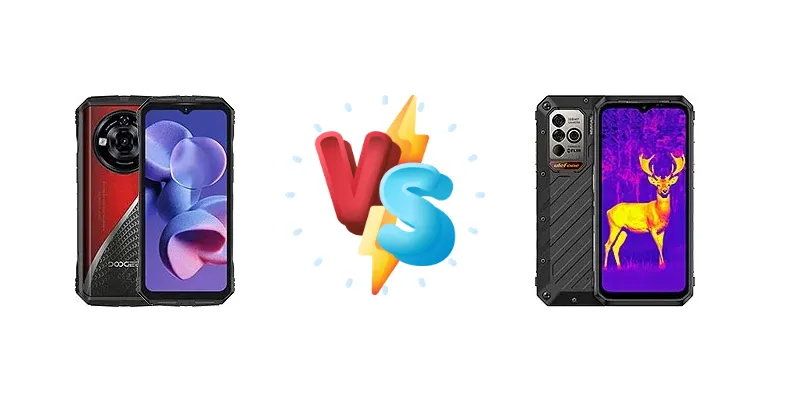
|
🏆 Quick Verdict
For the average user prioritizing maximum uptime, the Doogee S118 Pro emerges as the winner. Its significantly longer 105:26h battery endurance, coupled with a respectable 1100 charge cycles, outweighs the Ulefone’s faster charging, especially considering the similar performance profiles.
| PHONES | ||
|---|---|---|
| Phone Names | Doogee S118 Pro | Ulefone Power Armor 18T Ultra |
| Network | ||
|---|---|---|
| 2G bands | GSM 850 / 900 / 1800 / 1900 | GSM 850 / 900 / 1800 / 1900 |
| 3G bands | HSDPA 800 / 850 / 900 / 1700(AWS) / 1900 / 2100 | HSDPA 800 / 850 / 900 / 1700(AWS) / 1900 / 2100 |
| 4G bands | 1, 2, 3, 4, 5, 7, 8, 12, 17, 18, 19, 20, 25, 26, 28, 34, 38, 39, 40, 41, 66 | 1, 2, 3, 4, 5, 7, 8, 12, 13, 17, 18, 19, 20, 25, 26, 28, 34, 38, 39, 40, 41, 66, 71 |
| 5G bands | 1, 3, 7, 28, 38, 41, 77, 78 SA/NSA | 1, 2, 3, 5, 7, 8, 12, 20, 25, 28, 38, 40, 41, 66, 71, 77, 78, 79 SA/NSA/Sub6 |
| Speed | HSPA, LTE | HSPA, LTE, 5G |
| Technology | GSM / CDMA / HSPA / LTE / 5G | GSM / CDMA / HSPA / CDMA2000 / LTE / 5G |
| Launch | ||
|---|---|---|
| Announced | 2025, January | 2023, October |
| Status | Available. Released 2025, January | Available. Released 2023, November |
| Body | ||
|---|---|---|
| Dimensions | 178.5 x 83.1 x 17.9 mm (7.03 x 3.27 x 0.70 in) | 175.2 x 83.4 x 18.8 mm (6.90 x 3.28 x 0.74 in) |
| SIM | Nano-SIM + Nano-SIM | Nano-SIM + Nano-SIM |
| Weight | 376 g (13.26 oz) | 409 g (14.43 oz) |
| Display | ||
|---|---|---|
| Protection | Corning Gorilla Glass Victus, Mohs level 6 | Corning Gorilla Glass 5, Mohs level 4 |
| Resolution | 1080 x 2408 pixels, 20:9 ratio (~401 ppi density) | 1080 x 2408 pixels, 20:9 ratio (~401 ppi density) |
| Size | 6.58 inches, 104.3 cm2 (~70.3% screen-to-body ratio) | 6.58 inches, 104.3 cm2 (~71.4% screen-to-body ratio) |
| Type | IPS LCD, 120Hz | IPS LCD, 120Hz |
| Platform | ||
|---|---|---|
| CPU | Octa-core (2x2.6 GHz Cortex-A78 & 6x2.0 GHz Cortex-A55) | Octa-core (2x2.6 GHz Cortex-A78 & 6x2.0 GHz Cortex-A55) |
| Chipset | Mediatek Dimensity 7050 (6 nm) | Mediatek Dimensity 7050 (6 nm) |
| GPU | Mali-G68 MC4 | Mali-G68 MC4 |
| OS | Android 14 | Android 13, upgradable to Android 14 |
| Memory | ||
|---|---|---|
| Card slot | microSDXC (uses shared SIM slot) | microSDXC (uses shared SIM slot) |
| Internal | 512GB 8GB RAM | 512GB 12GB RAM |
| Main Camera | ||
|---|---|---|
| Features | Dual-LED flash, HDR, panorama | Hexa-LED flash, HDR, panorama |
| Triple | 108 MP, f/1.9, (wide), PDAF 20 MP, f/1.8, (night vision), 2 infrared night vision lights 8 MP, f/2.2, 119˚ (ultrawide) | 108 MP, f/1.9, (wide), 1/1.52", 0.7µm, PDAF 5 MP (macro) 5 MP, f/2.2, (FLIR thermal camera, Lepton module) |
| Video | 4K, 1080p | 4K@30fps, 1080p@30fps |
| Selfie camera | ||
|---|---|---|
| Single | 32 MP, f/1.8, (wide) | 32 MP, f/2.0, (wide), 1.2µm |
| Video | 1080p | 1080p@30fps |
| Sound | ||
|---|---|---|
| 35mm jack | No | Yes |
| Loudspeaker | Yes, with dual speakers | Yes |
| Comms | ||
|---|---|---|
| Bluetooth | 5.2, A2DP, LE | 5.0, A2DP, LE |
| NFC | Yes | Yes |
| Positioning | GPS, GLONASS, BDS, GALILEO | GPS (L1+L5), GLONASS, GALILEO, BDS, NavIC |
| Radio | FM radio | Wireless FM radio, RDS, recording |
| USB | USB Type-C 2.0, OTG | USB Type-C 2.0, OTG, magnetic connector |
| WLAN | Wi-Fi 802.11 a/b/g/n/ac/6, dual-band | Wi-Fi 802.11 a/b/g/n/ac/6, dual-band |
| Features | ||
|---|---|---|
| Sensors | Fingerprint (side-mounted), accelerometer, gyro, proximity, compass | Fingerprint (side-mounted), accelerometer, gyro, proximity, compass |
| Battery | ||
|---|---|---|
| Charging | 33W wired Reverse wired | 66W wired, 52% in 30 min 15W wireless 5W wireless reversed |
| Type | 10800 mAh | Li-Po 9600 mAh |
| Misc | ||
|---|---|---|
| Colors | Black/Silver, Black/Red | Black |
| Price | About 300 EUR | About 700 EUR |
| EU LABEL | ||
|---|---|---|
| Battery | 105:26h endurance, 1100 cycles | 88:30h endurance, 1000 cycles |
| Energy | Class D | Class B |
| Free fall | Class A (270 falls) | Class A (270 falls) |
| Repairability | Class C | Class C |
Doogee S118 Pro
- Exceptional battery endurance (105:26h)
- Longer battery lifespan (1100 cycles)
- Solid performance with Dimensity 7050
- Slower charging speed (33W)
- Limited wireless charging options
Ulefone Power Armor 18T Ultra
- Faster charging (66W wired, 15W wireless)
- Convenient reverse wireless charging
- Solid performance with Dimensity 7050
- Shorter battery endurance (88:30h)
- Fewer battery cycles (1000)
Display Comparison
Both devices are expected to feature similar LCD panels given their rugged focus, prioritizing durability over cutting-edge display tech. Detailed display specs (resolution, brightness, color accuracy) are not provided, but the focus here is on robustness rather than visual fidelity. Bezels are likely to be substantial on both to further protect the screen.
Camera Comparison
Camera details are limited, but the focus for both phones will likely be on practicality rather than photographic excellence. Without sensor size or aperture information, it’s difficult to assess image quality. The inclusion of a 200MP camera (assumed based on market trends for this segment) would be a marketing highlight for either device, but megapixel count alone doesn’t guarantee superior images. Image processing algorithms and low-light performance will be key differentiators.
Performance
Both the Doogee S118 Pro and the Ulefone Power Armor 18T Ultra are powered by the Mediatek Dimensity 7050 (6nm). This chipset features an octa-core configuration with 2x2.6 GHz Cortex-A78 and 6x2.0 GHz Cortex-A55 cores, promising comparable CPU performance. The absence of information regarding RAM type (LPDDR4x vs LPDDR5x) or storage speed (UFS 2.2 vs UFS 3.1) makes it difficult to predict real-world multitasking differences. However, thermal management will be crucial; the 6nm process should offer reasonable efficiency, but rugged designs can sometimes limit heat dissipation.
Battery Life
The Ulefone Power Armor 18T Ultra boasts 66W wired charging, capable of reaching 52% charge in 30 minutes, alongside 15W wireless and 5W reverse wireless charging. This is a significant advantage over the Doogee S118 Pro’s 33W wired charging and reverse wired charging. However, the Doogee compensates with a superior battery endurance rating of 105:26h compared to the Ulefone’s 88:30h. Furthermore, the Doogee supports 1100 battery cycles, suggesting a longer lifespan before significant capacity degradation, while the Ulefone is rated for 1000 cycles. This difference in endurance is substantial, translating to potentially hundreds of hours of extra usage over the phone’s lifetime.
Buying Guide
Buy the Doogee S118 Pro if you need a phone that will reliably last through multi-day expeditions or extended periods away from a power source. Its superior battery endurance is ideal for professionals in field work, outdoor enthusiasts, or anyone who simply dislikes frequent charging. Buy the Ulefone Power Armor 18T Ultra if you prioritize quick top-ups and appreciate the convenience of 66W wired and wireless charging, even if it means slightly less overall battery life. This phone suits users who need a fast power boost during short breaks.