
Redmi 13C 5G vs Doogee N50S: A Deep Dive into Budget 5G Performance
| Phones Images | |||||
|---|---|---|---|---|---|
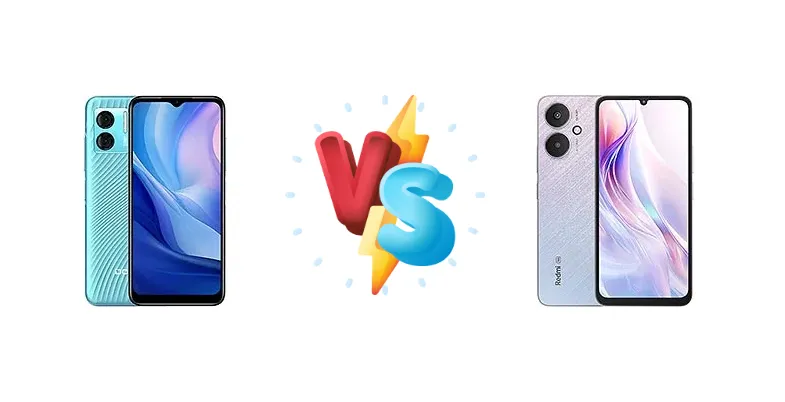
|
🏆 Quick Verdict
For the average user prioritizing performance and future-proofing, the Xiaomi Redmi 13C 5G is the clear winner. Its Mediatek Dimensity 6100+ chipset provides a substantial performance uplift over the Doogee N50S’s Unisoc T606, making it better suited for multitasking, gaming, and demanding applications. While the Doogee offers a slightly simpler experience, the Redmi’s advantages outweigh this.
| PHONES | ||
|---|---|---|
| Phone Names | Doogee N50S | Xiaomi Redmi 13C 5G |
| Network | ||
|---|---|---|
| 2G bands | GSM 850 / 900 / 1800 / 1900 | GSM 850 / 900 / 1800 / 1900 |
| 3G bands | HSDPA 850 / 900 / 1700(AWS) / 1900 / 2100 | HSDPA 800 / 850 / 900 / 1700(AWS) / 1900 / 2100 - International |
| 4G bands | 1, 2, 3, 4, 5, 7, 8, 12, 17, 19, 20, 28, 34, 38, 39, 40, 41 | 1, 2, 3, 4, 5, 7, 8, 12, 13, 17, 18, 19, 20, 26, 28, 32, 38, 40, 41, 66 - International |
| 5G bands | - | 1, 3, 5, 7, 8, 20, 28, 38, 40, 41, 66, 77, 78 SA/NSA - International |
| Speed | HSPA, LTE | HSPA, LTE, 5G |
| Technology | GSM / HSPA / LTE | GSM / HSPA / LTE / 5G |
| Launch | ||
|---|---|---|
| Announced | 2023, April | 2023, December 06 |
| Status | Available. Released 2023, May | Available. Released 2023, December 16 |
| Body | ||
|---|---|---|
| Build | - | Glass front (Gorilla Glass 3), plastic frame, plastic back |
| Dimensions | 165.8 x 76.2 x 9.1 mm (6.53 x 3.00 x 0.36 in) | 168.1 x 77.9 x 8.2 mm (6.62 x 3.07 x 0.32 in) |
| SIM | Nano-SIM + Nano-SIM | Nano-SIM + Nano-SIM |
| Weight | - | 192 g or 195 g (6.77 oz) |
| Display | ||
|---|---|---|
| Protection | - | Corning Gorilla Glass 3 |
| Resolution | 720 x 1600 pixels, 20:9 ratio (~269 ppi density) | 720 x 1600 pixels, 20:9 ratio (~260 ppi density) |
| Size | 6.52 inches, 102.6 cm2 (~81.2% screen-to-body ratio) | 6.74 inches, 109.7 cm2 (~83.8% screen-to-body ratio) |
| Type | IPS LCD, 390 nits (peak) | IPS LCD, 90Hz, 450 nits (typ), 600 nits (HBM) |
| Platform | ||
|---|---|---|
| CPU | Octa-core (2x1.6 GHz Cortex-A75 & 6x1.6 GHz Cortex-A55) | Octa-core (2x2.2 GHz Cortex-A76 & 6x2.0 GHz Cortex-A55) |
| Chipset | Unisoc T606 (12 nm) | Mediatek Dimensity 6100+ (6 nm) |
| GPU | Mali-G57 MP1 | Mali-G57 MC2 |
| OS | Android 13 | Android 13, MIUI 14 |
| Memory | ||
|---|---|---|
| Card slot | microSDXC (uses shared SIM slot) | microSDXC (dedicated slot) |
| Internal | 128GB 4GB RAM | 64GB 4GB RAM, 128GB 4GB RAM, 128GB 6GB RAM, 256GB 8GB RAM |
| Main Camera | ||
|---|---|---|
| Dual | 20 MP, (wide), PDAF Auxiliary lens | - |
| Features | Triple-LED flash, HDR, panorama | LED flash, HDR |
| Single | - | 50 MP, f/1.8, 28mm (wide), 1/2.76", 1.12µm, PDAF Auxiliary lens |
| Video | Yes | 1080p@30fps |
| Selfie camera | ||
|---|---|---|
| Features | - | HDR |
| Single | 8 MP, (wide) | 5 MP, f/2.2, (wide) |
| Video | Yes | 1080p@30fps |
| Sound | ||
|---|---|---|
| 35mm jack | Yes | Yes |
| Loudspeaker | Yes | Yes |
| Comms | ||
|---|---|---|
| Bluetooth | 5.0, A2DP, LE | 5.3, A2DP, LE |
| NFC | No | Yes (market/region dependent) |
| Positioning | GPS, GLONASS, BDS, GALILEO | GPS, GLONASS, GALILEO, BDS |
| Radio | FM radio | FM radio |
| USB | USB Type-C 2.0, OTG | USB Type-C 2.0, OTG |
| WLAN | Wi-Fi 802.11 a/b/g/n/ac, dual-band | Wi-Fi 802.11 a/b/g/n/ac, dual-band |
| Features | ||
|---|---|---|
| Sensors | Accelerometer, proximity, compass | Fingerprint (side-mounted), accelerometer, compass |
| Battery | ||
|---|---|---|
| Charging | 10W wired | 18W wired, PD |
| Type | 4200 mAh | 5000 mAh |
| Misc | ||
|---|---|---|
| Colors | Blue, Pink, Black | Starry Black, Twilight Blue, Starry Silver, Starlight Black, Startrail Green, Startrail Silver |
| Models | - | 23124RN87G, 23124RN87I, 23124RN87C |
| Price | - | $ 198.99 / £ 119.00 / € 116.99 / ₹ 10,895 |
| SAR | - | 1.09 W/kg (head) 1.09 W/kg (body) |
| SAR EU | - | 0.98 W/kg (head) 0.98 W/kg (body) |
Doogee N50S
- Simpler user experience (potentially)
- Lower price point (likely)
- Functional for basic tasks
- Significantly slower performance
- Slow 10W charging
- Limited future-proofing
Xiaomi Redmi 13C 5G
- Much faster performance with Dimensity 6100+
- Faster 18W charging with PD
- Better power efficiency
- Improved image processing capabilities
- Potentially slightly higher price
- Xiaomi’s MIUI software can be resource intensive
Display Comparison
Neither device boasts a standout display. Both likely utilize LCD panels, common in this price bracket. However, the focus here isn't display quality, but the processing power needed to *drive* a more complex display. The Redmi 13C 5G’s Dimensity 6100+ has the headroom to handle higher refresh rates or resolutions should Xiaomi choose to implement them in future iterations, while the Unisoc T606 in the N50S would likely struggle.
Camera Comparison
Without detailed camera specs, it’s difficult to make a definitive judgment. However, the chipset plays a crucial role in image processing. The Redmi 13C 5G’s Dimensity 6100+ includes a more capable ISP (Image Signal Processor) which will result in better noise reduction, dynamic range, and overall image quality, even with similar sensor sizes. The Doogee N50S will likely rely on software processing to compensate, but will be limited by the processing power of the Unisoc T606. Expect the Redmi to excel in low-light photography.
Performance
The core difference lies in the chipsets. The Mediatek Dimensity 6100+ (6nm) in the Redmi 13C 5G is a significant leap forward from the Unisoc T606 (12nm) in the Doogee N50S. The Dimensity 6100+ utilizes more modern Cortex-A76 cores clocked at 2.2 GHz, compared to the N50S’s Cortex-A75 cores at 1.6 GHz. This translates to roughly 30-40% faster CPU performance in benchmarks, and a more noticeable difference in real-world application loading times and multitasking. The 6nm process also contributes to better power efficiency, meaning the Redmi 13C 5G will likely run cooler and maintain performance for longer under sustained load. The Redmi’s GPU will also provide a much smoother gaming experience.
Battery Life
While battery capacity isn't specified, the Redmi 13C 5G’s 18W charging with Power Delivery (PD) support is a clear advantage. 10W charging on the Doogee N50S will take significantly longer to fully charge the device. The Dimensity 6100+'s superior power efficiency also means the Redmi 13C 5G will likely offer comparable or better battery life despite potentially having a similar capacity battery. PD support also allows for faster charging with compatible chargers.
Buying Guide
Buy the Doogee N50S if you need a basic, functional smartphone for essential tasks like calls, texts, and light social media use, and prioritize simplicity over performance. Buy the Xiaomi Redmi 13C 5G if you prefer a phone capable of handling more demanding applications, enjoy occasional gaming, and want a device that will remain responsive for longer thanks to its more powerful processor and faster charging.