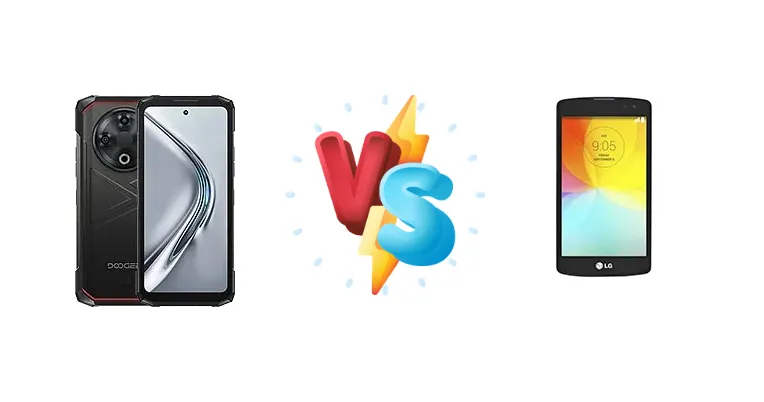
The smartphone landscape is littered with budget options, but performance varies wildly. We pit the Doogee Fire 6, featuring a relatively modern Unisoc T606 chipset, against the LG L Fino, powered by the aging Qualcomm Snapdragon 200. This isn't just a spec sheet comparison; it's a look at how architectural differences translate to real-world usability in 2024.
🏆 Quick Verdict
For the average user, the Doogee Fire 6 is the clear winner. Its Unisoc T606 chipset offers a substantial performance leap over the LG L Fino’s Snapdragon 200, making it capable of handling modern apps and multitasking. While the L Fino might have a slightly simpler software experience, the Fire 6’s longevity and usability outweigh this benefit.
| Network |
|---|
| 2G bands | GSM 850 / 900 / 1800 / 1900 | GSM 850 / 900 / 1800 / 1900 - SIM 1 & SIM 2 (dual-SIM model only) |
| 3G bands | HSDPA 850 / 900 / 1700(AWS) / 1900 / 2100 | HSDPA 900 / 2100 |
| 4G bands | 1, 2, 3, 4, 5, 7, 8, 18, 19, 20, 25, 26, 28, 34, 38, 39, 40, 41, 66 | - |
| Speed | HSPA, LTE | HSPA 21.1/5.76 Mbps |
| Technology | GSM / HSPA / LTE | GSM / HSPA |
| Launch |
|---|
| Announced | 2024, December | 2014, August. Released 2014, September |
| Status | Available. Released 2024, December | Discontinued |
| Body |
|---|
| Dimensions | 174 x 81.2 x 15.8 mm (6.85 x 3.20 x 0.62 in) | 127.5 x 67.9 x 11.9 mm (5.02 x 2.67 x 0.47 in) |
| SIM | Nano-SIM + Nano-SIM | Single SIM (Micro-SIM) or Dual SIM (Micro-SIM, dual stand-by) |
| Weight | - | 145 g (5.11 oz) |
| Display |
|---|
| Protection | Mohs level 6 | Corning Gorilla Glass 3 |
| Resolution | 720 x 1612 pixels, 20:9 ratio (~269 ppi density) | 480 x 800 pixels, 5:3 ratio (~207 ppi density) |
| Size | 6.56 inches, 103.4 cm2 (~73.2% screen-to-body ratio) | 4.5 inches, 57.6 cm2 (~66.6% screen-to-body ratio) |
| Type | IPS LCD, 90Hz | IPS LCD |
| Platform |
|---|
| CPU | Octa-core (2x1.6 GHz Cortex-A75 & 6x1.6 GHz Cortex-A55) | Quad-core 1.2 GHz Cortex-A7 |
| Chipset | Unisoc T606 (12 nm) | Qualcomm MSM8212 Snapdragon 200 (28 nm) |
| GPU | Mali-G57 MP1 | Adreno 302 |
| OS | Android 14 | Android 4.4.2 (KitKat), LG UI 3 |
| Memory |
|---|
| Card slot | microSDXC (dedicated slot) | microSDHC (dedicated slot) |
| Internal | 256GB 6GB RAM | 4GB 1GB RAM |
| | - | eMMC 4.5 |
| Main Camera |
|---|
| Features | Dual-LED flash, HDR, panorama | LED flash, panorama |
| Single | - | 8 MP, AF |
| Triple | 50 MP, f/1.8, (wide), PDAF
Thermal camera, 160x120 px, 12μm
8 MP, f/2.2 | - |
| Video | 1080p | 480p |
| Selfie camera |
|---|
| Single | 8 MP, f/2.2, (wide) | VGA |
| Video | 720p | - |
| Sound |
|---|
| 3.5mm jack | - | Yes |
| 35mm jack | No | Yes |
| Loudspeaker | Yes | Yes |
| Comms |
|---|
| Bluetooth | 5.0, A2DP, LE | 4.0, A2DP |
| NFC | No | Yes |
| Positioning | GPS, GLONASS, BDS, GALILEO | GPS, GLONASS |
| Radio | FM radio | FM radio, RDS |
| USB | USB Type-C 2.0, OTG | microUSB 2.0 |
| WLAN | Wi-Fi 802.11 a/b/g/n/ac, dual-band | Wi-Fi 802.11 b/g/n, hotspot |
| Features |
|---|
| Sensors | Fingerprint (side-mounted), accelerometer, gyro, proximity, compass | Accelerometer, proximity |
| Battery |
|---|
| Charging | 18W wired
Reverse wired | - |
| Stand-by | - | Up to 345 h (3G) |
| Talk time | - | Up to 15 h (3G) |
| Type | 10400 mAh | Li-Ion 1900 mAh, removable |
| Misc |
|---|
| Colors | Black, Blue | White, Black, Gold, Red, Green |
| Models | - | D295, D290 |
| Price | - | About 110 EUR |
| EU LABEL |
|---|
| Battery | 105:26h endurance, 1100 cycles | - |
| Energy | Class D | - |
| Free fall | Class A (270 falls) | - |
| Repairability | Class C | - |
Doogee Fire 6
- Significantly faster processor for smoother performance
- Longer battery life with 105:26h endurance
- 18W fast charging with reverse wired charging capability
- Software experience may not be as refined as LG's
- Brand recognition is lower than LG
LG L Fino
- Simpler software experience (potentially)
- Lower price point (likely, given its age)
- Compact size (potentially)
- Extremely slow processor leading to lag and frustration
- Poor battery life due to inefficient chipset
- Outdated technology and limited app compatibility
Display Comparison
Neither device’s display specifications are provided, so a direct comparison is difficult. However, given the L Fino’s age and market positioning, it likely features a lower resolution and less color accurate panel than what would be found even in a modern budget device. The Fire 6, while not a flagship, benefits from being a more recent release and likely incorporates improvements in display technology, even if it's just in terms of brightness and viewing angles.
Camera Comparison
Camera details are absent for both devices. However, given the L Fino’s age, its camera is likely a very basic sensor with limited capabilities. The Fire 6, while not boasting flagship camera specs, likely benefits from more modern image processing algorithms and a potentially larger sensor, resulting in better image quality, especially in low-light conditions. It's reasonable to assume the Fire 6 offers a more usable camera experience.
Performance
The performance gap is the most significant differentiator. The Doogee Fire 6’s Unisoc T606, built on a 12nm process, is an octa-core processor featuring both Cortex-A75 and Cortex-A55 cores. This architecture provides a substantial advantage over the LG L Fino’s quad-core Cortex-A7 processor within the Snapdragon 200, which is fabricated on a much older 28nm node. The 28nm process is significantly less efficient, leading to higher power consumption and lower performance. The Fire 6 will handle multitasking, social media, and even light gaming far more smoothly. The Snapdragon 200 struggles with even basic tasks, resulting in noticeable lag and slowdowns.
Battery Life
The Doogee Fire 6 boasts an impressive 105:26h endurance rating and supports 18W wired charging with reverse wired charging. This suggests a large battery capacity and efficient power management. While the LG L Fino’s battery capacity is unknown, its inefficient Snapdragon 200 chipset will likely result in significantly shorter battery life. The 18W charging on the Fire 6 also provides a faster recharge time compared to what the L Fino likely offers.
Buying Guide
Buy the Doogee Fire 6 if you need a smartphone capable of running current apps, browsing the web without frustration, and lasting through a full day of moderate use. It’s ideal for users who prioritize performance and battery life on a tight budget. Buy the LG L Fino if you absolutely require the simplest possible smartphone experience and are willing to accept extremely limited performance – it’s best suited for basic calling and texting, and users who are technologically averse.
Frequently Asked Questions
❓ Will the Doogee Fire 6 be able to run popular social media apps like TikTok and Instagram smoothly?
Yes, the Unisoc T606 chipset in the Doogee Fire 6 is capable of running popular social media apps like TikTok and Instagram without significant lag. The Cortex-A75 cores provide the necessary processing power for these applications, unlike the Snapdragon 200 in the L Fino which would struggle considerably.
❓ How long will the Doogee Fire 6's battery last with moderate use (calls, texts, browsing)?
With moderate use, the Doogee Fire 6’s battery is rated for over 105 hours of endurance. This translates to multiple days of use on a single charge, even with regular calls, texts, and web browsing. The efficient Unisoc T606 chipset and likely large battery capacity contribute to this impressive battery life.
❓ Is the LG L Fino still a viable option for someone who only needs a phone for basic calling and texting?
While the LG L Fino *can* still perform basic calling and texting, its extremely limited performance and outdated technology make it a less desirable option even for these simple tasks. The Doogee Fire 6 offers a significantly better user experience for a minimal price increase.