
Doogee Fire 3 Ultra vs. Samsung Galaxy A10e: A Deep Dive into Battery, Performance, and Value
| Phones Images | |||||
|---|---|---|---|---|---|
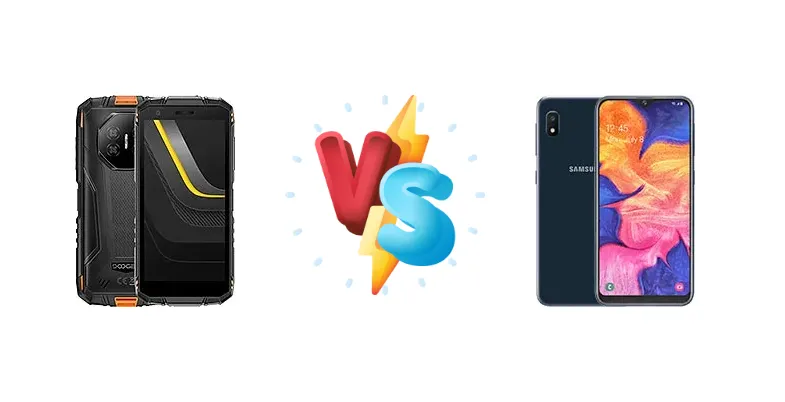
|
🏆 Quick Verdict
For users prioritizing longevity and resilience, the Doogee Fire 3 Ultra is the clear winner. Its 91-hour battery endurance and 1100 charge cycles significantly outperform the Galaxy A10e. However, the A10e remains a viable option for those on a strict budget who don't demand extended usage.
| PHONES | ||
|---|---|---|
| Phone Names | Doogee Fire 3 Ultra | Samsung Galaxy A10e |
| Network | ||
|---|---|---|
| 2G bands | GSM 850 / 900 / 1800 / 1900 | GSM 850 / 900 / 1800 / 1900 |
| 3G bands | HSDPA 850 / 900 / 1700(AWS) / 1900 / 2100 | HSDPA 850 / 1700(AWS) / 1900 / 2100 - AT&T |
| 4G bands | 1, 2, 3, 4, 5, 7, 8, 18, 19, 20, 25, 26, 28, 34, 38, 39, 40, 41, 66 | 2, 3, 4, 5, 7, 12, 14, 29, 30, 66 - AT&T |
| Speed | HSPA, LTE | HSPA 42.2/5.76 Mbps, LTE Cat4 150/50 Mbps |
| Technology | GSM / HSPA / LTE | GSM / CDMA / HSPA / LTE |
| - | 1, 2, 3, 4, 5, 7, 8, 12, 13, 20, 25, 26, 28, 38, 39, 40, 41, 66, 71 - Metro PCS, T-Mobile | |
| Launch | ||
|---|---|---|
| Announced | 2025, August | 2019, July. Released 2019, August |
| Status | Available. Released 2025, August | Discontinued |
| Body | ||
|---|---|---|
| Build | - | Glass front, plastic back, plastic frame |
| Dimensions | 162.5 x 77.4 x 17.8 mm (6.40 x 3.05 x 0.70 in) | 147.3 x 69.6 x 8.4 mm (5.80 x 2.74 x 0.33 in) |
| SIM | Nano-SIM + Nano-SIM | Nano-SIM |
| Weight | 290 g (10.23 oz) | 141 g (4.97 oz) |
| Display | ||
|---|---|---|
| Protection | Mohs level 5 | - |
| Resolution | 720 x 1440 pixels, 18:9 ratio (~293 ppi density) | 720 x 1560 pixels, 19.5:9 ratio (~295 ppi density) |
| Size | 5.5 inches, 78.1 cm2 (~62.1% screen-to-body ratio) | 5.83 inches, 83.4 cm2 (~81.4% screen-to-body ratio) |
| Type | IPS LCD | PLS LCD |
| Platform | ||
|---|---|---|
| CPU | Octa-core (2x1.6 GHz Cortex-A75 & 6x1.6 GHz Cortex-A55) | Octa-core (2x1.6 GHz Cortex-A73 & 6x1.35 GHz Cortex-A53) |
| Chipset | Unisoc T7200 (12 nm) | Exynos 7884 (14 nm) |
| GPU | Mali-G57 MP1 | Mali-G71 MP2 |
| OS | Android 15 | Android 9.0 (Pie), upgradable to Android 11, One UI 3.1 |
| Memory | ||
|---|---|---|
| Card slot | microSDXC (uses shared SIM slot) | microSDXC (dedicated slot) |
| Internal | 256GB 6GB RAM | 32GB 2GB RAM, 32GB 3GB RAM |
| - | eMMC 5.1 | |
| Main Camera | ||
|---|---|---|
| Dual | 16 MP, f/1.8, (wide), AF 20 MP, f/1.8, (night vision), infrared night vision light | - |
| Features | LED flash, HDR, panorama | LED flash, panorama, HDR |
| Single | - | 8 MP, f/1.9, AF or 5 MP, AF |
| Video | 1080p@30fps | 1080p@30fps |
| Selfie camera | ||
|---|---|---|
| Features | HDR | - |
| Single | 8 MP, f/2.0, (wide) | 5 MP, f/2.0 or 2 MP |
| Video | 720p@30fps | - |
| Sound | ||
|---|---|---|
| 3.5mm jack | - | Yes |
| 35mm jack | Yes | Yes |
| Loudspeaker | Yes | Yes |
| Comms | ||
|---|---|---|
| Bluetooth | 5.0, A2DP, LE | 5.0, A2DP, LE |
| NFC | Yes | No |
| Positioning | GPS, GLONASS, GALILEO, BDS | GPS, GLONASS, GALILEO |
| Radio | FM radio | No |
| USB | USB Type-C 2.0 | USB Type-C 2.0 |
| WLAN | Wi-Fi 802.11 a/b/g/n/ac, dual-band | Wi-Fi 802.11 a/b/g/n/ac, dual-band, Wi-Fi Direct |
| Features | ||
|---|---|---|
| Sensors | Fingerprint (side-mounted), accelerometer, gyro, proximity, compass | Accelerometer, proximity |
| Battery | ||
|---|---|---|
| Charging | 18W wired | - |
| Type | 8350 mAh | Li-Ion 3000 mAh, non-removable |
| Misc | ||
|---|---|---|
| Colors | Gray, Orange, Green | Black |
| Models | - | SM-A102U, SM-S102DL, SM-A102U1, SM-A102W, SM-A102N |
| Price | About 160 EUR | About 80 EUR |
| SAR | - | 0.47 W/kg (head) 0.54 W/kg (body) |
| EU LABEL | ||
|---|---|---|
| Battery | 91:00h endurance, 1100 cycles | - |
| Energy | Class A | - |
| Free fall | Class D (45 falls) | - |
| Repairability | Class C | - |
Doogee Fire 3 Ultra
- Exceptional battery life (91 hours)
- High battery cycle count (1100 cycles)
- More modern chipset (Unisoc T7200)
- Likely more durable construction
- Camera specs unknown, potentially basic
- Charging speed is moderate (18W)
Samsung Galaxy A10e
- Lower initial cost
- Familiar Samsung Android experience
- Lightweight and portable
- Larger display size (6.3 inches)
- Significantly shorter battery life
- Less efficient chipset (Exynos 7884)
- Basic camera performance
- Limited long-term durability
Display Comparison
Neither device boasts a standout display. Both likely utilize LCD panels, given their price points. The focus here isn't on visual fidelity, but practicality. While specific display specs are unavailable for the Doogee, its rugged design likely prioritizes durability over thin bezels. The A10e's 6.3-inch display is adequate for basic tasks, but lacks the advanced features like high refresh rates or HDR support found in higher-end models. The A10e's 14nm Exynos chip will likely struggle to drive a higher resolution or refresh rate panel efficiently.
Camera Comparison
Camera performance is likely a weak point on both devices. Given the context data, it's safe to assume both phones feature basic camera setups. The Doogee Fire 3 Ultra's camera specs are unknown, but its focus on durability suggests a practical, rather than high-end, imaging experience. The A10e's camera is similarly positioned. The presence of a 2MP macro camera on the A10e is largely a marketing gimmick, offering limited practical benefit due to its low resolution and lack of optical image stabilization (OIS). Image quality will be acceptable in good lighting conditions, but expect significant noise and detail loss in low light.
Performance
The Doogee Fire 3 Ultra's Unisoc T7200 (12nm) chipset offers a more modern architecture than the Samsung Galaxy A10e's Exynos 7884 (14nm). The T7200’s Cortex-A75 cores, paired with Cortex-A55s, provide a performance edge over the A10e’s Cortex-A73 and A53 combination. The 12nm process node on the Unisoc chip is also more efficient than the 14nm Exynos, potentially leading to better thermal management and sustained performance. This translates to smoother multitasking and a more responsive user experience on the Doogee, particularly for demanding applications. The A10e will be sufficient for basic tasks, but may exhibit lag with heavier workloads.
Battery Life
This is where the Doogee Fire 3 Ultra truly shines. Its 91-hour endurance and 1100 charge cycles are exceptional for a smartphone, far exceeding what the Samsung Galaxy A10e can offer. While the A10e’s battery capacity is not specified, its less efficient chipset and lack of optimization suggest significantly shorter usage times. The Doogee’s 18W wired charging is adequate, but not particularly fast. However, the massive battery capacity means you won’t need to charge it frequently. The A10e’s charging speed is also likely around 15W, meaning a full charge will take considerably longer than on the Doogee, even if the battery capacity were similar.
Buying Guide
Buy the Doogee Fire 3 Ultra if you need a phone that can withstand harsh conditions and last for days on a single charge – ideal for outdoor workers, travelers, or anyone who frequently finds themselves away from power outlets. Buy the Samsung Galaxy A10e if you prefer a lightweight, familiar Android experience and prioritize initial cost over long-term battery performance and durability.