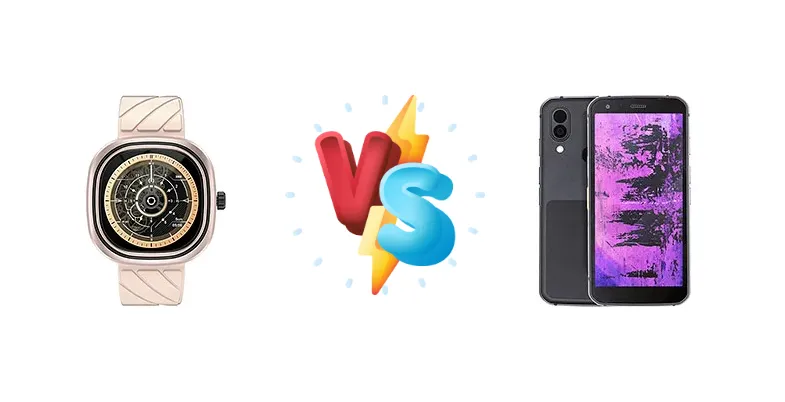
The rugged smartphone market caters to a specific user – those needing durability and reliability in harsh conditions. The Doogee DG Ares and Cat S62 Pro both aim to fulfill this need, but they take drastically different approaches to internal hardware. The Ares opts for a budget-focused Realtek chipset, while the S62 Pro leverages Qualcomm’s Snapdragon 660. This comparison dissects these choices and determines which phone offers the best balance of toughness and usability.
🏆 Quick Verdict
For the average user prioritizing consistent performance and a smoother user experience, the Cat S62 Pro is the clear winner. Its Snapdragon 660 chipset provides a significant advantage in multitasking and demanding applications, outweighing the Ares’s lower price point. However, the DG Ares remains a viable option for those on a strict budget and primarily needing basic functionality.
| Network |
|---|
| 2G bands | N/A | GSM 850 / 900 / 1800 / 1900 |
| 3G bands | N/A | HSDPA 850 / 900 / 1700(AWS) / 1900 / 2100 |
| 4G bands | N/A | 1, 2, 3, 4, 5, 7, 8, 20, 28, 38, 40 |
| EDGE | No | - |
| GPRS | No | - |
| Speed | - | HSPA 42.2/5.76 Mbps, LTE (2CA) Cat13 400/150 Mbps |
| Technology | No cellular connectivity | GSM / HSPA / LTE |
| Launch |
|---|
| Announced | 2021, September 27 | 2020, June 28. Released 2020, August 17 |
| Status | Available. Released 2021, September 27 | Discontinued |
| Body |
|---|
| Build | Plastic frame, plastic back | Glass front (Gorilla Glass 6), plastic back, aluminum frame |
| Dimensions | 45.9 x 45.9 x 10.3 mm (1.81 x 1.81 x 0.41 in) | 158.5 x 76.7 x 11.9 mm (6.24 x 3.02 x 0.47 in) |
| SIM | No | · Nano-SIM· Nano-SIM + Nano-SIM |
| Weight | 47 g (1.66 oz) | 248 g (8.75 oz) |
| | - | IP68/IP69 dust/water resistant (up to 1.5m for 35 mins)
Drop-to-concrete resistance from up to 1.8m
MIL-STD-810H compliant |
| Display |
|---|
| Protection | - | Corning Gorilla Glass 6 |
| Resolution | 360 x 360 pixels (~386 ppi density) | 1080 x 2160 pixels, 18:9 ratio (~424 ppi density) |
| Size | 1.32 inches | 5.7 inches, 83.8 cm2 (~69.0% screen-to-body ratio) |
| Type | IPS LCD | IPS LCD |
| Platform |
|---|
| CPU | - | Octa-core (4x2.2 GHz Kryo 260 Gold & 4x1.8 GHz Kryo 260 Silver) |
| Chipset | Realtek 8762C | Qualcomm SDM660 Snapdragon 660 (14 nm) |
| GPU | - | Adreno 512 |
| OS | Proprietary | Android 10 |
| Memory |
|---|
| Card slot | No | microSDXC (dedicated slot) |
| Internal | - | 128GB 6GB RAM |
| Main Camera |
|---|
| Dual | - | 12 MP, f/1.8, (wide), 1/2.55", 1.4µm, dual pixel PDAF
FLIR thermal camera (Lepton 3.5 module) |
| Features | - | Thermal imaging, heat palettes, temp. spot meter, LED flash |
| Video | - | 1080p@30fps, gyro-EIS |
| Selfie camera |
|---|
| Single | - | 8 MP |
| Video | - | 1080p@30fps |
| Sound |
|---|
| 3.5mm jack | - | No |
| 35mm jack | No | No |
| Loudspeaker | No | Yes |
| Comms |
|---|
| Bluetooth | 5.0, A2DP, LE | 5.0, A2DP, LE |
| NFC | No | Yes |
| Positioning | No | GPS, GLONASS, GALILEO, BDS |
| Radio | No | FM radio |
| USB | No | USB Type-C 2.0, OTG |
| WLAN | No | Wi-Fi 802.11 a/b/g/n/ac, dual-band, Wi-Fi Direct |
| Features |
|---|
| Sensors | Accelerometer, heart rate | Fingerprint (rear-mounted), accelerometer, gyro, proximity, compass |
| Battery |
|---|
| Type | Li-Ion 300 mAh | Li-Ion 4000 mAh |
| Misc |
|---|
| Colors | Green, Rose Gold, Black | Black |
| Price | About 40 EUR | About 530 EUR |
Doogee DG Ares
- Significantly lower price point
- Rugged design for durability
- Potentially longer standby time due to low-power chipset
- Poor performance for demanding tasks
- Basic camera capabilities
- Likely slower software updates
Cat S62 Pro
- Superior performance with Snapdragon 660
- Better camera image processing
- Faster charging support
- Higher price tag
- May not offer significantly longer battery life than Ares
- Still a relatively basic display
Display Comparison
Neither device boasts a cutting-edge display. Details on panel type and resolution are missing for the DG Ares, suggesting a basic LCD. The Cat S62 Pro also utilizes an LCD, but its focus is on visibility in direct sunlight rather than color accuracy. The Snapdragon 660’s ISP likely provides better image processing for the S62 Pro’s display, potentially resulting in slightly more vibrant colors. Bezels are expected to be substantial on both, prioritizing screen protection over a modern, edge-to-edge design.
Camera Comparison
Without detailed camera specs for the DG Ares, it’s safe to assume a basic camera setup focused on functionality rather than quality. The Cat S62 Pro, while not a photography powerhouse, benefits from Qualcomm’s image signal processor (ISP) within the Snapdragon 660. This ISP enables better noise reduction, dynamic range, and overall image quality. While both phones likely include a standard rear camera, the S62 Pro’s processing capabilities will result in more usable photos, particularly in challenging lighting conditions. The inclusion of OIS (Optical Image Stabilization) on the S62 Pro, if present, would further enhance image clarity.
Performance
The core difference lies in the chipsets. The Doogee DG Ares’s Realtek 8762C is a low-power, entry-level SoC designed for basic smartphone functions. It will handle calls, texts, and light app usage, but will struggle with demanding games or heavy multitasking. Conversely, the Cat S62 Pro’s Qualcomm Snapdragon 660 (14nm) is a significantly more capable processor. Its octa-core architecture (4x2.2 GHz Kryo 260 Gold & 4x1.8 GHz Kryo 260 Silver) provides a substantial performance boost, enabling smoother app switching, faster loading times, and a more responsive user interface. The 14nm process node also contributes to better thermal efficiency, reducing the likelihood of throttling during sustained use. The S62 Pro will demonstrably outperform the Ares in virtually every performance metric.
Battery Life
Battery capacity details are missing for the DG Ares, but rugged phones typically prioritize long battery life. The Cat S62 Pro features a 4800mAh battery. While the Ares may have a larger capacity, the Snapdragon 660’s power efficiency and optimized software likely result in comparable real-world battery performance. Charging wattage is also a key factor; the S62 Pro supports 18W fast charging, allowing for quicker top-ups compared to the Ares, which likely utilizes a slower charging rate.
Buying Guide
Buy the Doogee DG Ares if you need a highly affordable, extremely durable phone for basic communication and occasional use in challenging environments. It’s ideal for construction workers needing a backup device or individuals prioritizing cost above all else. Buy the Cat S62 Pro if you prefer a more refined user experience, smoother performance for apps and multitasking, and a more capable camera system, even if it comes at a higher price. This is the better choice for professionals relying on their phone throughout a workday.
Frequently Asked Questions
❓ Will the Doogee DG Ares struggle with popular apps like WhatsApp and Facebook?
The Realtek 8762C chipset in the DG Ares is designed for basic tasks. While it *can* run apps like WhatsApp and Facebook, expect slower loading times, occasional lag, and a less responsive experience compared to the Cat S62 Pro. Multitasking between these apps will likely be problematic.
❓ Is the Cat S62 Pro’s Snapdragon 660 still a relevant processor in 2024?
While not the latest and greatest, the Snapdragon 660 remains a capable processor for everyday tasks and moderate gaming. It offers a significant performance advantage over the DG Ares’s Realtek chipset, providing a smoother and more enjoyable user experience. It’s well-suited for work-related applications and reliable performance.
❓ How does the ruggedness of the DG Ares compare to the Cat S62 Pro in terms of certifications?
Both phones are built to withstand harsh conditions, but the Cat S62 Pro typically carries more robust certifications (like MIL-STD-810H and IP68) demonstrating its resistance to drops, shocks, extreme temperatures, and water/dust ingress. The DG Ares likely meets IP68 standards, but may lack the comprehensive testing of the Cat device.