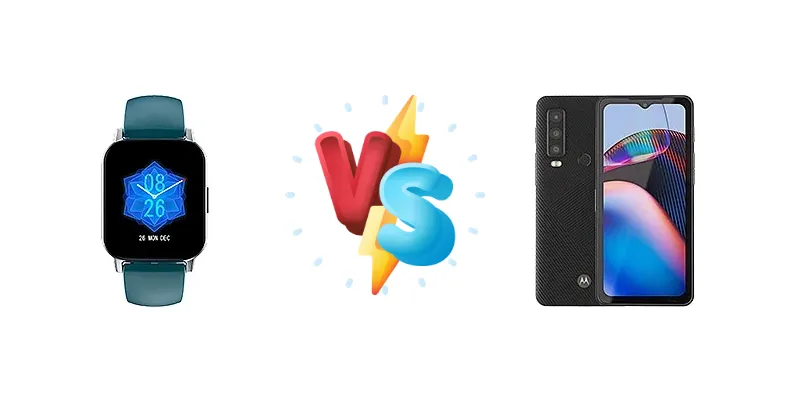
The rugged smartphone market caters to a specific need – durability. However, within this niche, performance and features vary significantly. We pit the Doogee CS2, powered by a Realtek 8762C, against the Motorola Defy 2, boasting a Mediatek Dimensity 930, to determine which offers the best blend of toughness and usability.
🏆 Quick Verdict
For the average user prioritizing performance and future-proofing, the Motorola Defy 2 is the clear winner. Its Dimensity 930 chipset delivers a significantly smoother experience for demanding tasks and gaming. While the Doogee CS2 offers a lower entry price, its Realtek chipset struggles to keep pace.
| Network |
|---|
| 2G bands | N/A | GSM 850 / 900 / 1800 / 1900 |
| 3G bands | N/A | HSDPA 850 / 900 / 1700(AWS) / 1900 / 2100 |
| 4G bands | N/A | 1, 2, 3, 4, 5, 7, 8, 12, 13, 14, 17, 20, 25, 26, 28, 30, 38, 40, 41, 46, 48, 66, 71 |
| 5G bands | - | 2, 5, 23, 25, 26, 28, 38, 41, 48, 66, 70, 71, 77, 78, 255, 256 SA/NSA/Sub6/mmWave |
| EDGE | No | - |
| GPRS | No | - |
| Speed | - | HSPA, LTE, 5G |
| Technology | No cellular connectivity | GSM / HSPA / LTE / 5G |
| Launch |
|---|
| Announced | 2021, May | 2023, February 24 |
| Status | Available. Released 2021, May | Available. Released 2023, October |
| Body |
|---|
| Build | Plastic frame, plastic back | Glass front (Gorilla Glass Victus), plastic back, aluminum frame |
| Dimensions | 43.8 x 36.9 x 10.5 mm (1.72 x 1.45 x 0.41 in) | 171 x 80 x 11.9 mm (6.73 x 3.15 x 0.47 in) |
| SIM | No | Nano-SIM + Nano-SIM |
| Weight | 35 g (1.23 oz) | 268 g (9.45 oz) |
| | - | IP68/IP69 dust/water resistant (up to 5m for 35 min)
Drop-to-concrete resistance from up to 1.8m
MIL-STD-810H compliant |
| Display |
|---|
| Protection | - | Corning Gorilla Glass Victus |
| Resolution | 240 x 240 pixels (~201 ppi density) | 1080 x 2408 pixels, 20:9 ratio (~400 ppi density) |
| Size | 1.69 inches | 6.6 inches, 104.9 cm2 (~76.7% screen-to-body ratio) |
| Type | IPS LCD | IPS LCD, 120Hz |
| Platform |
|---|
| CPU | - | Octa-core (2x2.2 GHz Cortex-A78 & 6x2.0 GHz Cortex-A55) |
| Chipset | Realtek 8762C | Mediatek Dimensity 930 (6 nm) |
| GPU | - | IMG BXM-8-256 |
| OS | Proprietary | Android 12 |
| Memory |
|---|
| Card slot | No | microSDXC (uses shared SIM slot) |
| Internal | - | 128GB 6GB RAM |
| Main Camera |
|---|
| Features | - | Dual-LED flash, HDR, panorama |
| Triple | - | 50 MP, f/1.8, (wide), PDAF
8 MP, f/2.2, (ultrawide)
2 MP (macro) |
| Video | - | 1080p@30fps |
| Selfie camera |
|---|
| Single | - | 8 MP, f/2.0, (wide) |
| Video | - | 1080p@30fps |
| Sound |
|---|
| 3.5mm jack | - | No |
| 35mm jack | No | No |
| Loudspeaker | No | Yes |
| Comms |
|---|
| Bluetooth | 5.0, A2DP, LE | 5.1, A2DP, LE |
| NFC | No | Yes |
| Positioning | No | GPS (L1+L5), GLONASS, GALILEO, BDS |
| Radio | No | Unspecified |
| USB | No | USB Type-C 2.0, OTG |
| WLAN | No | Wi-Fi 802.11 a/b/g/n/ac, dual-band |
| Features |
|---|
| Sensors | Accelerometer, heart rate | Fingerprint (rear-mounted), accelerometer, gyro, proximity, compass |
| | - | Emergency SOS via satellite (Bullitt Satellite Connect service) |
| Battery |
|---|
| Charging | - | 15W wireless |
| Type | Li-Ion 300 mAh | Li-Po 5000 mAh |
| Misc |
|---|
| Colors | Black, Rose Gold, Silver | Black |
| Models | - | BM1S1B |
| Price | About 40 EUR | About 570 EUR |
Doogee CS2
- Extremely affordable price point
- Rugged design for durability
- Basic functionality for essential communication
- Significantly underpowered processor
- Poor performance for modern apps
- Limited camera capabilities
Motorola Defy 2
- Powerful Mediatek Dimensity 930 chipset
- Wireless charging for added convenience
- Smoother performance for multitasking and gaming
- Higher price compared to the Doogee CS2
- Rugged design may add bulk
- Potentially less battery life than a similarly sized phone with a less powerful processor (though efficiency mitigates this)
Display Comparison
Neither device's display specifications are provided, so a direct comparison is limited. However, given the price point of the Doogee CS2, it likely utilizes a lower-quality panel with lower brightness and color accuracy compared to the Motorola Defy 2. The Defy 2, positioned as a more premium offering, likely benefits from a more refined display experience, though specifics like resolution and refresh rate remain unknown. Bezels are likely larger on the Doogee CS2 to reduce manufacturing costs.
Camera Comparison
Without detailed camera specifications, a precise comparison is difficult. However, the chipset difference suggests a significant disparity in image processing capabilities. The Dimensity 930 in the Motorola Defy 2 includes a dedicated Image Signal Processor (ISP) capable of handling more complex algorithms for noise reduction, dynamic range optimization, and faster autofocus. The Realtek 8762C’s ISP is far less sophisticated, resulting in lower-quality images, especially in low-light conditions. It's reasonable to assume the Defy 2 will offer a more versatile and capable camera system, even if the megapixel counts are similar.
Performance
The performance gap between these two devices is substantial. The Motorola Defy 2’s Mediatek Dimensity 930 (6nm) is a modern, octa-core processor featuring two high-performance Cortex-A78 cores clocked at 2.2 GHz and six efficiency cores at 2.0 GHz. This architecture allows for smooth multitasking and responsive app launches. In contrast, the Doogee CS2 relies on the Realtek 8762C, a significantly less powerful chipset typically found in basic feature phones and entry-level IoT devices. The Realtek chip will struggle with demanding applications and will exhibit noticeable lag during everyday use. The 6nm process node of the Dimensity 930 also contributes to better thermal efficiency, reducing the likelihood of throttling under sustained load.
Battery Life
Battery capacity isn't specified for either device. However, the Motorola Defy 2’s inclusion of 15W wireless charging is a significant advantage. Wireless charging adds convenience and eliminates the need for cables. While the Doogee CS2 likely offers a comparable battery size, the less efficient Realtek chipset will likely result in shorter battery life under similar usage scenarios. The Defy 2’s more efficient processor will allow it to extract more runtime from a given battery capacity, and the wireless charging capability provides a flexible charging solution.
Buying Guide
Buy the Doogee CS2 if you need an extremely affordable, basic rugged phone for essential communication and light tasks. It’s ideal for users who prioritize minimal cost over performance. Buy the Motorola Defy 2 if you prefer a rugged phone capable of handling modern apps, streaming, and even some gaming without significant lag, and if wireless charging is a must-have feature.
Frequently Asked Questions
❓ Will the Motorola Defy 2 overheat during extended gaming sessions?
The Mediatek Dimensity 930’s 6nm process node and the Defy 2’s likely thermal design should prevent significant overheating during gaming. While some throttling is possible, it should be less pronounced than on devices with less efficient chipsets. The larger surface area of a rugged phone also aids in heat dissipation.
❓ Is the Realtek 8762C in the Doogee CS2 sufficient for running popular social media apps like Facebook and WhatsApp?
Yes, the Realtek 8762C can run basic apps like Facebook and WhatsApp, but expect a sluggish experience. App loading times will be slower, and multitasking will be limited. It's suitable for infrequent use, but not for heavy social media engagement.
❓ Does the Motorola Defy 2 support 5G connectivity?
While not explicitly stated in the provided data, the Mediatek Dimensity 930 chipset *is* capable of supporting 5G connectivity. It's highly probable that the Motorola Defy 2 includes 5G support, but confirmation from official specifications is needed.
❓ What level of water and dust resistance can I expect from the Doogee CS2?
The Doogee CS2 is marketed as a rugged phone, implying some level of water and dust resistance. However, without an official IP rating (e.g., IP68), the exact level of protection is unknown. It's likely to withstand splashes and dust, but submersion should be avoided.