
Doogee Blade10 Pro vs Motorola Edge 30 Pro: A Deep Dive into Performance and Endurance
| Phones Images | |||||
|---|---|---|---|---|---|
|
🏆 Quick Verdict
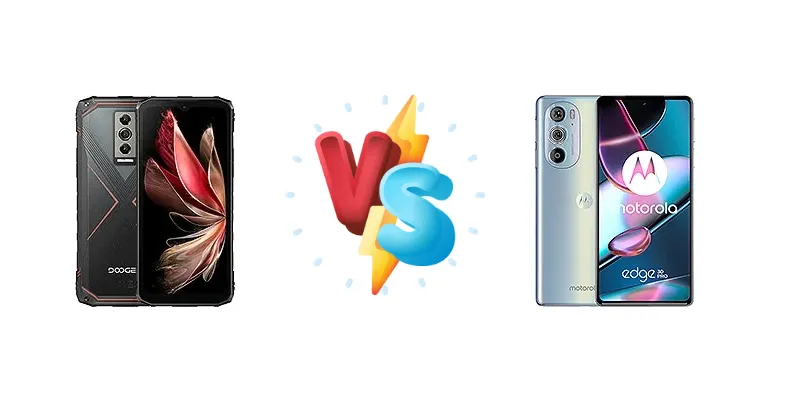
For the average user prioritizing raw speed and a premium experience, the Motorola Edge 30 Pro is the clear winner. However, the Doogee Blade10 Pro delivers exceptional battery endurance and a compelling price point, making it ideal for users who prioritize longevity and affordability.
| PHONES | ||
|---|---|---|
| Phone Names | Doogee Blade10 Pro | Motorola Edge 30 Pro |
| Network | ||
|---|---|---|
| 2G bands | GSM 850 / 900 / 1800 / 1900 | GSM 850 / 900 / 1800 / 1900 |
| 3G bands | HSDPA 850 / 900 / 1700(AWS) / 1900 / 2100 | HSDPA 850 / 900 / 1700(AWS) / 1900 / 2100 |
| 4G bands | 1, 2, 3, 4, 5, 7, 8, 18, 19, 20, 25, 26, 28, 34, 38, 39, 40, 41, 66 | 1, 2, 3, 4, 5, 7, 8, 12, 13, 17, 18, 19, 20, 25, 26, 28, 32, 38, 39, 40, 41, 42, 43, 48, 66 - International |
| 5G bands | - | 1, 3, 5, 7, 8, 20, 28, 38, 40, 41, 66, 77, 78 SA/NSA/Sub6 - International |
| Speed | HSPA, LTE | HSPA 42.2/5.76 Mbps, LTE Cat20 2000/150 Mbps, 5G |
| Technology | GSM / HSPA / LTE | GSM / HSPA / LTE / 5G |
| - | 2, 5, 7, 12, 25, 26, 29, 30, 41, 48, 66, 71, 77, 78, 260, 261 SA/NSA/Sub6/mmWave - USA | |
| Launch | ||
|---|---|---|
| Announced | 2024, August | 2022, January 24 |
| Status | Available. Released 2024, September | Available. Released 2022, March 04 |
| Body | ||
|---|---|---|
| Build | - | Glass front (Gorilla Glass 3), glass back (Gorilla Glass 5), plastic frame |
| Dimensions | 10.7 mm thickness | 163.1 x 76 x 8.8 mm (6.42 x 2.99 x 0.35 in) |
| SIM | Nano-SIM + Nano-SIM | · Nano-SIM· Nano-SIM + Nano-SIM |
| Weight | 240 g (8.47 oz) | 196 g (6.91 oz) |
| - | Water-repellent design | |
| Display | ||
|---|---|---|
| Protection | Corning Gorilla Glass 5, Mohs level 5 | Corning Gorilla Glass 3 |
| Resolution | 720 x 1612 pixels, 20:9 ratio (~269 ppi density) | 1080 x 2400 pixels, 20:9 ratio (~393 ppi density) |
| Size | 6.56 inches, 103.4 cm2 | 6.7 inches, 108.4 cm2 (~87.4% screen-to-body ratio) |
| Type | IPS LCD, 90Hz | OLED, 1B colors, 144Hz, HDR10+ |
| - | Always-on display | |
| Platform | ||
|---|---|---|
| CPU | Octa-core (2x1.6 GHz Cortex-A75 & 6x1.6 GHz Cortex-A55) | Octa-core (1x3.00 GHz Cortex-X2 & 3x2.50 GHz Cortex-A710 & 4x1.80 GHz Cortex-A510) |
| Chipset | Unisoc T606 (12 nm) | Qualcomm SM8450 Snapdragon 8 Gen 1 (4 nm) |
| GPU | Mali-G57 MP1 | Adreno 730 |
| OS | Android 14 | Android 12, upgradable to Android 14 |
| Memory | ||
|---|---|---|
| Card slot | microSDXC (dedicated slot) | No |
| Internal | 256GB 6GB RAM | 128GB 8GB RAM, 256GB 8GB RAM, 256GB 12GB RAM, 512GB 8GB RAM, 512GB 12GB RAM |
| - | UFS 3.1 | |
| Main Camera | ||
|---|---|---|
| Features | LED flash | Dual-LED dual-tone flash, HDR, panorama |
| Single | 50 MP, (wide), AF | - |
| Triple | - | 50 MP, f/1.8, (wide), 1/1.55", 1.0µm, multi-directional PDAF, OIS 50 MP, f/2.2, 114˚ (ultrawide), 1/2.76", 0.64µm, AF Auxiliary lens |
| Video | Yes | 8K@24/30fps, 4K@30/60fps, 1080p@30/60/120/240/960fps, 10-bit HDR10+, gyro-EIS |
| Selfie camera | ||
|---|---|---|
| Features | - | HDR |
| Single | 8 MP, (wide) | 60 MP, f/2.2, (wide), 1/2.8", 0.61µm |
| Video | Yes | 4K@30fps, 1080p@30/120fps |
| Sound | ||
|---|---|---|
| 3.5mm jack | - | No |
| 35mm jack | No | No |
| Loudspeaker | Yes | Yes, with stereo speakers |
| - | 24-bit/192kHz audio | |
| Comms | ||
|---|---|---|
| Bluetooth | 5.0, A2DP, LE | 5.2, A2DP, LE, aptX HD, aptX Adaptive |
| NFC | Yes | Yes |
| Positioning | GPS, GLONASS, BDS, GALILEO | GPS (L1+L5), GLONASS, BDS, GALILEO |
| Radio | Unspecified | No |
| USB | USB Type-C | USB Type-C 3.1, DisplayPort 1.4 |
| WLAN | Wi-Fi 802.11 a/b/g/n/ac, dual-band | Wi-Fi 802.11 a/b/g/n/ac/6e, dual-band, Wi-Fi Direct |
| Features | ||
|---|---|---|
| Sensors | Unspecified | Fingerprint (side-mounted), accelerometer, gyro, proximity, compass, barometer |
| - | Ready For support | |
| Battery | ||
|---|---|---|
| Charging | - | 68W wired, 50% in 15 min, 100% in 35 min 15W wireless 5W reverse wireless |
| Type | 5150 mAh | Li-Po 4800 mAh |
| Misc | ||
|---|---|---|
| Colors | Black, Camouflage | Cosmos Blue, Stardust White |
| Models | - | XT2201-1 |
| Price | About 190 EUR | € 475.45 |
| Tests | ||
|---|---|---|
| Battery life | - | Endurance rating 80h |
| Camera | - | Photo / Video |
| Display | - | Contrast ratio: Infinite (nominal) |
| Loudspeaker | - | -24.2 LUFS (Very good) |
| Performance | - | AnTuTu: 941895 (v9) GeekBench: 3658 (v5.1) GFXBench: 78fps (ES 3.1 onscreen) |
| EU LABEL | ||
|---|---|---|
| Battery | 50:50h endurance, 1000 cycles | - |
| Energy | Class B | - |
| Free fall | Class A (270 falls) | - |
| Repairability | Class B | - |
Doogee Blade10 Pro
- Exceptional battery endurance (50:50h)
- Long battery lifespan (1000 cycles)
- More affordable price point
- Significantly slower processor
- Likely lower-quality display
- Limited camera capabilities
Motorola Edge 30 Pro
- Flagship-level performance (Snapdragon 8 Gen 1)
- Bright and vibrant display (685 nits)
- Fast charging (68W wired, 15W wireless)
- Shorter battery lifespan compared to Doogee
- Potential for thermal throttling under heavy load
- Higher price
Display Comparison
The Motorola Edge 30 Pro boasts a significantly brighter display, reaching a measured 685 nits, compared to the Doogee Blade10 Pro’s unspecified brightness. This makes the Motorola far more usable outdoors in direct sunlight. While the Edge 30 Pro’s contrast ratio is listed as ‘infinite’ (typical for OLED), the Blade10 Pro’s panel type is not specified, suggesting an LCD which will have lower contrast. The Motorola’s display is likely to offer superior color accuracy and viewing angles, enhancing the overall visual experience.
Camera Comparison
Both devices are listed as having Photo/Video capabilities, but detailed camera specifications are lacking for the Doogee Blade10 Pro. The Motorola Edge 30 Pro likely features a more sophisticated camera system, benefiting from Qualcomm’s image signal processor (ISP). While sensor size and aperture details are missing, the Motorola’s flagship status suggests a higher-quality camera experience with better low-light performance and image stabilization. The absence of specific camera details for the Doogee suggests a more basic camera setup focused on everyday snapshots.
Performance
The performance gap between these devices is substantial. The Motorola Edge 30 Pro’s Qualcomm Snapdragon 8 Gen 1 (4nm) is a flagship chipset featuring a Cortex-X2 prime core clocked at 3.00 GHz, alongside Cortex-A710 and A510 cores. This contrasts sharply with the Doogee Blade10 Pro’s Unisoc T606 (12nm), which utilizes Cortex-A75 and A55 cores clocked at 1.6 GHz. The Snapdragon 8 Gen 1’s 4nm process offers superior power efficiency and thermal performance, minimizing throttling during sustained workloads. The Motorola will handle demanding games and applications with ease, while the Doogee will struggle with more intensive tasks. The Edge 30 Pro’s likely use of LPDDR5x RAM further enhances its performance advantage.
Battery Life
The Doogee Blade10 Pro claims a 50:50h endurance rating and 1000 charge cycles, emphasizing longevity. The Motorola Edge 30 Pro has an endurance rating of 80h. While the Motorola has a higher endurance rating, the Doogee’s 1000 cycle claim suggests a longer lifespan before significant battery degradation. The Motorola compensates with significantly faster charging: 68W wired (0-50% in 15 minutes, 0-100% in 35 minutes), 15W wireless, and 5W reverse wireless. The Doogee’s charging speed is not specified, but is likely considerably slower. The Motorola offers convenience with wireless charging, a feature absent on the Doogee.
Buying Guide
Buy the Doogee Blade10 Pro if you need a phone that can reliably last through two full days of moderate use, and you're willing to compromise on processing power for extended battery life. Buy the Motorola Edge 30 Pro if you demand the fastest possible performance for gaming, video editing, or demanding applications, and you value features like 68W fast charging and a brighter display.