
Doogee Blade GT vs Oppo Reno8 T 5G: A Deep Dive into Performance and Power
| Phones Images | |||||
|---|---|---|---|---|---|
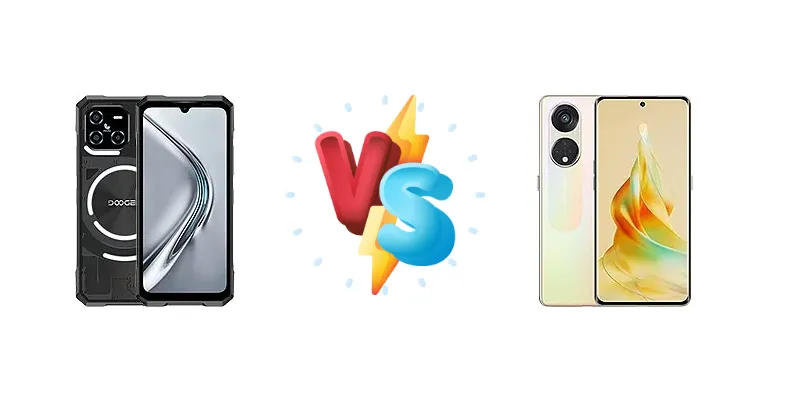
|
🏆 Quick Verdict
For users prioritizing long-term performance and battery life, the Doogee Blade GT emerges as the winner. Its Dimensity 7050 chipset and 30:21h endurance offer a more robust experience for demanding tasks. However, the Oppo Reno8 T 5G’s 67W charging is a significant advantage for those who value quick top-ups.
| PHONES | ||
|---|---|---|
| Phone Names | Doogee Blade GT | Oppo Reno8 T 5G |
| Network | ||
|---|---|---|
| 2G bands | GSM 850 / 900 / 1800 / 1900 | GSM 850 / 900 / 1800 / 1900 |
| 3G bands | HSDPA 850 / 900 / 1700(AWS) / 1900 / 2100 | HSDPA 800 / 850 / 900 / 1700(AWS) / 1900 / 2100 |
| 4G bands | 1, 2, 3, 4, 5, 7, 8, 12, 17, 18, 19, 20, 25, 26, 28, 66 | 1, 2, 3, 4, 5, 7, 8, 12, 17, 18, 19, 20, 26, 28, 38, 39, 40, 41, 66 |
| 5G bands | 1, 3, 7, 8, 28, 38, 41, 77, 78, 79 SA/NSA | 1, 3, 5, 7, 8, 20, 28, 38, 40, 41, 66, 77, 78 SA/NSA |
| Speed | HSPA, LTE, 5G | HSPA, LTE, 5G |
| Technology | GSM / HSPA / LTE / 5G | GSM / HSPA / LTE / 5G |
| Launch | ||
|---|---|---|
| Announced | 2024, December | 2023, February 01 |
| Status | Available. Released 2025, January | Available. Released 2023, February 10 |
| Body | ||
|---|---|---|
| Dimensions | 178.5 x 83.5 x 10.5 mm (7.03 x 3.29 x 0.41 in) | 162.3 x 74.3 x 7.7 mm (6.39 x 2.93 x 0.30 in) |
| SIM | Nano-SIM + Nano-SIM | Nano-SIM + Nano-SIM |
| Weight | 260 g (9.17 oz) | 171 g (6.03 oz) |
| Display | ||
|---|---|---|
| Protection | Mohs level 6 | Asahi Glass AGC DT-Star2 |
| Resolution | 1080 x 2400 pixels, 20:9 ratio (~392 ppi density) | 1080 x 2412 pixels, 20:9 ratio (~394 ppi density) |
| Size | 6.72 inches, 109.0 cm2 (~73.1% screen-to-body ratio) | 6.7 inches, 108.0 cm2 (~89.6% screen-to-body ratio) |
| Type | IPS LCD, 120Hz | AMOLED, 1B colors, 120Hz, 500 nits (typ), 800 nits (HBM), 950 nits (peak) |
| Platform | ||
|---|---|---|
| CPU | Octa-core (2x2.6 GHz Cortex-A78 & 6x2.0 GHz Cortex-A55) | Octa-core (2x2.2 GHz Kryo 660 Gold & 6x1.7 GHz Kryo 660 Silver) |
| Chipset | Mediatek Dimensity 7050 (6 nm) | Qualcomm SM6375 Snapdragon 695 5G (6 nm) |
| GPU | Mali-G68 MC4 | Adreno 619 |
| OS | Android 14 | Android 13, upgradable to Android 14, ColorOS 14 |
| Memory | ||
|---|---|---|
| Card slot | microSDXC (uses shared SIM slot) | microSDXC (uses shared SIM slot) |
| Internal | 256GB 12GB RAM | 128GB 8GB RAM, 256GB 8GB RAM |
| - | UFS 2.2 | |
| Main Camera | ||
|---|---|---|
| Dual | 48 MP, f/1.8, (wide), PDAF, OIS 5 MP, f/2.2, 120˚ (ultrawide) Auxiliary lens | 108 MP, f/1.7, 24mm (wide), 1/1.67", 0.64µm, AF 2 MP, f/3.3, 34mm (microscope) 2 MP, f/2.4, (depth) |
| Features | LED flash, HDR, panorama | LED flash, HDR, panorama |
| Single | - | 32 MP, f/2.4, 22mm (wide) |
| Triple | - | 108 MP, f/1.7, 24mm (wide), 1/1.67", 0.64µm, AF 2 MP, f/3.3, 34mm (microscope) Auxiliary lens |
| Video | 4K@30fps, 1080p@30fps, gyro-EIS | 1080p@30fps |
| Selfie camera | ||
|---|---|---|
| Features | - | HDR, panorama |
| Single | 20 MP, f/2.3, (wide) | 32 MP, f/2.4, 22mm (wide) |
| Video | 1080p@30fps | 1080p@30fps |
| Sound | ||
|---|---|---|
| 3.5mm jack | - | No |
| 35mm jack | No | No |
| Loudspeaker | Yes | Yes, with stereo speakers |
| Comms | ||
|---|---|---|
| Bluetooth | 5.2, A2DP, LE | 5.1, A2DP, LE, aptX HD |
| NFC | Yes | Yes |
| Positioning | GPS, GLONASS, GALILEO, BDS | GPS, GALILEO, GLONASS, BDS, QZSS |
| Radio | FM radio | No |
| USB | USB Type-C 2.0 | USB Type-C 2.0, OTG |
| WLAN | Wi-Fi 802.11 a/b/g/n/ac/6, dual-band | Wi-Fi 802.11 a/b/g/n/ac, dual-band |
| Features | ||
|---|---|---|
| Sensors | Fingerprint (side-mounted), accelerometer, gyro, proximity, compass | Fingerprint (under display, optical), accelerometer, gyro, proximity, compass |
| Battery | ||
|---|---|---|
| Charging | 18W wired | 67W wired, PD, 100% in 44 min Reverse wired |
| Type | 5500 mAh | Li-Po 4800 mAh |
| Misc | ||
|---|---|---|
| Colors | Black, Silver | Black Starlight (Midnight Black), Dawn Gold (Sunrise Gold) |
| Models | - | CPH2505 |
| Price | About 340 EUR | About 340 EUR |
| EU LABEL | ||
|---|---|---|
| Battery | 30:21h endurance, 1300 cycles | - |
| Energy | Class E | - |
| Free fall | Class A (270 falls) | - |
| Repairability | Class C | - |
Doogee Blade GT
- Superior CPU performance with Dimensity 7050
- Exceptional battery endurance (30:21h)
- Long-lasting battery health (1300 cycles)
- Slower charging speed (18W)
- Missing reverse charging functionality
Oppo Reno8 T 5G
- Ultra-fast 67W charging (0-100% in 44 mins)
- Reverse wired charging capability
- Potentially better image processing (Oppo's strength)
- Less powerful CPU (Snapdragon 695)
- Likely shorter battery life compared to Blade GT
Display Comparison
Display specifications are absent from the provided data, but considering the market positioning, both devices likely feature 6.6-6.7 inch LCD or AMOLED panels with FHD+ resolution. The Reno8 T 5G, given Oppo’s brand focus, may have a slightly more color-accurate display. However, without specific data on peak brightness, refresh rates, and color gamut coverage, a definitive comparison is impossible. The absence of LTPO technology on either device suggests standard refresh rate implementations.
Camera Comparison
Camera details are missing, but based on the price bracket, both phones likely feature a multi-camera setup with a primary sensor around 50MP. The Reno8 T 5G, leveraging Oppo’s image processing expertise, may deliver more visually appealing photos in standard shooting conditions. However, without knowing sensor sizes, aperture values, and the presence of Optical Image Stabilization (OIS), it’s difficult to assess the true camera capabilities. The inclusion of a 2MP macro lens on either device is likely a marketing feature with limited practical benefit.
Performance
The core difference lies in the chipsets. The Doogee Blade GT’s Mediatek Dimensity 7050 (6nm) boasts a more powerful CPU configuration – 2x2.6 GHz Cortex-A78 and 6x2.0 GHz Cortex-A55 – compared to the Oppo Reno8 T 5G’s Qualcomm Snapdragon 695 5G (6nm) with 2x2.2 GHz Kryo 660 Gold and 6x1.7 GHz Kryo 660 Silver cores. This translates to a noticeable advantage for the Blade GT in CPU-intensive tasks like video editing and demanding games. While both are 6nm chips, the Cortex-A78 cores in the Dimensity 7050 offer superior single-core performance. The Snapdragon 695 focuses more on efficient 5G connectivity, but falls behind in raw processing power.
Battery Life
The Doogee Blade GT’s 30:21h endurance is a significant advantage, indicating exceptional battery life. This is coupled with a respectable 1300 charge cycles, suggesting long-term battery health. The Oppo Reno8 T 5G, while likely having a smaller battery capacity (data unavailable), compensates with its 67W wired charging, achieving a full charge in just 44 minutes. This rapid charging is a game-changer for users who need a quick power boost. The Reno8 T 5G also offers reverse wired charging, a feature absent on the Blade GT, allowing it to charge other devices.
Buying Guide
Buy the Doogee Blade GT if you need a phone that can handle extended gaming sessions, demanding applications, and multi-day use without frequent charging. It’s ideal for power users and those who dislike battery anxiety. Buy the Oppo Reno8 T 5G if you prioritize convenience and rapid charging, and frequently find yourself needing to quickly replenish your battery throughout the day. It’s a better fit for users who value speed and ease of use over raw processing power.