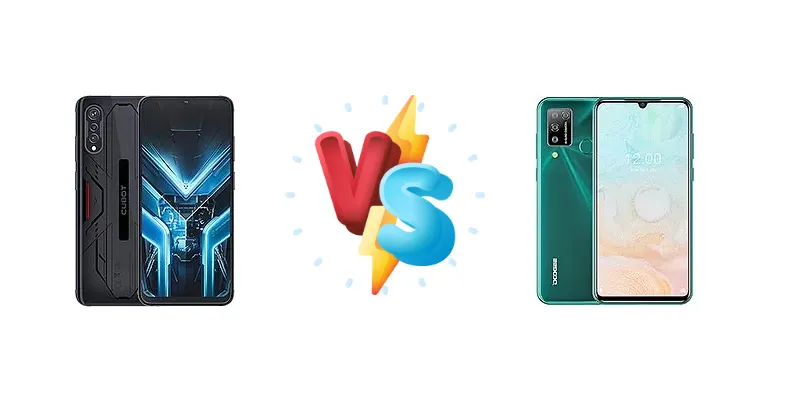
The Cubot X70 and Doogee N20 Pro represent two distinct approaches to the budget smartphone market. The X70 aims for a balance of performance and features, leveraging the newer Mediatek Helio G99 chipset. Conversely, the N20 Pro focuses on delivering a functional experience at the lowest possible price point, utilizing the older Helio P60. This comparison dissects their key differences to help you determine which device best suits your needs.
🏆 Quick Verdict
For the average user prioritizing performance, especially gaming, the Cubot X70 is the clear winner. Its Helio G99 chipset provides a substantial leap in processing power over the Doogee N20 Pro’s Helio P60. However, the N20 Pro remains a viable option for those on an extremely tight budget who prioritize basic functionality over speed.
| Network |
|---|
| 2G bands | GSM 850 / 900 / 1800 / 1900 | GSM 850 / 900 / 1800 / 1900 |
| 3G bands | HSDPA 800 / 850 / 900 / 1700(AWS) / 1900 / 2100 | HSDPA 850 / 900 / 2100 |
| 4G bands | 1, 2, 3, 4, 5, 7, 8, 12, 13, 17, 18, 19, 20, 25, 26, 28, 38, 39, 40, 41, 66 | 1, 3, 5, 7, 8, 19, 20 |
| Speed | HSPA, LTE | HSPA, LTE |
| Technology | GSM / CDMA / HSPA / LTE | GSM / HSPA / LTE |
| Launch |
|---|
| Announced | 2023 | 2020, August 04. Released 2020, August |
| Status | Available. Released 2023 | Discontinued |
| Body |
|---|
| Dimensions | 165.1 x 75.3 x 10.2 mm (6.5 x 2.96 x 0.40 in) | 159 x 77.1 x 8.8 mm (6.26 x 3.04 x 0.35 in) |
| SIM | Nano-SIM + Nano-SIM | Nano-SIM + Nano-SIM |
| Weight | 220 g (7.76 oz) | 175 g (6.17 oz) |
| Display |
|---|
| Resolution | 1080 x 2408 pixels, 20:9 ratio (~401 ppi density) | 1080 x 2280 pixels, 19:9 ratio (~400 ppi density) |
| Size | 6.58 inches, 104.3 cm2 (~83.9% screen-to-body ratio) | 6.3 inches, 99.1 cm2 (~80.8% screen-to-body ratio) |
| Type | IPS LCD, 120Hz | IPS LCD |
| Platform |
|---|
| CPU | Octa-core (2x2.2 GHz Cortex-A76 & 6x2.0 GHz Cortex-A55) | Octa-core (4x2.0 GHz Cortex-A73 & 4x2.0 GHz Cortex-A53) |
| Chipset | Mediatek Helio G99 (6 nm) | Mediatek MT6771V/CA Helio P60 (12 nm) |
| GPU | Mali-G57 MC2 | Mali-G72 MP3 |
| OS | Android 13 | Android 10 |
| Memory |
|---|
| Card slot | microSDXC (uses shared SIM slot) | microSDXC (uses shared SIM slot) |
| Internal | 256GB 12GB RAM | 128GB 6GB RAM |
| Main Camera |
|---|
| Features | LED flash | LED flash |
| Quad | - | 16 MP, f/2.0, (wide), PDAF
8 MP, f/2.4, 130˚ (ultrawide)
2 MP (macro)
Auxiliary lens |
| Triple | 100 MP, (wide), PDAF
5 MP (macro)
Auxiliary lens | - |
| Video | Yes | 1080p |
| Selfie camera |
|---|
| Single | 32 MP | 16 MP, f/2.0, (wide) |
| Video | Yes | 1080p |
| Sound |
|---|
| 35mm jack | No | Yes |
| Loudspeaker | Yes | Yes |
| Comms |
|---|
| Bluetooth | 5.2, A2DP | 5.0, A2DP, LE |
| NFC | Yes | No |
| Positioning | GPS, GLONASS, GALILEO, BDS | GPS, GLONASS, BDS, GALILEO |
| Radio | Unspecified | FM radio |
| USB | USB Type-C, OTG | microUSB 2.0 |
| WLAN | Wi-Fi 802.11 a/b/g/n/ac, dual-band | Wi-Fi 802.11 a/b/g/n/ac, dual-band |
| Features |
|---|
| Sensors | Fingerprint (side-mounted), accelerometer, gyro, proximity, compass | Fingerprint (rear-mounted), accelerometer, proximity |
| Battery |
|---|
| Charging | - | 10W wired |
| Type | 5200 mAh | 4400 mAh |
| Misc |
|---|
| Colors | Tech Black, Space Black | Gray, Purple, Forest |
| Price | About 200 EUR | About 170 EUR |
Cubot X70
- Significantly faster processor (Helio G99)
- More efficient 6nm process node
- Likely better camera performance
- Potentially faster charging
- Likely higher price point
- Specific display details unknown
Doogee N20 Pro
- Extremely affordable price
- Functional for basic tasks
- Simple and straightforward user experience
- Potentially longer battery life due to less demanding processor (though offset by slow charging)
- Outdated and slow processor (Helio P60)
- Slow 10W charging
- Likely lower-quality display
- Poor gaming performance
Display Comparison
Neither device’s display specifications are provided, so a direct comparison is limited. However, given the N20 Pro’s focus on cost reduction, it likely utilizes a lower-quality panel with lower brightness and color accuracy. The X70, positioned slightly higher in the market, likely benefits from a more refined display experience, though specifics like resolution and refresh rate remain unknown. Expect the X70 to offer a more vibrant and viewable display in direct sunlight.
Camera Comparison
Without detailed camera specifications, a precise comparison is difficult. However, it’s reasonable to assume the Cubot X70 will offer a more capable camera system. The G99’s integrated image signal processor (ISP) is more advanced than the P60’s, enabling better image processing and noise reduction. While both phones likely feature multiple rear cameras, the X70’s primary sensor is likely larger and of higher resolution, resulting in better low-light performance and detail. The N20 Pro’s camera is likely adequate for casual snapshots but will fall short in challenging conditions.
Performance
The core difference lies in the chipsets. The Cubot X70’s Mediatek Helio G99 (6nm) is a significant upgrade over the Doogee N20 Pro’s Helio P60 (12nm). The 6nm process node of the G99 translates to improved power efficiency and reduced heat generation, allowing for sustained performance during demanding tasks. Architecturally, the G99’s Cortex-A76 cores (2x2.2 GHz) are considerably more powerful than the N20 Pro’s Cortex-A73 cores (4x2.0 GHz). This difference will be most noticeable in gaming and app loading times. The G99’s newer architecture also benefits from improved AI processing capabilities. The N20 Pro’s P60, while capable for basic tasks, will struggle with modern, graphically intensive games.
Battery Life
Battery capacity isn’t specified for either device. However, the Doogee N20 Pro’s 10W wired charging is a significant limitation. This slow charging speed will require considerably longer to reach a full charge compared to the X70, which likely supports faster charging (though the exact wattage is unknown). While the N20 Pro might have a slightly larger battery, the G99’s superior power efficiency in the X70 could result in comparable or even better real-world battery life, especially during gaming or video playback.
Buying Guide
Buy the Cubot X70 if you need a phone capable of handling modern mobile games, multitasking, and demanding applications without significant lag. It’s ideal for users who value a smoother, more responsive experience. Buy the Doogee N20 Pro if you prefer a no-frills device for essential communication – calls, texts, and light web browsing – and are unwilling to spend more than the absolute minimum.
Frequently Asked Questions
❓ Will the Doogee N20 Pro struggle with popular apps like Facebook and WhatsApp?
While the N20 Pro can run basic apps like Facebook and WhatsApp, expect noticeable lag and slower loading times compared to devices with more powerful processors. The Helio P60 is an older chipset and isn't optimized for the demands of modern applications.
❓ Is the Helio G99 in the Cubot X70 capable of playing demanding games like PUBG Mobile?
Yes, the Helio G99 is a capable gaming chipset. PUBG Mobile should be playable on the Cubot X70 at medium settings with reasonable frame rates. However, sustained performance may be limited by thermal throttling, depending on the phone's cooling solution.
❓ How long will it take to fully charge the Doogee N20 Pro with its 10W charging?
With 10W charging, expect the Doogee N20 Pro to take approximately 3-4 hours to fully charge from 0% to 100%, depending on the battery capacity. This is significantly slower than most modern smartphones.
❓ Does the Cubot X70 support fast charging, and if so, what wattage?
While the exact charging wattage isn't specified, the Cubot X70 likely supports faster charging than the N20 Pro's 10W. Based on similar devices in this price range, it could potentially support 18W or even 33W charging, significantly reducing charging times.