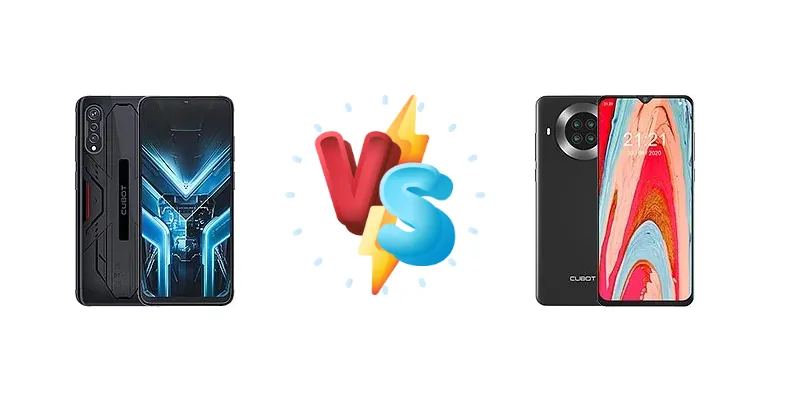
Cubot offers two compelling budget smartphones, the X70 and Note 20 Pro, both aiming to deliver a solid Android experience without breaking the bank. However, a significant difference lies under the hood: the X70 boasts the newer Mediatek Helio G99, while the Note 20 Pro relies on the older Helio P60. This comparison dissects the implications of this chipset disparity and other key differences to help you choose the right device.
🏆 Quick Verdict
For the vast majority of users, the Cubot X70 is the clear winner. Its Helio G99 chipset provides a substantial performance uplift over the Note 20 Pro’s Helio P60, translating to smoother multitasking, faster app loading, and a more enjoyable gaming experience. While the Note 20 Pro may offer a slightly lower price point, the X70’s improved performance justifies the potential cost difference.
| Network |
|---|
| 2G bands | GSM 850 / 900 / 1800 / 1900 | GSM 850 / 900 / 1800 / 1900 |
| 3G bands | HSDPA 800 / 850 / 900 / 1700(AWS) / 1900 / 2100 | HSDPA 900 / 2100 |
| 4G bands | 1, 2, 3, 4, 5, 7, 8, 12, 13, 17, 18, 19, 20, 25, 26, 28, 38, 39, 40, 41, 66 | 1, 3, 7, 8, 19, 20 |
| Speed | HSPA, LTE | HSPA, LTE |
| Technology | GSM / CDMA / HSPA / LTE | GSM / HSPA / LTE |
| Launch |
|---|
| Announced | 2023 | 2020. Released 2020 |
| Status | Available. Released 2023 | Discontinued |
| Body |
|---|
| Dimensions | 165.1 x 75.3 x 10.2 mm (6.5 x 2.96 x 0.40 in) | 162.8 x 75.4 x 9.1 mm (6.41 x 2.97 x 0.36 in) |
| SIM | Nano-SIM + Nano-SIM | Nano-SIM + Nano-SIM |
| Weight | 220 g (7.76 oz) | 200 g (7.05 oz) |
| Display |
|---|
| Resolution | 1080 x 2408 pixels, 20:9 ratio (~401 ppi density) | 720 x 1600 pixels, 20:9 ratio (~270 ppi density) |
| Size | 6.58 inches, 104.3 cm2 (~83.9% screen-to-body ratio) | 6.5 inches, 102.0 cm2 (~83.1% screen-to-body ratio) |
| Type | IPS LCD, 120Hz | IPS LCD |
| Platform |
|---|
| CPU | Octa-core (2x2.2 GHz Cortex-A76 & 6x2.0 GHz Cortex-A55) | Octa-core (4x2.0 GHz Cortex-A73 & 4x2.0 GHz Cortex-A53) |
| Chipset | Mediatek Helio G99 (6 nm) | Mediatek MT6771 Helio P60 (12 nm) |
| GPU | Mali-G57 MC2 | Mali-G72 MP3 |
| OS | Android 13 | Android 10 |
| Memory |
|---|
| Card slot | microSDXC (uses shared SIM slot) | microSDXC (dedicated slot) |
| Internal | 256GB 12GB RAM | 128GB 8GB RAM |
| Main Camera |
|---|
| Features | LED flash | LED flash |
| Quad | - | 12 MP, (wide), 1/2.9", AF
20 MP, (depth), 1/2.78"
Auxiliary lenses |
| Triple | 100 MP, (wide), PDAF
5 MP (macro)
Auxiliary lens | - |
| Video | Yes | Yes |
| Selfie camera |
|---|
| Single | 32 MP | 8 MP |
| Video | Yes | Yes |
| Sound |
|---|
| 35mm jack | No | Yes |
| Loudspeaker | Yes | Yes |
| Comms |
|---|
| Bluetooth | 5.2, A2DP | 4.2, A2DP |
| NFC | Yes | Yes |
| Positioning | GPS, GLONASS, GALILEO, BDS | GPS |
| Radio | Unspecified | Unspecified |
| USB | USB Type-C, OTG | microUSB, OTG |
| WLAN | Wi-Fi 802.11 a/b/g/n/ac, dual-band | Wi-Fi 802.11 a/b/g/n |
| Features |
|---|
| Sensors | Fingerprint (side-mounted), accelerometer, gyro, proximity, compass | Accelerometer, gyro, proximity, compass |
| Battery |
|---|
| Type | 5200 mAh | 4200 mAh, removable |
| Misc |
|---|
| Colors | Tech Black, Space Black | Black, Blue, Green |
| Price | About 200 EUR | - |
Cubot X70
- Significantly faster processor (Helio G99)
- Improved power efficiency for longer battery life
- Better gaming performance
- Likely more advanced camera processing
- Potentially slightly higher price
- May not have a dramatically different design
Cubot Note 20 Pro
- Potentially lower price point
- Sufficient for basic smartphone tasks
- Familiar Android experience
- May be more readily available in certain markets
- Outdated processor (Helio P60)
- Poor performance with demanding apps and games
- Less efficient power consumption
- Limited future-proofing
Display Comparison
Neither device's display specifications are provided, so a direct comparison is limited. However, given the X70's positioning as a more modern device, it likely benefits from a higher peak brightness and potentially a more color-accurate panel. The Note 20 Pro, with its older chipset, may utilize a less efficient display technology, potentially impacting battery life. Bezels are likely comparable given both phones target the budget segment.
Camera Comparison
Without specific camera sensor details, it’s difficult to make a definitive comparison. However, the X70’s newer chipset likely includes a more advanced image signal processor (ISP), enabling better image processing and potentially improved low-light performance. It’s reasonable to assume the X70 benefits from more sophisticated algorithms for noise reduction and dynamic range. The presence of a newer chipset often correlates with better camera software features. The Note 20 Pro’s older ISP will likely produce less refined images, particularly in challenging lighting conditions. We can assume both phones will include a standard set of camera features, but the X70 will likely have more advanced options.
Performance
The core difference lies in the chipsets. The Cubot X70’s Mediatek Helio G99 (6nm) is a significant upgrade over the Note 20 Pro’s Helio P60 (12nm). The G99 utilizes newer Cortex-A76 cores clocked at 2.2 GHz, compared to the P60’s Cortex-A73 cores at 2.0 GHz. This architectural improvement, coupled with the smaller 6nm process node, results in substantially better CPU and GPU performance. The 6nm node also translates to improved thermal efficiency, meaning the X70 is less likely to throttle under sustained load. The G99’s GPU will handle graphically intensive games with higher frame rates and detail settings. The Note 20 Pro’s P60, while capable for basic tasks, will struggle with modern gaming and demanding applications.
Battery Life
Battery capacity isn't specified for either device. However, the Helio G99’s superior power efficiency (due to the 6nm process) will likely result in longer battery life for the Cubot X70, even if both phones have similar battery capacities. The P60’s 12nm process is inherently less efficient. While charging wattage isn’t provided, the X70’s more modern design may incorporate faster charging technology, allowing for quicker top-ups. The combination of efficient power management and potentially faster charging gives the X70 a clear advantage in real-world battery performance.
Buying Guide
Buy the Cubot X70 if you prioritize performance, responsiveness, and future-proofing. It’s ideal for users who enjoy mobile gaming, frequently multitask, or simply want a phone that feels snappy and modern. Buy the Cubot Note 20 Pro if your primary needs are basic communication, light social media use, and you are on an extremely tight budget where every dollar counts. Be prepared for noticeable slowdowns with demanding tasks.
Frequently Asked Questions
❓ Will the Cubot X70 handle demanding games like PUBG or Call of Duty Mobile smoothly?
Yes, the Helio G99 chipset in the Cubot X70 is significantly more capable of handling demanding games than the Helio P60 in the Note 20 Pro. While you may need to adjust graphics settings for optimal performance, the X70 should provide a playable and enjoyable gaming experience, whereas the Note 20 Pro will likely struggle with consistent frame rates.
❓ Is the difference in performance between the Helio G99 and Helio P60 noticeable for everyday tasks like browsing and social media?
Absolutely. While both phones can handle basic tasks, the Helio G99 in the X70 will make everyday use feel much smoother and more responsive. App loading times will be faster, multitasking will be less laggy, and the overall user experience will be significantly improved. The Note 20 Pro’s P60 may exhibit noticeable slowdowns even with moderate use.
❓ Does the Cubot X70 support faster charging than the Note 20 Pro?
While specific charging speeds aren't provided, the Cubot X70 is more likely to support faster charging due to its newer design and chipset. Modern chipsets often incorporate advanced charging protocols. Even if the battery capacities are similar, the X70’s potentially faster charging will reduce downtime.