
Cubot X30 vs. Motorola Moto G Power (2021): A Detailed Performance and Value Showdown
| Phones Images | |||||
|---|---|---|---|---|---|
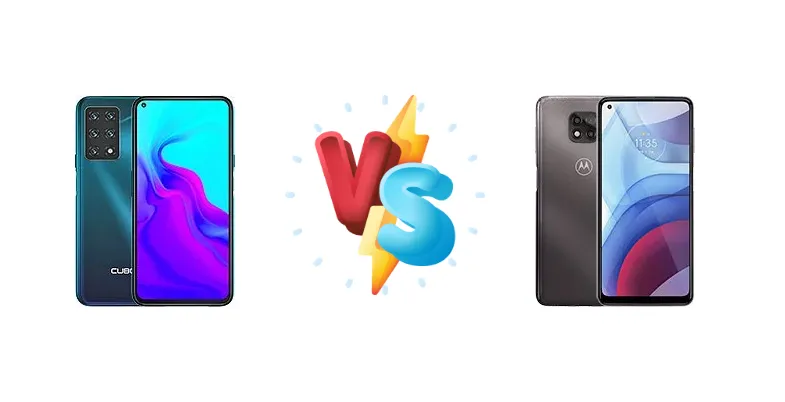
|
🏆 Quick Verdict
For the average user prioritizing consistent performance and a more refined software experience, the Motorola Moto G Power (2021) is the better choice. While the Cubot X30 offers a potentially lower price, the Snapdragon 662’s efficiency and Qualcomm’s software optimization provide a smoother, more reliable experience.
| PHONES | ||
|---|---|---|
| Phone Names | Cubot X30 | Motorola Moto G Power (2021) |
| Network | ||
|---|---|---|
| 2G bands | GSM 850 / 900 / 1800 / 1900 | GSM 850 / 900 / 1800 / 1900 |
| 3G bands | HSDPA 850 / 900 / 1700(AWS) / 1900 / 2100 | HSDPA 850 / 900 / 1700(AWS) / 1900 / 2100 |
| 4G bands | 1, 2, 3, 4, 5, 7, 8, 12, 13, 17, 18, 19, 20, 25, 26, 28, 38, 40, 41, 66 | 1, 2, 3, 4, 5, 7, 8, 12, 13, 14, 17, 25, 26, 29, 30, 38, 41, 66, 71 |
| Speed | HSPA, LTE | HSPA, LTE |
| Technology | GSM / HSPA / LTE | GSM / CDMA / HSPA / EVDO / LTE |
| - | CDMA2000 1xEV-DO | |
| Launch | ||
|---|---|---|
| Announced | 2020. Released 2020 | 2021, January 08 |
| Status | Discontinued | Available. Released 2021, January 14 |
| Body | ||
|---|---|---|
| Build | - | Glass front, plastic back, plastic frame |
| Dimensions | 157.1 x 76.4 x 8.5 mm (6.19 x 3.01 x 0.33 in) | 165.3 x 75.9 x 9.5 mm (6.51 x 2.99 x 0.37 in) |
| SIM | Nano-SIM + Nano-SIM | Nano-SIM |
| Weight | 193 g (6.81 oz) | 206.5 g (7.30 oz) |
| - | Water-repellent coating | |
| Display | ||
|---|---|---|
| Resolution | 1080 x 2310 pixels (~398 ppi density) | 720 x 1600 pixels, 20:9 ratio (~266 ppi density) |
| Size | 6.4 inches, 101.4 cm2 (~84.5% screen-to-body ratio) | 6.6 inches, 105.2 cm2 (~83.8% screen-to-body ratio) |
| Type | IPS LCD | IPS LCD |
| Platform | ||
|---|---|---|
| CPU | Octa-core (4x2.0 GHz Cortex-A73 & 4x2.0 GHz Cortex-A53) | Octa-core (4x2.0 GHz Kryo 260 Gold & 4x1.8 GHz Kryo 260 Silver) |
| Chipset | Mediatek MT6771 Helio P60 (12 nm) | Qualcomm SM6115 Snapdragon 662 (11 nm) |
| GPU | Mali-G72 MP3 | Adreno 610 |
| OS | Android 10 | Android 10 |
| Memory | ||
|---|---|---|
| Card slot | microSDXC (uses shared SIM slot) | microSDXC (dedicated slot) |
| Internal | 128GB 8GB RAM, 256GB 8GB RAM | 32GB 3GB RAM, 64GB 4GB RAM |
| - | eMMC 5.1 | |
| Main Camera | ||
|---|---|---|
| Features | LED flash | LED flash, HDR, panorama |
| Penta | 48 MP, (wide), 1/2.0", AF 16 MP, (ultrawide) 5 MP (macro) Auxiliary lenses | - |
| Triple | - | 48 MP, f/1.7, (wide), 1/2.0", 0.8µm, PDAF 2 MP (macro) Auxiliary lens |
| Video | Yes | 1080p@30/60fps, gyro-EIS |
| Selfie camera | ||
|---|---|---|
| Features | - | HDR |
| Single | 32 MP | 8 MP, f/2.0, 1.12µm |
| Video | Yes | 1080p@30fps, gyro-EIS |
| Sound | ||
|---|---|---|
| 3.5mm jack | - | Yes |
| 35mm jack | Unspecified | Yes |
| Loudspeaker | Yes | Yes |
| Comms | ||
|---|---|---|
| Bluetooth | 4.2, A2DP | 5.0, A2DP, LE |
| NFC | Yes | No |
| Positioning | GPS | GPS, GLONASS, GALILEO |
| Radio | Unspecified | FM radio |
| USB | USB Type-C, OTG | USB Type-C 2.0 |
| WLAN | Wi-Fi 802.11 a/b/g/n | Wi-Fi 802.11 a/b/g/n/ac, dual-band, Wi-Fi Direct |
| Features | ||
|---|---|---|
| Sensors | Fingerprint (side-mounted), accelerometer, gyro, proximity, compass | Fingerprint (side-mounted), accelerometer, gyro, proximity, compass, barometer |
| Battery | ||
|---|---|---|
| Charging | - | 15W wired |
| Type | 4200 mAh | Li-Po 5000 mAh |
| Misc | ||
|---|---|---|
| Colors | Blue, Black, Gradient Green | Flash Gray, Polar Silver |
| Price | - | About 60 EUR |
Cubot X30
- Potentially lower price point
- Octa-core processor for multitasking
- May offer more RAM for the price
- Less efficient chipset (Helio P60)
- Likely inferior image processing
- Potentially less frequent software updates
Motorola Moto G Power (2021)
- More efficient chipset (Snapdragon 662)
- Better sustained performance
- Established brand with software support
- Slightly higher price
- 720p+ display resolution
- 15W charging is relatively slow
Display Comparison
Neither device boasts a standout display. Details regarding panel type (IPS vs AMOLED) and resolution are missing for the Cubot X30, suggesting a standard LCD panel. The Moto G Power (2021) also utilizes an LCD, but its larger size (6.6 inches) and 720p+ resolution prioritize battery life over sharpness. Both likely feature similar color accuracy, typical of this price segment. The absence of high refresh rates on either device is standard, focusing on power conservation.
Camera Comparison
Without detailed camera specs beyond the chipsets, a direct comparison is limited. However, Qualcomm’s Snapdragon ISPs generally offer superior image processing capabilities compared to Mediatek’s offerings at this price point. This means the Moto G Power (2021) is likely to produce more detailed and dynamic photos, especially in challenging lighting conditions. The prevalence of low-resolution auxiliary cameras (often 2MP) on both devices suggests these are primarily for marketing purposes and offer limited real-world benefit.
Performance
The core difference lies in the chipsets. The Mediatek Helio P60 (12nm) in the Cubot X30 uses a big.LITTLE architecture with Cortex-A73 and A53 cores. While offering a peak clock speed of 2.0 GHz, the older 12nm process is less efficient than Qualcomm’s 11nm process used in the Snapdragon 662. The Snapdragon 662’s Kryo 260 Gold and Silver cores, also clocked at 2.0 GHz and 1.8 GHz respectively, benefit from Qualcomm’s architectural optimizations and a more modern manufacturing process. This translates to better sustained performance and thermal management, particularly during prolonged gaming sessions. The Snapdragon 662 will likely exhibit less throttling under load.
Battery Life
The Moto G Power (2021) features 15W wired charging, a standard offering in this segment. The Cubot X30’s charging speed is unspecified, but likely similar. The Moto G Power’s larger battery capacity (5000 mAh) combined with the Snapdragon 662’s efficiency provides a significant advantage in battery life. Users can expect all-day battery life with moderate usage on the Moto G Power, while the Cubot X30 may require more frequent charging due to the less efficient Helio P60.
Buying Guide
Buy the Cubot X30 if you need a phone primarily for basic tasks like calling, texting, and light social media, and are willing to accept occasional performance hiccups to save money. Buy the Motorola Moto G Power (2021) if you prioritize a more responsive user experience, better sustained performance for gaming, and a more established brand reputation with guaranteed software updates.