
Cubot X100 vs Blackview BV9200: A Deep Dive into Performance and Endurance
| Phones Images | |||||
|---|---|---|---|---|---|
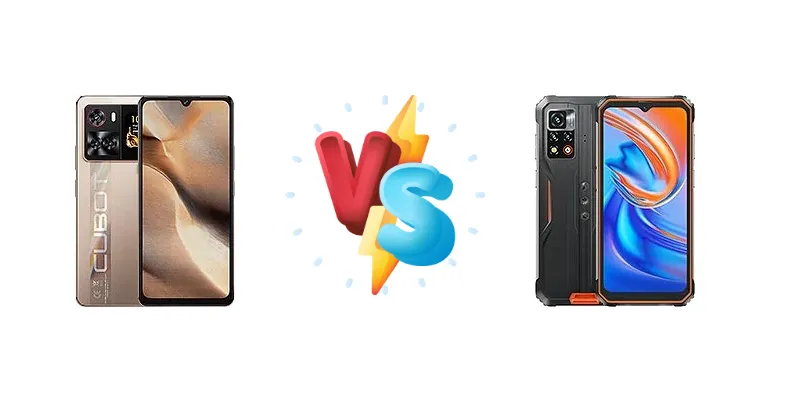
|
🏆 Quick Verdict
For users prioritizing all-day battery life and consistent performance, the Cubot X100 is the clear winner. Its Dimensity 7025 chipset and impressive 31:15h endurance outweigh the Blackview BV9200’s faster charging, especially for those who dislike frequent top-ups.
| PHONES | ||
|---|---|---|
| Phone Names | Cubot X100 | Blackview BV9200 |
| Network | ||
|---|---|---|
| 2G bands | GSM 850 / 900 / 1800 / 1900 | GSM 850 / 900 / 1800 / 1900 |
| 3G bands | HSDPA 800 / 850 / 900 / 1700(AWS) / 1900 / 2100 | HSDPA 850 / 900 / 1700(AWS) / 1900 / 2100 |
| 4G bands | 1, 2, 3, 4, 5, 7, 8, 12, 13, 17, 18, 19, 20, 25, 26, 28, 34, 38, 39, 40, 41, 66, 71 | 1, 2, 3, 4, 5, 7, 8, 12, 13, 17, 18, 19, 20, 25, 26, 28, 34, 38, 39, 40, 41, 66 |
| 5G bands | 1, 2, 3, 5, 7, 8, 20, 25, 28, 38, 40, 41, 66, 77, 78 SA/NSA | - |
| Speed | HSPA, LTE, 5G | HSPA, LTE |
| Technology | GSM / HSPA / LTE / 5G | GSM / CDMA / HSPA / LTE |
| - | CDMA 800 / 1900 | |
| Launch | ||
|---|---|---|
| Announced | 2025, August | 2022, December 28 |
| Status | Available. Released 2025, August | Available. Released 2023, January 09 |
| Body | ||
|---|---|---|
| Build | Glass front, plastic frame, plastic back | - |
| Dimensions | 171.9 x 78.1 x 8.9 mm (6.77 x 3.07 x 0.35 in) | 174.5 x 81.8 x 13.6 mm (6.87 x 3.22 x 0.54 in) |
| SIM | Nano-SIM + Nano-SIM | Nano-SIM + Nano-SIM |
| Weight | 207 g (7.30 oz) | 310 g (10.93 oz) |
| - | IP68/IP69K dust/water resistant (up to 1.5m for 30 min) Drop-to-concrete resistance from up to 1.8m MIL-STD-810H compliant | |
| Display | ||
|---|---|---|
| Protection | Mohs level 6 | Corning Gorilla Glass 5 |
| Resolution | 720 x 1640 pixels (~260 ppi density) | 1080 x 2408 pixels, 20:9 ratio (~400 ppi density) |
| Size | 6.88 inches, 112.4 cm2 (~83.7% screen-to-body ratio) | 6.6 inches, 104.9 cm2 (~73.5% screen-to-body ratio) |
| Type | IPS LCD, 120Hz | IPS LCD, 120Hz |
| Platform | ||
|---|---|---|
| CPU | Octa-core (2x2.5 GHz Cortex-A78 & 6x2.0 GHz Cortex-A55) | Octa-core (2x2.05 GHz Cortex-A76 & 6x2.0 GHz Cortex-A55) |
| Chipset | Mediatek Dimensity 7025 (6 nm) | Mediatek MT6781 Helio G96 (12 nm) |
| GPU | IMG BXM-8-256 | Mali-G52 MC2 |
| OS | Android 15 | Android 12, Doke-OS 3.1 |
| Memory | ||
|---|---|---|
| Card slot | No | microSDXC (dedicated slot) |
| Internal | 256GB 8GB RAM, 256GB 12GB RAM | 256GB 8GB RAM |
| - | UFS 2.1 | |
| Main Camera | ||
|---|---|---|
| Features | LED flash, HDR, panorama | LED flash, HDR, panorama |
| Single | - | 16 MP, (wide), 1/3", 1.0µm |
| Triple | 64 MP, (wide), PDAF 5 MP, (ultrawide) 2 MP (macro) | 50 MP, f/1.8, (wide), 1/2.76", 0.64µm, PDAF 8 MP, f/1.8, 120˚, (ultrawide), AF Auxiliary lens |
| Video | 1080p@30fps | 1440p@30fps, 1080p@30fps |
| Selfie camera | ||
|---|---|---|
| Single | 16 MP | 16 MP, f/2.0, (wide), 1/3", 1.0µm |
| Video | 1080p@30fps | 1080p |
| Sound | ||
|---|---|---|
| 3.5mm jack | - | No |
| 35mm jack | No | No |
| Loudspeaker | Yes, with stereo speakers | Yes, with dual speakers |
| Comms | ||
|---|---|---|
| Bluetooth | 5.1, A2DP | 5.2, A2DP, LE |
| NFC | Yes | Yes |
| Positioning | GPS, GALILEO, GLONASS, BDS | GPS, GLONASS, GALILEO, BDS |
| Radio | Unspecified | FM radio |
| USB | USB Type-C, OTG | USB Type-C, OTG |
| WLAN | Wi-Fi 802.11 a/b/g/n/ac, dual-band | Wi-Fi 802.11 a/b/g/n/ac, dual-band |
| Features | ||
|---|---|---|
| Sensors | Fingerprint (side-mounted), accelerometer, gyro, proximity, compass | Fingerprint (side-mounted), accelerometer, gyro, proximity, compass, barometer |
| Battery | ||
|---|---|---|
| Charging | 33W wired | 66W wired 30W wireless |
| Type | 5100 mAh | 5000 mAh |
| Misc | ||
|---|---|---|
| Colors | Gray, Gold | Black, Orange, Green |
| Price | $ 213.21 / € 199.95 | About 200 EUR |
| EU LABEL | ||
|---|---|---|
| Battery | 31:15h endurance, 1400 cycles | - |
| Energy | Class E | - |
| Free fall | Class A (270 falls) | - |
| Repairability | Class B | - |
Cubot X100
- Exceptional battery life (31:15h endurance)
- More efficient Dimensity 7025 chipset
- Long-term battery health (1400 charge cycles)
- Display specifications currently unknown
- Charging speed is slower than the BV9200
Blackview BV9200
- 66W wired and 30W wireless charging
- Brighter display (481 nits)
- Rugged design for enhanced durability
- Less efficient Helio G96 chipset
- Likely shorter battery life compared to the X100
Display Comparison
The Blackview BV9200 boasts a measured peak brightness of 481 nits and a 1423:1 contrast ratio, suggesting a visually punchy display. However, the Cubot X100’s display specifications are currently unavailable, making a direct comparison difficult. Given Blackview’s focus on ruggedness, the BV9200’s display is likely designed for outdoor visibility, while the X100 may prioritize color accuracy or power efficiency. Without further data on the X100’s panel type and calibration, the BV9200 holds an advantage in display clarity.
Camera Comparison
Camera specifications are limited for both devices. Without sensor size, aperture, or image processing details, a meaningful comparison is impossible. However, given the market positioning, it’s reasonable to assume both phones will feature multi-camera setups geared towards general photography. The absence of high-resolution sensors or advanced features suggests neither device is a primary contender for photography enthusiasts.
Performance
The Cubot X100’s Mediatek Dimensity 7025 (6nm) chipset, featuring 2x2.5 GHz Cortex-A78 cores and 6x2.0 GHz Cortex-A55 cores, represents a significant architectural leap over the Blackview BV9200’s Helio G96 (12nm). The 6nm process node of the Dimensity 7025 translates to improved thermal efficiency and power consumption, allowing for sustained performance during demanding tasks. While the BV9200’s 2x2.05 GHz Cortex-A76 cores are capable, they are a generation behind the A78 cores in the X100. This means the X100 will likely exhibit less throttling and maintain higher frame rates in games over extended periods. The X100’s chipset is a clear advantage for users who prioritize gaming or resource-intensive applications.
Battery Life
The Cubot X100’s 31:15h endurance is a standout feature, indicating exceptional battery life. This is coupled with a claimed 1400 charge cycles, promising long-term battery health. The Blackview BV9200, while lacking endurance data, compensates with 66W wired and 30W wireless charging. This allows for significantly faster top-ups – a full charge will be considerably quicker on the BV9200. However, the X100’s superior endurance means users may not need to charge as frequently, mitigating the benefit of faster charging. The X100’s battery longevity is a key advantage for users who dislike daily charging.
Buying Guide
Buy the Cubot X100 if you need a phone that can reliably last through a full day of heavy use, including gaming and media consumption, and value long-term battery health with its 1400 charge cycles. Buy the Blackview BV9200 if you prioritize quick charging – both wired and wireless – and need a device that can withstand harsher environments, though you’ll trade some performance efficiency for that convenience.