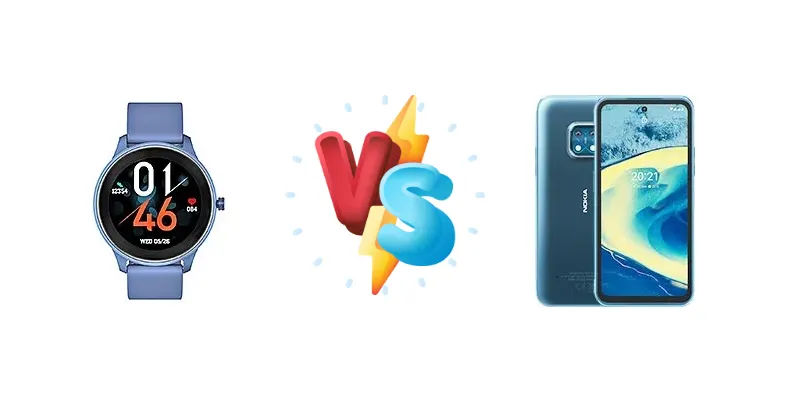
The rugged smartphone market caters to users demanding resilience, but often at a premium. We pit the relatively unknown Cubot W03 against the established Nokia XR20 to determine which device delivers the best blend of durability, performance, and value. The XR20, with its Snapdragon 480, represents a known quantity, while the W03's specifications remain largely obscured, forcing us to analyze based on brand positioning and market trends.
🏆 Quick Verdict
For the average user prioritizing a reliable 5G experience and guaranteed software updates, the Nokia XR20 is the clear winner. Its Snapdragon 480 chipset provides a tangible performance advantage, and Nokia's commitment to software support offers long-term peace of mind. The Cubot W03, lacking detailed specifications, remains a gamble.
| Network |
|---|
| 2G bands | N/A | GSM 850 / 900 / 1800 / 1900 |
| 3G bands | N/A | HSDPA 850 / 900 / 1700(AWS) / 1900 / 2100 |
| 4G bands | N/A | 1, 2, 3, 4, 5, 7, 8, 12, 13, 14, 20, 25, 26, 28, 30, 38, 40, 41, 48, 66, 71 |
| 5G bands | - | 2, 5, 25, 38, 41, 48, 66, 77, 78 SA/NSA |
| EDGE | No | - |
| GPRS | No | - |
| Speed | No | HSPA, LTE, 5G |
| Technology | No cellular connectivity | GSM / CDMA / HSPA / EVDO / LTE / 5G |
| | - | CDMA2000 1xEV-DO |
| Launch |
|---|
| Announced | 2021 | 2021, July 27 |
| Status | Available. Released 2021 | Available. Released 2021, August 04 |
| Body |
|---|
| Build | Glass front, aluminum frame, plastic back | - |
| Dimensions | 43 x 43 x 12 mm (1.69 x 1.69 x 0.47 in) | 171.6 x 81.5 x 10.6 mm (6.76 x 3.21 x 0.42 in) |
| SIM | No | · Nano-SIM· Nano-SIM + Nano-SIM |
| Weight | - | 248 g (8.75 oz) |
| | - | IP68 dust/water resistant (up to 1.5m for 60 min)
Drop-to-concrete resistance from up to 1.8m
MIL-STD-810H compliant |
| Display |
|---|
| Protection | Scratch-resistant glass | Corning Gorilla Glass Victus |
| Resolution | 240 x 240 pixels (~200 ppi density) | 1080 x 2400 pixels, 20:9 ratio (~395 ppi density) |
| Size | 1.7 inches | 6.67 inches, 107.4 cm2 (~76.8% screen-to-body ratio) |
| Type | TFT LCD | IPS LCD, 550 nits |
| Platform |
|---|
| CPU | - | Octa-core (2x2.0 GHz Kryo 460 & 6x1.8 GHz Kryo 460) |
| Chipset | - | Qualcomm SM4350 Snapdragon 480 5G (8 nm) |
| GPU | - | Adreno 619 |
| OS | Proprietary OS | Android 11, upgradable to Android 13 |
| Memory |
|---|
| Card slot | No | microSDXC (uses shared SIM slot) |
| Internal | - | 64GB 4GB RAM, 128GB 6GB RAM |
| Main Camera |
|---|
| Dual | - | 48 MP, f/1.8, (wide), 1/2.25", 0.8µm, PDAF
13 MP, f/2.4, 123˚ (ultrawide), 1/3.0", 1.12µm |
| Features | - | Zeiss optics, Dual-LED dual-tone flash, second LED flash, HDR, panorama |
| Single | - | 8 MP, f/2.0 (wide), 1/4.0", 1.12µm |
| Video | - | 1080p@30fps |
| Selfie camera |
|---|
| Single | - | 8 MP, f/2.0 (wide), 1/4.0", 1.12µm |
| Video | - | 1080p@30fps |
| Sound |
|---|
| 3.5mm jack | - | Yes |
| 35mm jack | No | Yes |
| Loudspeaker | No | Yes, with stereo speakers |
| Comms |
|---|
| Bluetooth | 5.1, A2DP, LE | 5.1, A2DP, LE, aptX Adaptive |
| NFC | No | Yes |
| Positioning | No | GPS (L1+L5), GLONASS, BDS, GALILEO, QZSS, NavIC |
| Radio | No | Unspecified |
| USB | No | USB Type-C 3.0 |
| WLAN | No | Wi-Fi 802.11 a/b/g/n/ac/6, dual-band, Wi-Fi Direct |
| Features |
|---|
| Sensors | Accelerometer, gyro, heart rate | Fingerprint (side-mounted), accelerometer, gyro, proximity, compass, barometer |
| Battery |
|---|
| Charging | - | 18W wired
15W wireless |
| Type | 260 mAh | Li-Po 4630 mAh |
| Misc |
|---|
| Colors | Black, Blue, Pink | Ultra Blue, Granite Gray |
| Models | - | TA-1368, TA-1362 |
| Price | - | About 270 EUR |
| SAR EU | - | 1.13 W/kg (head) 1.43 W/kg (body) |
Cubot W03
- Potentially very affordable
- Rugged design (assumed)
- May offer long battery life (speculation)
- Unknown specifications
- Likely low performance
- Uncertain software support
Nokia XR20
- 5G connectivity with Snapdragon 480
- Guaranteed software updates from Nokia
- Durable build with Gorilla Glass Victus
- Higher price point
- IPS LCD isn't the most vibrant display
- Performance isn't flagship-level
Display Comparison
Without specific display details for the Cubot W03, a direct comparison is difficult. The Nokia XR20 benefits from a 6.67-inch IPS LCD, but its strength isn't peak brightness or color accuracy; it's durability, featuring Corning Gorilla Glass Victus. This is a significant advantage for outdoor visibility and scratch resistance. We can infer the W03 likely uses a standard, less-protected panel given its price point, making it more susceptible to damage. The XR20's display is designed to withstand the rigors of outdoor use, a key aspect of its rugged design.
Camera Comparison
The Nokia XR20 features a 48MP main camera, which, while not groundbreaking, is a solid performer in good lighting conditions. The absence of detailed camera specs for the Cubot W03 makes a direct comparison impossible. However, given its price bracket, it's reasonable to assume the W03's camera system will be less sophisticated, potentially lacking features like optical image stabilization (OIS) or advanced image processing algorithms. The XR20's camera is geared towards capturing reliable, usable photos in various environments, a practical consideration for a rugged device.
Performance
The Nokia XR20's Qualcomm SM4350 Snapdragon 480 5G (8nm) is the clear performance leader. Its octa-core CPU, with 2x2.0 GHz Kryo 460 and 6x1.8 GHz Kryo 460 cores, provides a noticeable boost over any chipset likely found in the Cubot W03 at its price range. The 8nm process node also contributes to better thermal efficiency, reducing throttling during sustained tasks. While not a gaming powerhouse, the XR20 can handle everyday tasks and moderate gaming with ease. The W03, lacking published specs, likely relies on a MediaTek Helio or Unisoc chipset, offering significantly lower performance.
Battery Life
The Nokia XR20 offers 18W wired charging and 15W wireless charging, providing convenient charging options. While the battery capacity isn't specified in the context data, the Snapdragon 480's efficiency contributes to good battery life. The Cubot W03's charging capabilities and battery capacity are unknown. However, it's likely to have slower charging speeds and potentially a smaller battery, given its lower price point. The XR20's wireless charging is a notable convenience feature absent in most budget rugged phones.
Buying Guide
Buy the Cubot W03 if you need an extremely budget-friendly rugged phone and are comfortable with potential compromises in performance and software support. It's suited for users who prioritize basic functionality and durability above all else. Buy the Nokia XR20 if you prefer a more polished experience, 5G connectivity, and the assurance of regular security updates, even if it comes at a higher price point. This phone is ideal for outdoor workers, adventurers, or anyone prone to accidental drops.
Frequently Asked Questions
❓ Is the Nokia XR20's Snapdragon 480 5G chipset capable of handling demanding games like PUBG Mobile?
While the Snapdragon 480 isn't a high-end gaming chip, it can run PUBG Mobile at medium settings with acceptable frame rates. Expect some occasional stuttering during intense firefights. It's suitable for casual gaming, but not ideal for competitive players seeking maximum performance.
❓ How long can I realistically expect software support for the Nokia XR20?
Nokia promises at least three years of security updates and two major Android OS upgrades for the XR20. This is a significant advantage over many budget smartphones, ensuring your device remains secure and functional for an extended period. This commitment to software support is a key differentiator for Nokia.
❓ Given the lack of detailed specs, what are the biggest risks of buying the Cubot W03?
The primary risk with the Cubot W03 is uncertainty. Without knowing the chipset, RAM, or storage specifications, you're relying on assumptions. Performance could be significantly lower than expected, and software updates are unlikely to be frequent or guaranteed. It's a gamble best suited for users with minimal expectations.