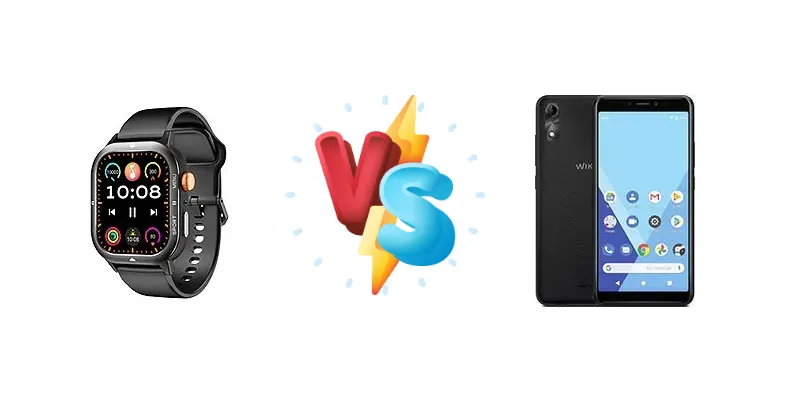
The Cubot U1 and Wiko Y51 represent the fiercely competitive entry-level smartphone market. Both aim to deliver essential smartphone functionality at an accessible price point, but their approaches differ. The Wiko Y51, with its known Cortex-A7 processor, offers a baseline level of performance, while the Cubot U1 remains largely a mystery due to a lack of publicly available specifications, forcing us to analyze it based on typical offerings in its price bracket and brand positioning.
🏆 Quick Verdict
For the average user prioritizing a known quantity, the Wiko Y51 is the safer bet. Its Cortex-A7 processor, while dated, provides a predictable experience. The Cubot U1, lacking detailed specifications, is a gamble – potentially offering better value if it includes modern features, but carrying a higher risk of compromises.
| Network |
|---|
| 2G bands | N/A | GSM 850 / 900 / 1800 / 1900 |
| 3G bands | N/A | HSDPA 850 / 900 / 1900 / 2100 |
| 4G bands | N/A | - |
| EDGE | No | - |
| GPRS | No | - |
| Speed | No | HSPA 42.2/5.76 Mbps |
| Technology | No cellular connectivity | GSM / HSPA |
| Launch |
|---|
| Announced | 2025, February | 2021, January 14 |
| Status | Available. Released 2025, February | Available. Released 2021, January 14 |
| Body |
|---|
| Dimensions | 49.8 x 42.4 x 11.4 mm (1.96 x 1.67 x 0.45 in) | 146.6 x 72.3 x 9 mm (5.77 x 2.85 x 0.35 in) |
| SIM | No | Nano-SIM + Micro-SIM |
| Weight | 43.8 g (1.55 oz) | 175 g (6.17 oz) |
| Display |
|---|
| Resolution | 240 x 288 pixels (~194 ppi density) | 480 x 960 pixels, 18:9 ratio (~197 ppi density) |
| Size | 1.93 inches | 5.45 inches, 76.7 cm2 (~72.3% screen-to-body ratio) |
| Type | TFT LCD | TN LCD |
| Platform |
|---|
| CPU | - | Quad-core 1.3 GHz Cortex-A7 |
| GPU | - | Mali-T820 MP1 |
| OS | Proprietary OS | Android 10 (Go edition) |
| Memory |
|---|
| Card slot | No | microSDXC |
| Internal | 16MB | 8GB 1GB RAM, 16GB 1GB RAM |
| Main Camera |
|---|
| Features | - | LED flash, HDR |
| Single | - | 5 MP |
| Video | - | 720p@30fps |
| Sound |
|---|
| 3.5mm jack | - | Yes |
| 35mm jack | No | Yes |
| Loudspeaker | Yes | Yes |
| Comms |
|---|
| Bluetooth | 5.4, A2DP, LE | 4.2, A2DP |
| NFC | No | No |
| Positioning | No | GPS |
| Radio | No | FM Radio |
| USB | No | microUSB 2.0 |
| WLAN | No | Wi-Fi 802.11 b/g/n |
| Features |
|---|
| Sensors | Accelerometer, gyro, heart rate, SpO2 | Accelerometer, proximity |
| Battery |
|---|
| Type | 300 mAh | Li-Ion 2500 mAh, removable |
| Misc |
|---|
| Colors | Black, Pink | Deep Grey, Gold, Mint |
| Models | - | W-K211-TH |
| Price | - | About 70 EUR |
| SAR | - | 0.70 W/kg (head) 1.55 W/kg (body) |
Cubot U1
- Potential for better specifications than Wiko Y51
- May offer a more modern design
- Could represent better value for money
- Lack of publicly available specifications
- Uncertainty regarding software support
- Potential for lower build quality
Wiko Y51
- Known processor and performance characteristics
- More established brand presence in some markets
- Predictable user experience
- Outdated Cortex-A7 processor
- Limited RAM capacity
- Basic camera performance
Display Comparison
Given the price points, both the Cubot U1 and Wiko Y51 likely feature LCD panels. The Wiko Y51’s display resolution is likely 480 x 854 pixels, typical for this segment. Without specifications for the Cubot U1, we can assume a similar resolution. Color accuracy will likely be standard for both, prioritizing power efficiency over fidelity. Bezels are expected to be substantial on both devices, maximizing screen real estate within a budget-friendly design. Peak brightness is likely to be around 400 nits on both, adequate for indoor use but struggling in direct sunlight.
Camera Comparison
Camera performance will be a weak point for both devices. The Wiko Y51 likely features a 5MP main camera, sufficient for basic snapshots in good lighting conditions. The Cubot U1’s camera specifications are unknown, but a larger sensor size (even if still small) would be a significant advantage. Image processing will be minimal on both, resulting in limited dynamic range and detail. Any claims of advanced features like HDR or night mode should be viewed with skepticism. The presence of a 2MP macro camera on either device is largely a marketing gimmick, offering minimal practical benefit.
Performance
The Wiko Y51’s Quad-core 1.3 GHz Cortex-A7 CPU is a significant limiting factor. This architecture dates back several years and will struggle with demanding tasks. Expect noticeable lag when multitasking or running modern applications. The Cubot U1’s processor is unknown, but to compete, it would need to offer a newer architecture, even if it’s also a quad-core unit. RAM capacity is crucial; if the Cubot U1 features 3GB or more RAM compared to the Wiko Y51’s likely 1GB, it will offer a smoother experience. Thermal management is unlikely to be a concern for either device due to the low-power processors.
Battery Life
Both the Cubot U1 and Wiko Y51 likely feature batteries in the 2000-3000 mAh range. The Wiko Y51’s low-power processor should translate to all-day battery life with moderate usage. The Cubot U1’s battery life will depend heavily on its processor and display efficiency. Charging wattage is likely to be 5W on both devices, resulting in slow charging times – expect several hours to reach a full charge. The efficiency of the processor will be the deciding factor in real-world battery endurance.
Buying Guide
Buy the Cubot U1 if you need a potentially higher-specification device and are comfortable with the risk of limited support and unknown performance characteristics. This is for the tech-savvy user willing to research and troubleshoot. Buy the Wiko Y51 if you prefer a reliable, albeit basic, smartphone experience with a known processor and a more established brand presence in certain markets. This is ideal for first-time smartphone users or those needing a simple, functional device.
Frequently Asked Questions
❓ Is the Wiko Y51’s Cortex-A7 processor sufficient for running popular apps like WhatsApp and Facebook?
Yes, the Cortex-A7 processor is capable of running basic applications like WhatsApp and Facebook, but expect some lag and slowdowns when multitasking or using more demanding features within those apps. It's suitable for light usage, but not for intensive tasks.
❓ What kind of storage options are likely available on the Cubot U1 and Wiko Y51, and can it be expanded?
Both devices likely offer 16GB or 32GB of internal storage, which is quite limited. Fortunately, both are expected to include a microSD card slot for storage expansion, allowing users to add up to 64GB or 128GB of additional storage for photos, videos, and apps.
❓ How reliable is the software support for the Wiko Y51, and will it receive Android updates?
Wiko’s software support is generally limited on their entry-level devices. The Y51 is unlikely to receive major Android updates beyond its initial release version. Security patches may be infrequent or non-existent. Users should expect a relatively static software experience.
❓ Given the lack of detailed specs for the Cubot U1, what should buyers look for in online reviews?
Focus on user reports regarding real-world performance, battery life, and build quality. Pay attention to comments about software stability and any reported issues with the device. Look for reviews that specifically test the phone with common apps and tasks.