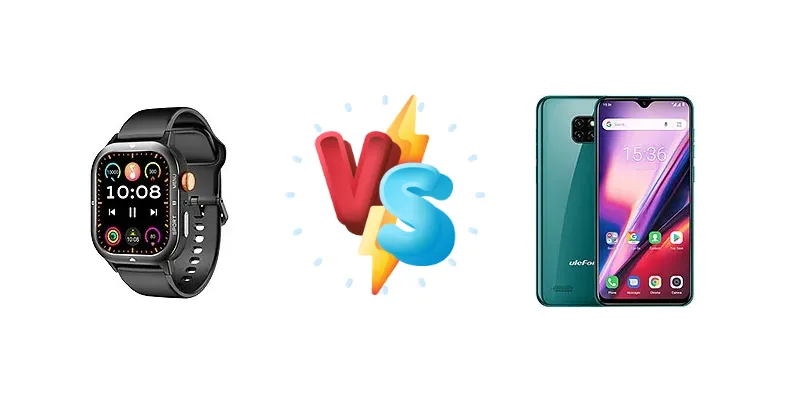
The sub-$150 smartphone market is fiercely competitive. Both the Cubot U1 and Ulefone Note 7T aim to deliver essential smartphone functionality at an incredibly affordable price point. However, with limited publicly available specifications for the Cubot U1, this comparison focuses heavily on the known capabilities of the Ulefone Note 7T and extrapolates based on typical offerings in this segment.
🏆 Quick Verdict
For the average user prioritizing a known quantity and basic performance, the Ulefone Note 7T is the better choice. Its Mediatek Helio A22 chipset provides a documented level of functionality, while the Cubot U1 remains largely an unknown entity in terms of performance and features.
| Network |
|---|
| 2G bands | N/A | GSM 850 / 900 / 1800 / 1900 |
| 3G bands | N/A | HSDPA 850 / 900 / 2100 |
| 4G bands | N/A | 1, 3, 5, 7, 8, 20 |
| EDGE | No | - |
| GPRS | No | - |
| Speed | No | HSPA 42.2/11.5 Mbps, LTE Cat7 300/150 Mbps |
| Technology | No cellular connectivity | GSM / HSPA / LTE |
| Launch |
|---|
| Announced | 2025, February | 2020, November 12. Released 2020, November 12 |
| Status | Available. Released 2025, February | Discontinued |
| Body |
|---|
| Dimensions | 49.8 x 42.4 x 11.4 mm (1.96 x 1.67 x 0.45 in) | 156.1 x 73.7 x 9.7 mm (6.15 x 2.90 x 0.38 in) |
| SIM | No | Dual SIM |
| Weight | 43.8 g (1.55 oz) | 177.5 g (6.28 oz) |
| Display |
|---|
| Resolution | 240 x 288 pixels (~194 ppi density) | 600 x 1280 pixels (~232 ppi density) |
| Size | 1.93 inches | 6.1 inches, 92.3 cm2 (~80.2% screen-to-body ratio) |
| Type | TFT LCD | IPS LCD |
| Platform |
|---|
| CPU | - | Octa-core 2.0 GHz Cortex-A53 |
| Chipset | - | Mediatek MT6761 Helio A22 (12 nm) |
| GPU | - | PowerVR GE8320 |
| OS | Proprietary OS | Android 10 |
| Memory |
|---|
| Card slot | No | microSDXC (dedicated slot) |
| Internal | 16MB | 16GB 2GB RAM |
| | - | eMMC 5.1 |
| Main Camera |
|---|
| Features | - | LED flash |
| Triple | - | 8 MP, f/2.0, (wide)
2 MP
2 MP |
| Video | - | 1080p@30fps |
| Selfie camera |
|---|
| Single | - | 5 MP, f/2.2 |
| Sound |
|---|
| 3.5mm jack | - | Yes |
| 35mm jack | No | Yes |
| Loudspeaker | Yes | Yes |
| Comms |
|---|
| Bluetooth | 5.4, A2DP, LE | 5.0, A2DP, LE |
| NFC | No | No |
| Positioning | No | GPS, GLONASS |
| Radio | No | Stereo FM radio, RDS, recording |
| USB | No | microUSB 2.0 |
| WLAN | No | Wi-Fi 802.11 a/b/g/n/ac, dual-band |
| Features |
|---|
| Sensors | Accelerometer, gyro, heart rate, SpO2 | Accelerometer, proximity |
| Battery |
|---|
| Type | 300 mAh | Li-Ion 3500 mAh |
| Misc |
|---|
| Colors | Black, Pink | Twilight, Black, Midnight Green |
| SAR | - | 0.67 W/kg (head) 0.59 W/kg (body) |
Cubot U1
- Potentially the lowest price point available.
- May offer a unique feature set not found on competitors (speculation).
- Lightweight design (speculation).
- Lack of publicly available specifications.
- Uncertain performance and software support.
- Potential for poor build quality.
Ulefone Note 7T
- Known and documented performance with the Helio A22.
- Reliable battery life with a 3500mAh battery.
- Affordable price point.
- Limited processing power for demanding tasks.
- Basic camera performance.
- Slow charging speeds.
Display Comparison
Specifications for the Cubot U1's display are unavailable. The Ulefone Note 7T likely features a standard IPS LCD panel, common in this price bracket. Given the target market, neither device is expected to boast high brightness levels or advanced features like HDR support. Bezels are likely to be substantial on both, maximizing screen real estate within a compact form factor. Color accuracy will likely be standard for the price, prioritizing power efficiency over color fidelity.
Camera Comparison
Camera details for the Cubot U1 are absent. The Ulefone Note 7T typically includes a dual-camera setup, often featuring an 8MP main sensor and a 2MP depth sensor. While the 2MP sensor adds a bokeh effect, its image quality is limited. The Helio A22's image signal processor (ISP) is basic, resulting in images that are acceptable in good lighting conditions but struggle in low light. Expect limited dynamic range and detail. The absence of optical image stabilization (OIS) on both devices means shaky hands will result in blurry photos.
Performance
The Ulefone Note 7T is powered by the Mediatek MT6761 Helio A22, a 12nm octa-core processor clocked at 2.0 GHz using Cortex-A53 cores. This chipset is designed for basic smartphone tasks like calling, texting, social media, and light web browsing. The Cubot U1's processor is unknown, but given its price point, it's likely to be a similar or slightly less powerful chipset. The Helio A22's 12nm process offers reasonable power efficiency, but it won't excel in demanding applications. Users should expect noticeable lag when multitasking or running graphically intensive games. RAM configurations are also unknown for the Cubot U1, but the Ulefone Note 7T likely features 2GB or 3GB, sufficient for basic operation but limiting multitasking capabilities.
Battery Life
Battery capacity for the Cubot U1 is unknown. The Ulefone Note 7T typically features a 3500mAh battery. Combined with the power-efficient Helio A22 chipset, this should provide all-day battery life for moderate usage. Charging speeds are likely to be slow on both devices, utilizing Micro-USB connectivity and a 5W or 10W charger. Expect a full charge to take several hours. The Ulefone Note 7T's battery life is a key strength, offering a reliable experience for users who prioritize longevity over fast charging.
Buying Guide
Buy the Cubot U1 if you are comfortable with a significant degree of uncertainty and are seeking the absolute lowest possible price, potentially accepting compromises in performance and software support. Buy the Ulefone Note 7T if you prefer a device with a known chipset, a documented performance profile, and a more predictable user experience, even if it means spending slightly more.
Frequently Asked Questions
❓ Is the Ulefone Note 7T's Helio A22 chipset capable of running popular social media apps like TikTok and Instagram smoothly?
Yes, the Helio A22 is generally capable of running social media apps like TikTok and Instagram, but expect some occasional lag or stuttering, especially when multitasking or using the apps for extended periods. Optimizing app settings and limiting background processes can help improve performance.
❓ What type of charging port does the Ulefone Note 7T use, and how long does it take to fully charge?
The Ulefone Note 7T uses a Micro-USB port for charging. Given the typical 5W or 10W charger included, a full charge from 0% to 100% will likely take between 3 to 5 hours. It does not support fast charging technologies.
❓ Given the limited information on the Cubot U1, what are the biggest risks of purchasing it?
The primary risk with the Cubot U1 is the lack of transparency regarding its specifications and performance. You may receive a device with significantly lower performance than expected, poor software support, or questionable build quality. It's a gamble for those seeking the absolute lowest price.