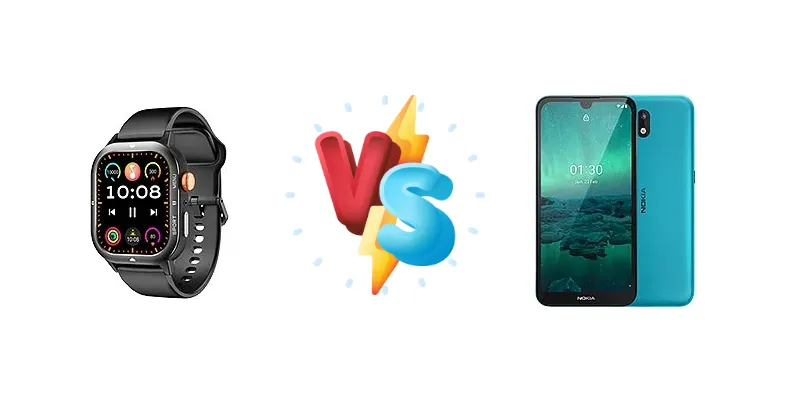
The sub-$100 smartphone market is fiercely competitive, catering to users prioritizing essential functionality over premium features. We pit the Cubot U1 against the Nokia 1.3, two devices aiming to deliver a smartphone experience without breaking the bank. Given the limited information available on the Cubot U1, this comparison will focus heavily on the Nokia 1.3's known specifications and extrapolate the U1's positioning based on typical market offerings at this price point.
🏆 Quick Verdict
For the average user needing a basic, reliable smartphone, the Nokia 1.3 is the better choice. Its Qualcomm Snapdragon 215 chipset, while not powerful, provides a more predictable and optimized experience than the likely MediaTek-based Cubot U1, and Nokia's commitment to software updates, even for budget devices, is a significant advantage.
| Network |
|---|
| 2G bands | N/A | GSM 850 / 900 / 1800 / 1900 |
| 3G bands | N/A | HSDPA 850 / 900 / 2100 - International |
| 4G bands | N/A | 1, 3, 5, 7, 8, 20, 28 - International |
| EDGE | No | - |
| GPRS | No | - |
| Speed | No | HSPA 42.2/5.76 Mbps, LTE Cat4 150/50 Mbps |
| Technology | No cellular connectivity | GSM / HSPA / LTE |
| | - | 1, 2, 3, 4, 5, 7, 8, 12, 17, 28, 66 - LATAM |
| Launch |
|---|
| Announced | 2025, February | 2020, March 19. Released 2020, April 02 |
| Status | Available. Released 2025, February | Discontinued |
| Body |
|---|
| Build | - | Glass front, plastic back, plastic frame |
| Dimensions | 49.8 x 42.4 x 11.4 mm (1.96 x 1.67 x 0.45 in) | 147.3 x 71.2 x 9.4 mm (5.80 x 2.80 x 0.37 in) |
| SIM | No | · Nano-SIM· Nano-SIM + Nano-SIM |
| Weight | 43.8 g (1.55 oz) | 155 g (5.47 oz) |
| Display |
|---|
| Resolution | 240 x 288 pixels (~194 ppi density) | 720 x 1520 pixels, 19:9 ratio (~295 ppi density) |
| Size | 1.93 inches | 5.71 inches, 81.4 cm2 (~77.6% screen-to-body ratio) |
| Type | TFT LCD | IPS LCD, 400 nits (typ) |
| Platform |
|---|
| CPU | - | Quad-core 1.3 GHz Cortex-A53 |
| Chipset | - | Qualcomm QM215 Snapdragon 215 (28 nm) |
| GPU | - | Adreno 308 |
| OS | Proprietary OS | Android 10 (Go edition), upgradable to Android 11 (Go edition), Android One |
| Memory |
|---|
| Card slot | No | microSDXC (dedicated slot) |
| Internal | 16MB | 16GB 1GB RAM |
| | - | eMMC 5.1 |
| Main Camera |
|---|
| Features | - | LED flash, HDR |
| Single | - | 8 MP, (wide), AF |
| Video | - | 720p@30fps |
| Selfie camera |
|---|
| Single | - | 5 MP |
| Video | - | 720p@30fps |
| Sound |
|---|
| 3.5mm jack | - | Yes |
| 35mm jack | No | Yes |
| Loudspeaker | Yes | Yes |
| Comms |
|---|
| Bluetooth | 5.4, A2DP, LE | 4.2, A2DP, LE, aptX HD |
| NFC | No | No |
| Positioning | No | GPS, GLONASS, BDS |
| Radio | No | FM radio |
| USB | No | microUSB 2.0, OTG |
| WLAN | No | Wi-Fi 802.11 b/g/n |
| Features |
|---|
| Sensors | Accelerometer, gyro, heart rate, SpO2 | Accelerometer, proximity |
| Battery |
|---|
| Type | 300 mAh | Li-Po 3000 mAh, removable |
| Misc |
|---|
| Colors | Black, Pink | Cyan, Charcoal, Sand |
| Models | - | TA-1216, TA-1205 |
| Price | - | About 170 EUR |
| SAR | - | 0.64 W/kg (head) 1.17 W/kg (body) |
| SAR EU | - | 0.38 W/kg (head) 0.86 W/kg (body) |
Cubot U1
- Potentially lower price point
- May offer slightly larger battery capacity (speculation)
- Could include features not found on Nokia 1.3 (speculation)
- Unknown chipset performance
- Likely inconsistent software updates
- Uncertain build quality and durability
Nokia 1.3
- Qualcomm Snapdragon 215 chipset for optimized performance
- Nokia's reputation for software support and durability
- Android Go Edition for smooth operation on limited hardware
- Limited processing power for demanding tasks
- Low-resolution display
- Basic camera performance
Display Comparison
Without specific display details for the Cubot U1, we can assume it features a standard LCD panel common in this price bracket. The Nokia 1.3 boasts a 6.09-inch HD+ (720 x 1560) LCD. While neither device will offer vibrant colors or high brightness, the Nokia 1.3's HD+ resolution provides a slightly sharper image than the likely lower resolution of the U1. Both will likely suffer from narrow viewing angles and limited outdoor visibility. Expect similar bezel sizes on both devices, prioritizing cost reduction over premium aesthetics.
Camera Comparison
Camera performance will be a significant compromise on both devices. The Nokia 1.3 features a 13MP main camera with autofocus, paired with a 5MP wide-angle lens. While image quality won't rival flagship phones, the 13MP sensor offers a reasonable level of detail in good lighting conditions. The Cubot U1's camera specifications are unknown, but it likely features a lower-resolution main sensor. The Nokia 1.3's inclusion of a wide-angle lens provides versatility, allowing for group photos or landscape shots. Both devices will struggle in low-light scenarios, producing noisy and blurry images. Any secondary 'macro' or 'depth' sensors on either device are likely to be of very low quality and offer minimal benefit.
Performance
The Nokia 1.3 is powered by the Qualcomm QM215 Snapdragon 215, a quad-core 1.3 GHz Cortex-A53 processor built on a 28nm process. This chipset is designed for basic Android Go Edition operation. The Cubot U1, lacking published specs, likely utilizes a MediaTek chipset in the same performance tier. The Snapdragon 215 benefits from Qualcomm’s optimized software support, potentially leading to smoother multitasking and app launches compared to a similarly-specced MediaTek chip. The 28nm process node of the Snapdragon 215 is relatively inefficient, but the low clock speed and core count minimize heat generation, preventing significant throttling during sustained use. Users should expect limited gaming capabilities on both devices, suitable only for very light titles.
Battery Life
The Nokia 1.3 packs a 3000mAh battery. Given the Snapdragon 215's efficiency and the low-resolution display, users can expect all-day battery life with moderate usage. The Cubot U1's battery capacity is unknown, but it likely falls within the 3000-4000mAh range. Charging speeds are expected to be slow on both devices, likely utilizing Micro-USB connectivity and 5W or 10W chargers. The Nokia 1.3's optimized software and chipset combination may result in slightly better real-world battery endurance compared to the U1, even with a similar battery capacity.
Buying Guide
Buy the Cubot U1 if you need a secondary device for very basic tasks like calls and texts, and are willing to accept potential software inconsistencies and limited performance. Buy the Nokia 1.3 if you prioritize a smoother, more reliable Android experience, even with limited processing power, and value Nokia's brand reputation for durability and software support. The Nokia 1.3 is ideal for first-time smartphone users or those needing a dependable backup phone.
Frequently Asked Questions
❓ Is the Snapdragon 215 in the Nokia 1.3 powerful enough for social media apps like Facebook and WhatsApp?
Yes, the Snapdragon 215 is sufficient for basic social media usage. While it won't offer a fluid experience with complex animations or heavy multitasking, it can comfortably handle Facebook, WhatsApp, and similar apps, especially when running Android Go Edition, which is optimized for low-RAM devices.
❓ How often can I expect software updates on the Nokia 1.3?
Nokia is known for providing regular security updates, even for its budget smartphones. While major Android version updates are less frequent on the 1.3, you can expect consistent security patches to protect your device from vulnerabilities. This is a significant advantage over many other phones in this price range.
❓ What is Android Go Edition, and how does it affect the Nokia 1.3's performance?
Android Go Edition is a lightweight version of Android designed for devices with limited processing power and RAM. It uses less storage space, data, and offers optimized versions of popular Google apps. This results in a smoother and more responsive experience on the Nokia 1.3 compared to running the full version of Android.