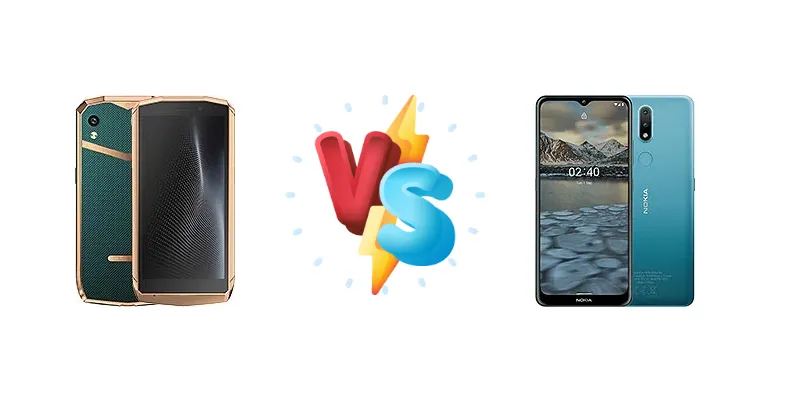
The sub-$150 smartphone market is fiercely competitive. The Cubot Pocket and Nokia 2.4 both aim to deliver essential smartphone functionality at an accessible price point, but they take different approaches to achieving this. The Cubot Pocket leverages a newer Unisoc chipset, while the Nokia 2.4 relies on MediaTek’s Helio P22. This comparison dissects their key differences to determine which device offers the best value.
🏆 Quick Verdict
For most users, the Cubot Pocket emerges as the stronger choice. Its Unisoc Tiger T310 chipset, featuring a Cortex-A75 core, provides a noticeable performance advantage over the Nokia 2.4’s all-Cortex-A53 Helio P22. While both phones are entry-level, the Cubot Pocket offers a smoother experience for everyday tasks and light multitasking.
| Network |
|---|
| 2G bands | GSM 850 / 900 / 1800 / 1900 | GSM 850 / 900 / 1800 / 1900 |
| 3G bands | HSDPA 900 / 2100 | HSDPA 850 / 900 / 1900 / 2100 |
| 4G bands | 1, 3, 5, 7, 8, 19, 20, 40 | LTE |
| Speed | HSPA, LTE | HSPA 42.2/5.76 Mbps, LTE Cat4 150/50 Mbps |
| Technology | GSM / HSPA / LTE | GSM / HSPA / LTE |
| Launch |
|---|
| Announced | 2022 | 2020, September 22. Released 2020, September 30 |
| Status | Available. Released 2022 | Discontinued |
| Body |
|---|
| Dimensions | 119 x 58 x 12.5 mm (4.69 x 2.28 x 0.49 in) | 165.9 x 76.3 x 8.7 mm (6.53 x 3.00 x 0.34 in) |
| SIM | Nano-SIM + Nano-SIM | Nano-SIM + Nano-SIM |
| Weight | 128 g (4.52 oz) | 195 g (6.88 oz) |
| Display |
|---|
| Resolution | 540 x 1080 pixels, 18:9 ratio (~302 ppi density) | 720 x 1600 pixels, 20:9 ratio (~270 ppi density) |
| Size | 4.0 inches, 41.3 cm2 (~59.8% screen-to-body ratio) | 6.5 inches, 102.0 cm2 (~80.6% screen-to-body ratio) |
| Type | IPS LCD | IPS LCD |
| Platform |
|---|
| CPU | Quad-core (1x2.0 GHz Cortex-A75 & 3x1.8 GHz Cortex-A55) | Octa-core 2.0 GHz Cortex-A53 |
| Chipset | Unisoc Tiger T310 (12 nm) | Mediatek MT6762 Helio P22 (12 nm) |
| GPU | PowerVR GE8300 | PowerVR GE8320 |
| OS | Android 11 | Android 10, upgradable to Android 11 |
| Memory |
|---|
| Card slot | microSDXC (uses shared SIM slot) | microSDXC (dedicated slot) |
| Internal | 64GB 4GB RAM | 32GB 2GB RAM, 64GB 3GB RAM |
| | - | eMMC 5.1 |
| Main Camera |
|---|
| Dual | - | 13 MP, AF
Auxiliary lens |
| Features | LED flash | LED flash, HDR, panorama |
| Single | 16 MP, (wide), AF | - |
| Video | Yes | 1080p@30fps |
| Selfie camera |
|---|
| Single | 5 MP | 5 MP, f/2.4 |
| Video | Yes | - |
| Sound |
|---|
| 3.5mm jack | - | Yes |
| 35mm jack | No | Yes |
| Loudspeaker | Yes | Yes |
| Comms |
|---|
| Bluetooth | 5.0, A2DP | 5.0, A2DP, LE |
| NFC | Yes | No |
| Positioning | GPS, GLONASS, GALILEO | GPS, GLONASS, BDS |
| Radio | Unspecified | FM radio |
| USB | USB Type-C | microUSB 2.0, OTG |
| WLAN | Wi-Fi 802.11 a/b/g/n/ac, dual-band | Wi-Fi 802.11 b/g/n |
| Features |
|---|
| Sensors | Accelerometer, gyro, proximity, compass | Fingerprint (rear-mounted), accelerometer, proximity |
| Battery |
|---|
| Charging | - | 10W wired |
| Type | 3000 mAh | Li-Po 4500 mAh |
| Misc |
|---|
| Colors | Black, Black/Red, Green/Gold | Fjord, Dusk, Charcoal |
| Models | - | TA-1277, TA-1275, TA-1274, TA-1270 |
| Price | - | About 240 EUR |
| SAR | - | 0.77 W/kg (head) 1.32 W/kg (body) |
| SAR EU | - | 0.27 W/kg (head) 1.54 W/kg (body) |
Cubot Pocket
- More powerful processor (Unisoc Tiger T310)
- Cortex-A75 core for improved responsiveness
- Potentially better multitasking performance
- Less established brand reputation
- Software updates may be less frequent
Nokia 2.4
- Well-known and trusted brand (Nokia)
- Potential for cleaner software experience (Android One)
- 10W charging included
- Less powerful processor (Helio P22)
- All Cortex-A53 cores result in slower performance
- Slower charging speed
Display Comparison
Neither device boasts a standout display. Both are likely utilizing LCD panels, typical for this price bracket. Specifics like resolution and brightness are missing, but we can infer they are similar – likely 720p+ resolution. The focus here isn’t on visual fidelity, but on basic usability. Bezels are expected to be noticeable on both, and color accuracy will likely be standard for budget phones, meaning less accurate color reproduction compared to higher-end devices.
Camera Comparison
Camera performance is likely to be similar on both devices, leaning towards basic functionality. Details on sensor sizes and apertures are unavailable, but given the price point, expect 13MP or similar main sensors. The Nokia 2.4 may benefit from MediaTek’s image signal processor (ISP), which is generally well-regarded for its image processing capabilities. However, the Cubot Pocket’s newer chipset *could* incorporate improvements in image processing algorithms. The presence of a 2MP macro camera on both devices is largely a marketing gimmick; image quality will be limited. Focus should be on the main sensor’s performance in good lighting conditions.
Performance
The core difference lies in the chipsets. The Cubot Pocket’s Unisoc Tiger T310 utilizes a quad-core configuration with a single high-performance Cortex-A75 core clocked at 2.0 GHz, alongside three Cortex-A55 cores at 1.8 GHz. This architecture provides a significant boost in single-core performance compared to the Nokia 2.4’s MediaTek Helio P22. The Helio P22 is an octa-core processor, but it consists entirely of less powerful Cortex-A53 cores, all clocked at 2.0 GHz. While more cores *can* be beneficial, the architectural advantage of the A75 in the Cubot Pocket translates to snappier app launches and smoother multitasking. The Unisoc T310’s 12nm process node is the same as the Helio P22, so thermal efficiency should be comparable.
Battery Life
Battery capacity is not specified for either device, but both likely house around 4000-5000 mAh batteries. The Nokia 2.4 includes 10W wired charging, which is slow by modern standards. The Cubot Pocket’s charging speed is unknown, but it’s unlikely to be significantly faster. Real-world battery life will depend heavily on usage patterns, but both phones should comfortably last a full day with moderate use. The slower charging speed on the Nokia 2.4 means longer periods tethered to a power outlet.
Buying Guide
Buy the Cubot Pocket if you prioritize responsiveness and a slightly more future-proofed processor for handling app updates and occasional gaming. It’s ideal for users who want a phone that feels less sluggish during daily use. Buy the Nokia 2.4 if you value brand reputation, a cleaner software experience (potentially with Android One updates, depending on region), and a more established ecosystem, even if it means sacrificing some raw processing power.
Frequently Asked Questions
❓ Will the Unisoc Tiger T310 in the Cubot Pocket struggle with popular apps like Facebook or WhatsApp?
While the Unisoc Tiger T310 is an entry-level chipset, the inclusion of a Cortex-A75 core provides a significant performance boost over the all-A53 Helio P22 in the Nokia 2.4. It should handle apps like Facebook and WhatsApp without significant lag, though demanding apps or heavy multitasking may still cause slowdowns.
❓ Is the Nokia 2.4 likely to receive Android updates in the future?
Nokia has a relatively good track record with software updates, particularly for devices participating in the Android One program. However, the Nokia 2.4 is an entry-level device, so the number and duration of updates may be limited. Check Nokia's official website for specific update commitments for your region.
❓ Can the Cubot Pocket handle basic mobile games like Candy Crush or Subway Surfers?
Yes, the Cubot Pocket’s Unisoc Tiger T310 should be capable of running basic mobile games like Candy Crush and Subway Surfers without issue. However, more graphically intensive games may require reduced settings or experience occasional frame drops.
❓ How does the software experience differ between the Cubot Pocket and Nokia 2.4?
The Nokia 2.4 often ships with a near-stock Android experience through the Android One program, offering a cleaner interface and faster updates. The Cubot Pocket likely uses a customized version of Android, which may include pre-installed apps (bloatware) and a different user interface. This can impact performance and user experience.