
Cubot Pocket 3 vs. Oukitel WP210: A Detailed Performance and Battery Life Showdown
| Phones Images | |||||
|---|---|---|---|---|---|
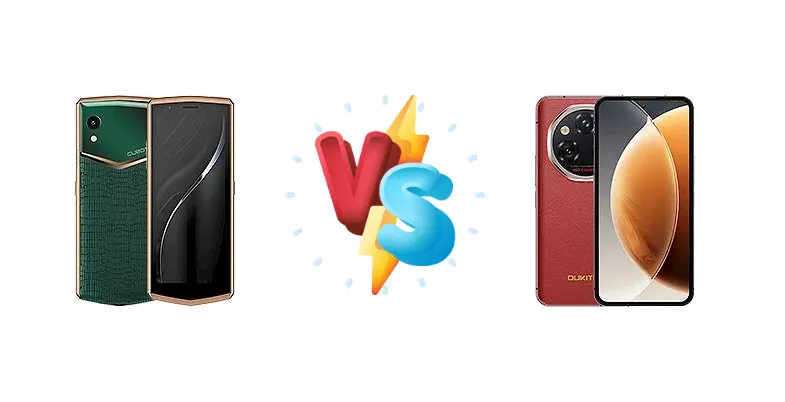
|
🏆 Quick Verdict
For the average user seeking a balance of price and functionality, the Oukitel WP210 is the clear winner. Its Dimensity 8200 chipset delivers significantly superior performance, and the 45W charging drastically reduces downtime. While the Cubot Pocket 3 is cheaper, the performance gap is too large to ignore for power users.
| PHONES | ||
|---|---|---|
| Phone Names | Cubot Pocket 3 | Oukitel WP210 |
| Network | ||
|---|---|---|
| 2G bands | GSM 850 / 900 / 1800 / 1900 | GSM 850 / 900 / 1800 / 1900 |
| 3G bands | HSDPA 900 / 2100 | HSDPA 800 / 850 / 900 / 1700(AWS) / 1900 / 2100 |
| 4G bands | 1, 3, 5, 7, 8, 19, 20, 40 | 1, 2, 3, 4, 5, 7, 8, 12, 13, 17, 18, 19, 20, 25, 26, 28, 34, 38, 39, 40, 41, 66, 71 |
| 5G bands | - | 1, 2, 3, 5, 7, 8, 12, 20, 25, 28, 34, 38, 39, 40, 41, 48, 66, 71, 77, 78 SA/NSA |
| Speed | HSPA, LTE | HSPA, LTE, 5G |
| Technology | GSM / HSPA / LTE | GSM / HSPA / LTE / 5G |
| Launch | ||
|---|---|---|
| Announced | 2022 | 2025, July |
| Status | Available. Released 2022 | Available. Released 2025, July 15 |
| Body | ||
|---|---|---|
| Dimensions | 133.2 x 58.5 x 12.3 mm (5.24 x 2.30 x 0.48 in) | 163.6 x 77.9 x 13.7 mm (6.44 x 3.07 x 0.54 in) |
| SIM | Nano-SIM + Nano-SIM | Nano-SIM + Nano-SIM |
| Weight | 135 g (4.76 oz) | 311 g (10.97 oz) |
| Display | ||
|---|---|---|
| Protection | - | Corning Gorilla Glass 5, Mohs level 5 |
| Resolution | 480 x 1170 pixels (~281 ppi density) | 1080 x 2408 pixels, 20:9 ratio (~394 ppi density) |
| Size | 4.5 inches, 45.9 cm2 (~58.9% screen-to-body ratio) | 6.7 inches, 108.1 cm2 (~84.9% screen-to-body ratio) |
| Type | TFT | IPS LCD, 120Hz, 500 nits |
| Platform | ||
|---|---|---|
| CPU | Octa-core (2x2.0 GHz Cortex-A75 & 6x1.8 GHz Cortex-A55) | Octa-core (1x3.1 GHz Cortex-A78 & 3x3.0 GHz Cortex-A78 & 4x2.0 GHz Cortex-A55) |
| Chipset | Mediatek MT6769CZ Helio G85 (12 nm) | Mediatek Dimensity 8200 (4 nm) |
| GPU | Mali-G52 MC2 | Mali-G610 MC6 |
| OS | Android 12 | Android 15 |
| Memory | ||
|---|---|---|
| Card slot | No | microSDXC (uses shared SIM slot) |
| Internal | 64GB 4GB RAM | 512GB 12GB RAM |
| Main Camera | ||
|---|---|---|
| Features | LED flash | LED flash, HDR, panorama |
| Single | 20 MP, (wide) | - |
| Triple | - | 108 MP, f/1.9, (wide), 1/1.8", PDAF 2 MP (macro) Auxiliary lens |
| Video | Yes | 4K@30fps |
| Selfie camera | ||
|---|---|---|
| Single | 5 MP | 32 MP, f/2.2, (wide), 1/2.74" |
| Video | Yes | 1080p@30fps |
| Sound | ||
|---|---|---|
| 35mm jack | Unspecified | No |
| Loudspeaker | Yes | Yes |
| Comms | ||
|---|---|---|
| Bluetooth | 5.0, A2DP | 5.3, A2DP, LE |
| NFC | Yes | Yes |
| Positioning | GPS, GLONASS, GALILEO, BDS | GPS (L1+L5), GLONASS, GALILEO, BDS |
| Radio | Unspecified | FM radio |
| USB | USB Type-C | USB Type-C 2.0 |
| WLAN | Wi-Fi 802.11 a/b/g/n/ac, dual-band | Wi-Fi 802.11 a/b/g/n/ac/6, dual-band |
| Features | ||
|---|---|---|
| Sensors | Accelerometer, gyro, proximity, compass | Fingerprint (side-mounted), accelerometer, gyro, proximity, compass |
| Battery | ||
|---|---|---|
| Charging | - | 45W wired |
| Type | 3000 mAh, removable | Li-Po 8800 mAh |
| Misc | ||
|---|---|---|
| Colors | Blue, Black, Green | Gray, Black, Red |
| EU LABEL | ||
|---|---|---|
| Battery | - | 86:17h endurance, 1000 cycles |
| Energy | - | Class B |
| Free fall | - | Class A (270 falls) |
| Repairability | - | Class C |
Cubot Pocket 3
- Significantly more affordable
- Potentially more compact design
- Sufficient for basic smartphone tasks
- Substantially weaker performance
- Likely slower charging speeds
- Inferior gaming capabilities
Oukitel WP210
- Flagship-level performance with Dimensity 8200
- Ultra-fast 45W charging
- Exceptional battery endurance
- Higher price point
- Potentially larger and heavier build
- May be overkill for basic users
Display Comparison
Display specifications are absent from the provided data, making a direct comparison impossible. However, given the Oukitel WP210's focus on overall performance, it's reasonable to expect a higher-quality panel with potentially higher brightness and color accuracy. The Cubot Pocket 3 likely utilizes a more cost-effective display to maintain its lower price point. Bezels are also likely to be more prominent on the Cubot Pocket 3.
Camera Comparison
Camera details are limited. Without sensor size or aperture information, a definitive comparison is difficult. However, the Oukitel WP210’s higher processing power allows for more sophisticated image processing algorithms, potentially resulting in better dynamic range and low-light performance. It's likely the WP210 will offer a more refined camera experience, even with similar sensor specifications. The Cubot Pocket 3 will likely rely on software optimization to compensate for its less powerful chipset.
Performance
The performance disparity is stark. The Oukitel WP210’s Mediatek Dimensity 8200 (4nm) is a flagship-level chipset featuring a 1x3.1 GHz Cortex-A78 core and 3x3.0 GHz Cortex-A78 cores, alongside 4x2.0 GHz Cortex-A55 cores. This architecture, built on a 4nm process, provides significantly higher processing power and improved thermal efficiency compared to the Cubot Pocket 3’s Mediatek MT6769CZ Helio G85 (12nm). The Helio G85, with its 2x2.0 GHz Cortex-A75 and 6x1.8 GHz Cortex-A55 cores, is geared towards budget gaming but will struggle with demanding titles and multitasking. The 4nm node of the Dimensity 8200 translates to less heat generation under load, minimizing performance throttling during extended gaming sessions. This benefits gamers and users running resource-intensive applications.
Battery Life
The Oukitel WP210 boasts an impressive 86:17h endurance rating and supports 45W wired charging. This combination is a significant advantage. While the Cubot Pocket 3’s battery capacity is unknown, the WP210’s endurance suggests a larger battery or more efficient power management. The 45W charging on the WP210 will dramatically reduce charging times, allowing users to quickly replenish the battery, whereas the Cubot Pocket 3 will likely have slower charging speeds. The WP210’s stated 1000 charge cycles also indicate a focus on long-term battery health.
Buying Guide
Buy the Cubot Pocket 3 if you need a highly affordable smartphone for basic tasks like calling, texting, and light social media use, and aren't concerned with demanding gaming or intensive multitasking. Buy the Oukitel WP210 if you prioritize smooth performance in demanding applications, enjoy mobile gaming, or require a phone that can last a full day (and beyond) on a single charge, and appreciate fast charging capabilities.