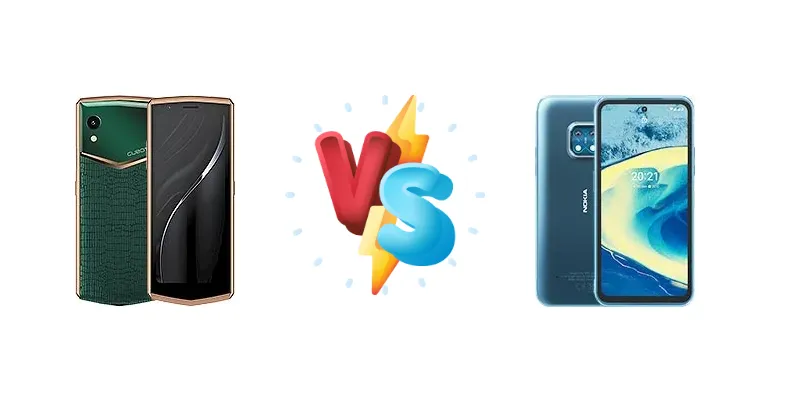
The smartphone market is flooded with affordable 5G options, but finding the right balance of performance, durability, and features can be challenging. We pit the Cubot Pocket 3, a value-focused device, against the Nokia XR20, known for its rugged build and software support, to determine which offers the best experience for budget-conscious consumers.
🏆 Quick Verdict
For the average user prioritizing 5G connectivity, long-term software support, and a durable design, the Nokia XR20 is the better choice. While the Cubot Pocket 3 offers a competitive price, the Snapdragon 480's efficiency and Nokia's commitment to updates provide a more well-rounded experience.
| Network |
|---|
| 2G bands | GSM 850 / 900 / 1800 / 1900 | GSM 850 / 900 / 1800 / 1900 |
| 3G bands | HSDPA 900 / 2100 | HSDPA 850 / 900 / 1700(AWS) / 1900 / 2100 |
| 4G bands | 1, 3, 5, 7, 8, 19, 20, 40 | 1, 2, 3, 4, 5, 7, 8, 12, 13, 14, 20, 25, 26, 28, 30, 38, 40, 41, 48, 66, 71 |
| 5G bands | - | 2, 5, 25, 38, 41, 48, 66, 77, 78 SA/NSA |
| Speed | HSPA, LTE | HSPA, LTE, 5G |
| Technology | GSM / HSPA / LTE | GSM / CDMA / HSPA / EVDO / LTE / 5G |
| | - | CDMA2000 1xEV-DO |
| Launch |
|---|
| Announced | 2022 | 2021, July 27 |
| Status | Available. Released 2022 | Available. Released 2021, August 04 |
| Body |
|---|
| Dimensions | 133.2 x 58.5 x 12.3 mm (5.24 x 2.30 x 0.48 in) | 171.6 x 81.5 x 10.6 mm (6.76 x 3.21 x 0.42 in) |
| SIM | Nano-SIM + Nano-SIM | · Nano-SIM· Nano-SIM + Nano-SIM |
| Weight | 135 g (4.76 oz) | 248 g (8.75 oz) |
| | - | IP68 dust/water resistant (up to 1.5m for 60 min)
Drop-to-concrete resistance from up to 1.8m
MIL-STD-810H compliant |
| Display |
|---|
| Protection | - | Corning Gorilla Glass Victus |
| Resolution | 480 x 1170 pixels (~281 ppi density) | 1080 x 2400 pixels, 20:9 ratio (~395 ppi density) |
| Size | 4.5 inches, 45.9 cm2 (~58.9% screen-to-body ratio) | 6.67 inches, 107.4 cm2 (~76.8% screen-to-body ratio) |
| Type | TFT | IPS LCD, 550 nits |
| Platform |
|---|
| CPU | Octa-core (2x2.0 GHz Cortex-A75 & 6x1.8 GHz Cortex-A55) | Octa-core (2x2.0 GHz Kryo 460 & 6x1.8 GHz Kryo 460) |
| Chipset | Mediatek MT6769CZ Helio G85 (12 nm) | Qualcomm SM4350 Snapdragon 480 5G (8 nm) |
| GPU | Mali-G52 MC2 | Adreno 619 |
| OS | Android 12 | Android 11, upgradable to Android 13 |
| Memory |
|---|
| Card slot | No | microSDXC (uses shared SIM slot) |
| Internal | 64GB 4GB RAM | 64GB 4GB RAM, 128GB 6GB RAM |
| Main Camera |
|---|
| Dual | - | 48 MP, f/1.8, (wide), 1/2.25", 0.8µm, PDAF
13 MP, f/2.4, 123˚ (ultrawide), 1/3.0", 1.12µm |
| Features | LED flash | Zeiss optics, Dual-LED dual-tone flash, second LED flash, HDR, panorama |
| Single | 20 MP, (wide) | 8 MP, f/2.0 (wide), 1/4.0", 1.12µm |
| Video | Yes | 1080p@30fps |
| Selfie camera |
|---|
| Single | 5 MP | 8 MP, f/2.0 (wide), 1/4.0", 1.12µm |
| Video | Yes | 1080p@30fps |
| Sound |
|---|
| 3.5mm jack | - | Yes |
| 35mm jack | Unspecified | Yes |
| Loudspeaker | Yes | Yes, with stereo speakers |
| Comms |
|---|
| Bluetooth | 5.0, A2DP | 5.1, A2DP, LE, aptX Adaptive |
| NFC | Yes | Yes |
| Positioning | GPS, GLONASS, GALILEO, BDS | GPS (L1+L5), GLONASS, BDS, GALILEO, QZSS, NavIC |
| Radio | Unspecified | Unspecified |
| USB | USB Type-C | USB Type-C 3.0 |
| WLAN | Wi-Fi 802.11 a/b/g/n/ac, dual-band | Wi-Fi 802.11 a/b/g/n/ac/6, dual-band, Wi-Fi Direct |
| Features |
|---|
| Sensors | Accelerometer, gyro, proximity, compass | Fingerprint (side-mounted), accelerometer, gyro, proximity, compass, barometer |
| Battery |
|---|
| Charging | - | 18W wired
15W wireless |
| Type | 3000 mAh, removable | Li-Po 4630 mAh |
| Misc |
|---|
| Colors | Blue, Black, Green | Ultra Blue, Granite Gray |
| Models | - | TA-1368, TA-1362 |
| Price | - | About 270 EUR |
| SAR EU | - | 1.13 W/kg (head) 1.43 W/kg (body) |
Cubot Pocket 3
- Potentially lower price point
- Helio G85 offers decent performance for basic tasks
- May offer larger battery capacity (speculation)
- No 5G connectivity
- Less efficient chipset (12nm)
- Likely limited software support
Nokia XR20
- 5G connectivity via Snapdragon 480
- More efficient 8nm chipset
- Guaranteed software updates from Nokia
- Higher price compared to Cubot Pocket 3
- 18W charging isn't the fastest
- IPS LCD display isn't exceptional
Display Comparison
Neither device boasts a standout display. Specifications are missing for the Cubot Pocket 3's display, but given its price point, we can expect a standard LCD panel. The Nokia XR20 features a 6.67-inch IPS LCD. The Snapdragon 480's ISP is capable of handling a decent display, but the XR20's display isn't known for exceptional brightness or color accuracy. Both likely target the same user, prioritizing functionality over visual fidelity.
Camera Comparison
Detailed camera specs for the Cubot Pocket 3 are unavailable, but budget phones often compromise on camera quality. The Nokia XR20 features a 48MP main sensor, which, while not flagship-level, offers a solid imaging experience, especially in good lighting conditions. The XR20's image processing is geared towards natural-looking photos, while the Pocket 3's processing is likely to be more aggressive. The XR20's larger sensor size (compared to what's typical in this price bracket) provides better low-light performance. We can assume the Pocket 3 will rely heavily on software enhancements to compensate for a potentially smaller sensor.
Performance
The core difference lies in the chipsets. The Cubot Pocket 3 utilizes the Mediatek MT6769CZ Helio G85, a 12nm process node chip. The Nokia XR20 employs the Qualcomm SM4350 Snapdragon 480 5G, built on a more efficient 8nm process. While both CPUs feature a 2x2.0 GHz core configuration alongside 6x1.8 GHz cores, the Snapdragon 480 benefits from Qualcomm’s architectural advantages and the smaller node size, resulting in better power efficiency and sustained performance. This translates to less throttling during extended gaming sessions and improved battery life. The Snapdragon 480 also unlocks 5G connectivity, a feature absent in the Pocket 3.
Battery Life
Battery capacity for the Cubot Pocket 3 is unknown. The Nokia XR20 packs a 4470mAh battery and supports 18W wired charging and 15W wireless charging. The Snapdragon 480’s 8nm process contributes to better power efficiency, potentially offsetting the Pocket 3’s potentially larger battery (if it has one). The XR20’s wireless charging is a significant convenience feature absent in the Pocket 3, catering to users who prefer cable-free charging.
Buying Guide
Buy the Cubot Pocket 3 if you need a highly affordable 5G phone primarily for basic tasks and light gaming, and are comfortable with a less refined software experience. Buy the Nokia XR20 if you prioritize durability, 5G connectivity, guaranteed software updates, and the convenience of wireless charging, even if it means spending a bit more.
Frequently Asked Questions
❓ Does the Snapdragon 480 in the Nokia XR20 get hot during prolonged gaming sessions?
The Snapdragon 480 is designed for efficiency, and while it can handle gaming, it's not a high-end gaming chip. It will experience some heat during extended gaming, but the 8nm process and Nokia's thermal management should prevent significant throttling. Expect playable frame rates, but not at maximum settings for demanding titles.
❓ How long will the Nokia XR20 receive software and security updates?
Nokia is known for its commitment to software support. The XR20 is guaranteed to receive at least 3 years of security updates and 2 major Android OS upgrades, ensuring your device remains secure and up-to-date for a longer period than many competitors in this price range.
❓ Is the Cubot Pocket 3 a good option for someone who primarily uses their phone for calls, texts, and social media?
Yes, the Cubot Pocket 3 is a viable option for basic usage. The Helio G85 is capable of handling everyday tasks like calls, texts, and social media apps without significant issues. However, be prepared for potential slowdowns with more demanding applications or multitasking.