
Cubot Pocket 3 vs Doogee S98 Pro: A Detailed Performance and Value Showdown
| Phones Images | |||||
|---|---|---|---|---|---|
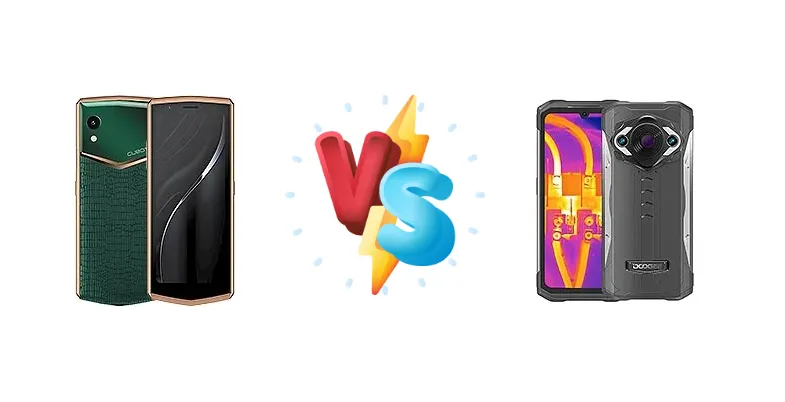
|
🏆 Quick Verdict
For the average user prioritizing gaming and value, the Doogee S98 Pro emerges as the stronger contender. Its Helio G96 chipset offers a noticeable performance uplift over the Pocket 3’s Helio G85, and the inclusion of 33W wired and 15W wireless charging provides a more versatile charging experience. However, the Pocket 3 remains a viable option for those seeking a smaller, more pocketable device.
| PHONES | ||
|---|---|---|
| Phone Names | Cubot Pocket 3 | Doogee S98 Pro |
| Network | ||
|---|---|---|
| 2G bands | GSM 850 / 900 / 1800 / 1900 | GSM 850 / 900 / 1800 / 1900 |
| 3G bands | HSDPA 900 / 2100 | HSDPA 800 / 850 / 900 / 1700(AWS) / 1900 / 2100 |
| 4G bands | 1, 3, 5, 7, 8, 19, 20, 40 | 1, 2, 3, 4, 5, 7, 8, 12, 13, 17, 18, 19, 20, 25, 26, 28, 34, 38, 39, 40, 41, 66 |
| Speed | HSPA, LTE | HSPA, LTE |
| Technology | GSM / HSPA / LTE | GSM / CDMA / HSPA / LTE |
| Launch | ||
|---|---|---|
| Announced | 2022 | 2022, May 27 |
| Status | Available. Released 2022 | Available. Released 2022, June 06 |
| Body | ||
|---|---|---|
| Dimensions | 133.2 x 58.5 x 12.3 mm (5.24 x 2.30 x 0.48 in) | 172 x 82 x 15.5 mm (6.77 x 3.23 x 0.61 in) |
| SIM | Nano-SIM + Nano-SIM | Nano-SIM + Nano-SIM |
| Weight | 135 g (4.76 oz) | 320 g (11.29 oz) |
| Display | ||
|---|---|---|
| Protection | - | Corning Gorilla Glass |
| Resolution | 480 x 1170 pixels (~281 ppi density) | 1080 x 2340 pixels, 19.5:9 ratio (~409 ppi density) |
| Size | 4.5 inches, 45.9 cm2 (~58.9% screen-to-body ratio) | 6.3 inches, 97.4 cm2 (~69.1% screen-to-body ratio) |
| Type | TFT | IPS LCD, 500 nits (peak) |
| Platform | ||
|---|---|---|
| CPU | Octa-core (2x2.0 GHz Cortex-A75 & 6x1.8 GHz Cortex-A55) | Octa-core (2x2.05 GHz Cortex-A76 & 6x2.0 GHz Cortex-A55) |
| Chipset | Mediatek MT6769CZ Helio G85 (12 nm) | Mediatek MT6781 Helio G96 (12 nm) |
| GPU | Mali-G52 MC2 | Mali-G57 MC2 |
| OS | Android 12 | Android 12 |
| Memory | ||
|---|---|---|
| Card slot | No | microSDXC (dedicated slot) |
| Internal | 64GB 4GB RAM | 256GB 8GB RAM |
| Main Camera | ||
|---|---|---|
| Features | LED flash | Dual-LED flash, HDR, panorama |
| Single | 20 MP, (wide) | - |
| Triple | - | 48 MP, f/1.8, (wide), PDAF 20 MP, f/1.8, (night vision), 2 infrared night vision lights Thermal imaging camera |
| Video | Yes | 1440p, 1080p |
| Selfie camera | ||
|---|---|---|
| Single | 5 MP | 16 MP, f/2.0, (wide) |
| Video | Yes | 1080p |
| Sound | ||
|---|---|---|
| 35mm jack | Unspecified | Unspecified |
| Loudspeaker | Yes | Yes |
| Comms | ||
|---|---|---|
| Bluetooth | 5.0, A2DP | 5.1, A2DP, LE |
| NFC | Yes | Yes |
| Positioning | GPS, GLONASS, GALILEO, BDS | GPS, GLONASS, BDS, GALILEO |
| Radio | Unspecified | FM radio |
| USB | USB Type-C | USB Type-C 2.0, OTG |
| WLAN | Wi-Fi 802.11 a/b/g/n/ac, dual-band | Wi-Fi 802.11 a/b/g/n/ac, dual-band |
| Features | ||
|---|---|---|
| Sensors | Accelerometer, gyro, proximity, compass | Fingerprint (side-mounted), accelerometer, gyro, proximity, compass |
| Battery | ||
|---|---|---|
| Charging | - | 33W wired 15W wireless |
| Type | 3000 mAh, removable | 6000 mAh |
| Misc | ||
|---|---|---|
| Colors | Blue, Black, Green | Black |
| Price | - | About 470 EUR |
Cubot Pocket 3
- Compact and pocketable design
- Affordable price point
- Decent performance for basic tasks
- Less powerful processor compared to the S98 Pro
- Likely slower charging speeds
- No wireless charging
Doogee S98 Pro
- More powerful Helio G96 chipset
- 33W wired and 15W wireless charging
- Ruggedized design for enhanced durability
- Potentially larger and heavier than the Pocket 3
- May be slightly more expensive
- Larger form factor may not appeal to all users
Display Comparison
Neither device boasts a flagship-level display. Both utilize LCD panels, and detailed specifications like resolution and refresh rate are absent from the provided data. However, the focus here is on performance, so display differences are less critical. The absence of high refresh rate panels on both devices suggests a prioritization of battery life and cost savings over visual fluidity.
Camera Comparison
Without detailed camera specifications beyond the chipsets, a direct comparison is limited. Both phones likely employ similar image signal processors (ISPs) within their respective chipsets. The absence of information regarding sensor size, aperture, or optical image stabilization (OIS) makes it difficult to assess image quality. It’s reasonable to assume both phones will perform adequately in well-lit conditions, but low-light performance will likely be a weak point for both, relying heavily on software processing.
Performance
The core difference lies in the chipsets. The Doogee S98 Pro’s Mediatek Helio G96 (12nm) represents a step up from the Cubot Pocket 3’s Helio G85 (12nm). The G96 utilizes two Cortex-A76 cores clocked at 2.05 GHz, compared to the G85’s Cortex-A75 cores at 2.0 GHz. While both are octa-core designs, the A76 architecture in the G96 offers improved single-core performance, translating to snappier app launches and smoother multitasking. The G96’s slightly higher core clock speeds and architectural improvements will be particularly noticeable in graphically intensive games. The Pocket 3 will handle everyday tasks adequately, but the S98 Pro provides headroom for more demanding applications.
Battery Life
Battery capacity is not specified for either device. However, the Doogee S98 Pro gains a significant advantage with its 33W wired charging and 15W wireless charging capabilities. This allows for significantly faster top-ups compared to the Pocket 3, which likely relies on slower charging speeds. The inclusion of wireless charging on the S98 Pro adds convenience for users who prefer cable-free charging solutions. Even with a similar battery capacity, the S98 Pro’s faster charging will result in less downtime.
Buying Guide
Buy the Cubot Pocket 3 if you need a genuinely compact smartphone that’s easy to handle and carry, and your gaming needs are limited to casual titles. Buy the Doogee S98 Pro if you prefer a more powerful processor for demanding games, value faster charging speeds (including wireless), and appreciate the added durability of a ruggedized design. The S98 Pro is the better choice for users who frequently spend time outdoors or in challenging environments.