
Cubot P80 vs. Xiaomi Redmi Note 12 Pro 4G: Which Mid-Range Phone Reigns Supreme?
| Phones Images | |||||
|---|---|---|---|---|---|
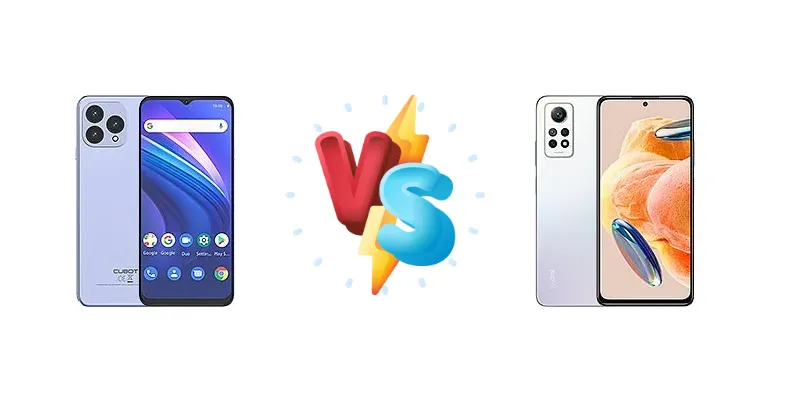
|
🏆 Quick Verdict
For the average user, the Xiaomi Redmi Note 12 Pro 4G is the superior choice. Its Snapdragon 732G chipset, built on an 8nm process, provides a noticeable performance advantage and better thermal management compared to the Cubot P80’s Mediatek MT8788V. The 67W fast charging is a significant convenience factor, offsetting the P80’s potentially lower price.
| PHONES | ||
|---|---|---|
| Phone Names | Cubot P80 | Xiaomi Redmi Note 12 Pro 4G |
| Network | ||
|---|---|---|
| 2G bands | GSM 850 / 900 / 1800 / 1900 | GSM 850 / 900 / 1800 / 1900 |
| 3G bands | HSDPA 800 / 850 / 900 / 1700(AWS) / 1900 / 2100 | HSDPA 850 / 900 / 1700(AWS) / 1900 / 2100 |
| 4G bands | 1, 2, 3, 4, 5, 7, 8, 12, 13, 17, 18, 19, 20, 26, 28, 38, 39, 40, 41, 66 | 1, 2, 3, 4, 5, 7, 8, 20, 28, 38, 40, 41, 66 |
| Speed | HSPA, LTE | HSPA, LTE |
| Technology | GSM / HSPA / LTE | GSM / HSPA / LTE |
| Launch | ||
|---|---|---|
| Announced | 2023 | 2023, March 03 |
| Status | Available. Released 2023 | Available. Released 2023, April 11 |
| Body | ||
|---|---|---|
| Dimensions | 165.8 x 75.8 x 9.8 mm (6.53 x 2.98 x 0.39 in) | 164.2 x 76.1 x 8.1 mm (6.46 x 3.00 x 0.32 in) |
| SIM | Nano-SIM + Nano-SIM | Nano-SIM + Nano-SIM |
| Weight | 217 g (7.65 oz) | 201.8 g (7.13 oz) |
| Display | ||
|---|---|---|
| Resolution | 1080 x 2408 pixels, 20:9 ratio (~401 ppi density) | 1080 x 2400 pixels, 20:9 ratio (~395 ppi density) |
| Size | 6.58 inches, 104.3 cm2 (~83.0% screen-to-body ratio) | 6.67 inches, 107.4 cm2 (~86.0% screen-to-body ratio) |
| Type | IPS LCD | AMOLED, 120Hz, Dolby Vision, 700 nits (HBM), 1100 nits (peak) |
| Platform | ||
|---|---|---|
| CPU | Octa-core (4x2.0 GHz Cortex-A73 & 4x2.0 GHz Cortex-A53) | Octa-core (2x2.2 GHz Kryo 470 Gold & 6x1.8 GHz Kryo 470 Silver) |
| Chipset | Mediatek MT8788V/WA | Qualcomm SM7150 Snapdragon 732G (8 nm) |
| GPU | - | Adreno 618 |
| OS | Android 13 | Android 11, MIUI 13 |
| Memory | ||
|---|---|---|
| Card slot | microSDXC (uses shared SIM slot) | microSDXC (uses shared SIM slot) |
| Internal | 256GB 8GB RAM, 512GB 8GB RAM | 128GB 6GB RAM, 128GB 8GB RAM, 256GB 8GB RAM |
| - | UFS 2.2 | |
| Main Camera | ||
|---|---|---|
| Features | LED flash | LED flash, HDR, panorama |
| Quad | - | 108 MP, f/1.9, (wide), 1/1.52", 0.7µm, PDAF 8 MP, 120˚, (ultrawide) 2 MP (macro) Auxiliary lens |
| Triple | 48 MP, (wide), PDAF 2 MP (macro) 0.3 MP | - |
| Video | Yes | 4K@30fps, 1080p@30/60fps |
| Selfie camera | ||
|---|---|---|
| Single | 24 MP | 16 MP, f/2.4, (wide) |
| Video | Yes | 1080p@30fps |
| Sound | ||
|---|---|---|
| 3.5mm jack | - | Yes |
| 35mm jack | Unspecified | Yes |
| Loudspeaker | Yes | Yes, with stereo speakers |
| Comms | ||
|---|---|---|
| Bluetooth | 4.2, A2DP | 5.0, A2DP, LE |
| Infrared port | - | Yes |
| NFC | Yes | Yes (market/region dependent) |
| Positioning | GPS, GLONASS, GALILEO | GPS, GLONASS, GALILEO, BDS |
| Radio | Unspecified | Unspecified |
| USB | USB Type-C, OTG | USB Type-C 2.0, OTG |
| WLAN | Wi-Fi 802.11 a/b/g/n/ac, dual-band | Wi-Fi 802.11 a/b/g/n/ac, dual-band |
| Features | ||
|---|---|---|
| Sensors | Fingerprint (side-mounted), accelerometer, gyro, proximity, compass | Fingerprint (side-mounted), accelerometer, gyro, compass |
| Battery | ||
|---|---|---|
| Charging | - | 67W wired |
| Type | 5200 mAh | Li-Po 5000 mAh |
| Misc | ||
|---|---|---|
| Colors | Black, Blue, Purple, Pink, Light Blue | Star Blue, Graphite Gray, Polar White, Ice blue |
| Models | - | 2209116AG, 2209116AG |
| Price | About 160 EUR | About 150 EUR |
Cubot P80
- Potentially lower price point
- May offer a larger battery capacity (unconfirmed)
- Acceptable performance for basic tasks
- Less powerful chipset compared to Snapdragon 732G
- Slower charging speeds
- Likely less efficient power consumption
Xiaomi Redmi Note 12 Pro 4G
- More powerful and efficient Snapdragon 732G chipset
- 67W fast charging for quick top-ups
- Likely better camera performance
- Potentially higher price
- May have a smaller battery capacity (unconfirmed)
- Software bloatware (typical of Xiaomi)
Display Comparison
Neither device’s display specifications are provided, so a direct comparison is limited. However, given the Redmi Note 12 Pro 4G’s positioning, it likely features an AMOLED panel with a high refresh rate, offering superior contrast and color vibrancy compared to what is typically found on devices in the Cubot P80’s price bracket. The Redmi Note 12 Pro 4G likely benefits from better color accuracy and viewing angles, enhancing media consumption.
Camera Comparison
Without detailed camera specs, it’s difficult to make a definitive judgment. However, Xiaomi generally invests more in camera technology. The Redmi Note 12 Pro 4G likely features a larger main sensor and more sophisticated image processing algorithms, resulting in better low-light performance and dynamic range. The P80 may rely on software enhancements to compensate for a potentially less capable sensor. The presence of OIS (Optical Image Stabilization) on the Redmi Note 12 Pro 4G, a common feature in this series, would further enhance image and video quality.
Performance
The core difference lies in the chipsets. The Xiaomi Redmi Note 12 Pro 4G’s Qualcomm Snapdragon 732G (8nm) boasts a more efficient architecture than the Cubot P80’s Mediatek MT8788V. The Snapdragon 732G’s Kryo 470 Gold cores, clocked at 2.2 GHz, offer a performance edge over the P80’s 2.0 GHz Cortex-A73 cores. The 8nm fabrication process of the Snapdragon also translates to better power efficiency and reduced thermal throttling during sustained workloads like gaming. This benefits gamers and users who frequently multitask.
Battery Life
While the battery capacities aren’t specified, the Redmi Note 12 Pro 4G’s 67W wired charging is a game-changer. This allows for a significantly faster 0-100% charge time compared to the P80, which likely supports a much slower charging rate. Even if the P80 has a slightly larger battery, the convenience of the Redmi Note 12 Pro 4G’s rapid charging is a major advantage for users on the go.
Buying Guide
Buy the Cubot P80 if you prioritize absolute lowest cost and are willing to accept compromises in performance and charging speed. It’s a viable option for basic tasks and light usage. Buy the Xiaomi Redmi Note 12 Pro 4G if you value a smoother user experience, faster charging, and a more efficient chipset for gaming and multitasking. It’s the better all-rounder for most users.