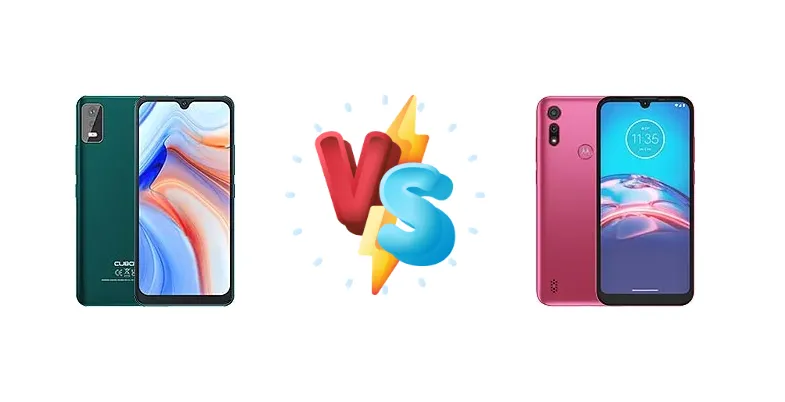
The sub-$150 smartphone market is fiercely competitive. Both the Motorola Moto E6i and the Cubot Note 8 aim to deliver essential smartphone functionality at an incredibly affordable price. However, they take different approaches to achieving this, with the Moto E6i leveraging an octa-core processor while the Cubot Note 8 opts for a quad-core solution. This comparison will dissect the key differences to determine which device offers the best value.
🏆 Quick Verdict
For the average user prioritizing responsiveness and multitasking, the Motorola Moto E6i is the better choice. Its octa-core Unisoc SC9863A processor demonstrably outperforms the Cubot Note 8’s quad-core Mediatek MT6739WW, offering a smoother experience for everyday tasks and light gaming. While both phones are entry-level, the E6i provides a more future-proofed platform.
| Network |
|---|
| 2G bands | GSM 850 / 900 / 1800 / 1900 | GSM 850 / 900 / 1800 / 1900 |
| 3G bands | HSDPA 900 / 2100 | HSDPA 850 / 900 / 1700(AWS) / 1900 / 2100 |
| 4G bands | 1, 3, 5, 7, 8, 19, 20 | 1, 2, 3, 4, 5, 7, 8, 19, 28, 66 |
| Speed | HSPA, LTE | HSPA, LTE |
| Technology | GSM / HSPA / LTE | GSM / HSPA / LTE |
| Launch |
|---|
| Announced | 2022 | 2021, February 11 |
| Status | Available. Released 2022 | Available. Released 2021, February 11 |
| Body |
|---|
| Build | - | Glass front, plastic back, plastic frame |
| Dimensions | 138 x 65 x 10.8 mm (5.43 x 2.56 x 0.43 in) | 155.6 x 73 x 8.5 mm (6.13 x 2.87 x 0.33 in) |
| SIM | Nano-SIM + Nano-SIM | Nano-SIM + Nano-SIM |
| Weight | 143 g (5.04 oz) | 160 g (5.64 oz) |
| Display |
|---|
| Resolution | 442 x 960 pixels, 19.5:9 ratio (~192 ppi density) | 720 x 1560 pixels, 19.5:9 ratio (~282 ppi density) |
| Size | 5.5 inches, 74.1 cm2 (~82.7% screen-to-body ratio) | 6.1 inches, 91.3 cm2 (~80.4% screen-to-body ratio) |
| Type | IPS LCD | IPS LCD |
| Platform |
|---|
| CPU | Quad-core 1.3 GHz Cortex-A53 | Octa-core (4x1.6 GHz Cortex-A55 & 4x1.2 GHz Cortex-A55) |
| Chipset | Mediatek MT6739WW (28 nm) | Unisoc SC9863A (28 nm) |
| GPU | PowerVR GE8100 | IMG8322 |
| OS | Android 11 | Android 10 (Go edition) |
| Memory |
|---|
| Card slot | microSDXC (dedicated slot) | microSDXC (uses shared SIM slot) |
| Internal | 16GB 2GB RAM | 32GB 2GB RAM |
| | - | eMMC 5.1 |
| Main Camera |
|---|
| Dual | 13 MP, (wide), AF
0.3 MP | 13 MP, f/2.2, 26mm (wide), 1/3.1", 1.12µm, PDAF
Auxiliary lens |
| Features | LED flash | LED flash, HDR, panorama |
| Video | Yes | 1080p@30fps |
| Selfie camera |
|---|
| Single | 5 MP | 5 MP, f/2.2, 27mm (wide), 1.12µm |
| Video | Yes | 1080p@30fps |
| Sound |
|---|
| 3.5mm jack | - | Yes |
| 35mm jack | Yes | Yes |
| Loudspeaker | Yes | Yes |
| Comms |
|---|
| Bluetooth | 4.2, A2DP | 4.2, A2DP, LE |
| NFC | No | No |
| Positioning | GPS, GLONASS | GPS, GLONASS |
| Radio | Unspecified | Unspecified |
| USB | Yes | microUSB 2.0, OTG |
| WLAN | Wi-Fi 802.11 a/b/g/n | Wi-Fi 802.11 b/g/n |
| Features |
|---|
| Sensors | Accelerometer, proximity | Fingerprint (rear-mounted), accelerometer, proximity |
| Battery |
|---|
| Charging | - | 10W wired |
| Type | 3100 mAh, removable | Li-Ion 3000 mAh |
| Misc |
|---|
| Colors | Black, Green | Titanium Gray, Pink |
| Models | - | XT2053-5 |
| Price | - | About 170 EUR |
Cubot Note 8
- Potentially lower price point
- Functional for basic tasks
- May offer larger storage options (depending on configuration)
- Outdated quad-core processor
- Slower performance
- Likely limited software support
Motorola Moto E6i
- Octa-core processor for smoother performance
- More efficient Cortex-A55 architecture
- 10W wired charging
- Established brand with potentially better software support
- May be slightly more expensive
- Still an entry-level device with limitations
- Camera quality likely limited by sensor and lens
Display Comparison
Neither device boasts a standout display. Both utilize 28nm chipsets, suggesting a focus on cost reduction over display technology. Specific display specs (resolution, panel type, brightness) are not provided, but given the price point, we can assume both feature basic LCD panels. The lack of information prevents a detailed comparison, but the E6i’s processor may allow for slightly smoother scrolling and animations, indirectly improving the perceived display experience.
Camera Comparison
Camera details are sparse for both devices. Without sensor size, aperture, or image processing information, a direct comparison is difficult. However, it’s safe to assume both phones feature basic camera setups geared towards casual snapshots. The E6i’s more powerful processor *could* contribute to faster image processing, but the overall image quality will likely be limited by the sensor and lens quality, which are unknown. We can expect both to struggle in low-light conditions.
Performance
The core difference lies in the processors. The Motorola Moto E6i’s Unisoc SC9863A is an octa-core chip (4x1.6 GHz Cortex-A55 & 4x1.2 GHz Cortex-A55), while the Cubot Note 8 uses a Mediatek MT6739WW quad-core (1.3 GHz Cortex-A53). The Cortex-A55 architecture in the E6i is a significant improvement over the older Cortex-A53 found in the Note 8, offering better performance per clock cycle. The higher core count also allows for more efficient multitasking. While both are 28nm, the architectural advantage of the Unisoc chip translates to a noticeably snappier experience for the E6i.
Battery Life
Battery capacity isn't specified for either device. However, the Moto E6i includes 10W wired charging, a feature absent from the provided Cubot Note 8 specifications. While 10W isn’t fast charging by modern standards, it’s a benefit over a potentially slower or non-existent charging solution on the Note 8. The more efficient Unisoc processor in the E6i may also contribute to slightly better battery life, even with a similar capacity battery.
Buying Guide
Buy the Cubot Note 8 if you need a basic, functional smartphone for calls, texts, and very light app usage, and are prioritizing absolute lowest cost. Buy the Motorola Moto E6i if you prefer a more responsive user experience, plan to use multiple apps simultaneously, or anticipate needing a phone that will handle software updates and new app versions more gracefully. The E6i is also a better choice for users who value a more established brand and potentially better software support.
Frequently Asked Questions
❓ Will the Motorola Moto E6i struggle with popular apps like Facebook or WhatsApp?
While the Moto E6i is an entry-level phone, its octa-core processor and Cortex-A55 architecture should handle apps like Facebook and WhatsApp reasonably well. However, expect some slowdowns with multiple apps open or during intensive tasks within those apps. It's designed for light to moderate usage.
❓ Is the Cubot Note 8 a good choice for someone who primarily uses their phone for calls and texts?
Yes, the Cubot Note 8 is a viable option for users who primarily need a phone for basic communication. Its quad-core processor is sufficient for calls and texts, but it will struggle with more demanding tasks. If your needs are minimal, it offers a very affordable solution.
❓ Does the Moto E6i support software updates, and for how long?
Motorola typically provides at least one major Android update and a few security patches for their budget phones. However, the Moto E6i is an entry-level device, so long-term software support is not guaranteed. Expect at least one Android version update, but don't anticipate updates beyond that.
❓ Can the Moto E6i handle light gaming, like Candy Crush or Angry Birds?
Yes, the Moto E6i should be able to handle light gaming like Candy Crush or Angry Birds without significant issues. However, don't expect to play graphically demanding games at high settings. The Unisoc SC9863A is capable of basic gaming, but it's not a gaming-focused processor.