
Cubot Note 60 vs Doogee S99: A Deep Dive into Budget Smartphone Performance and Battery Life
| Phones Images | |||||
|---|---|---|---|---|---|
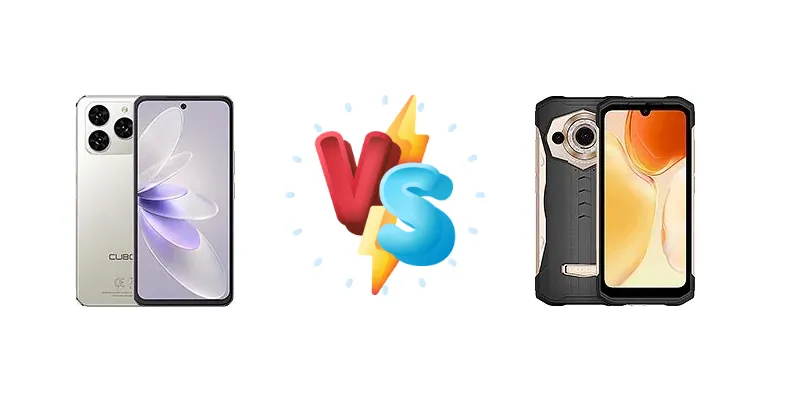
|
🏆 Quick Verdict
For the average user prioritizing all-day battery life and consistent performance for everyday tasks, the Cubot Note 60 is the better choice. While the Doogee S99 offers a performance boost with its Helio G96, the Note 60’s impressive 27:38h endurance and 1000 charge cycles provide a more reliable and worry-free experience.
| PHONES | ||
|---|---|---|
| Phone Names | Cubot Note 60 | Doogee S99 |
| Network | ||
|---|---|---|
| 2G bands | GSM 850 / 900 / 1800 / 1900 | GSM 850 / 900 / 1800 / 1900 |
| 3G bands | HSDPA 850 / 900 / 1700(AWS) / 1900 / 2100 | HSDPA 800 / 850 / 900 / 1700(AWS) / 1900 / 2100 |
| 4G bands | 1, 2, 3, 4, 5, 7, 8, 12, 17, 20, 26, 28, 38, 40, 41, 66 | 1, 2, 3, 4, 5, 7, 8, 12, 13, 17, 18, 19, 20, 25, 26, 28, 34, 38, 39, 40, 41, 66 |
| Speed | HSPA, LTE | HSPA, LTE |
| Technology | GSM / HSPA / LTE | GSM / CDMA / HSPA / LTE |
| Launch | ||
|---|---|---|
| Announced | 2025, November | 2022, December 05 |
| Status | Available. Released 2025, November | Available. Released 2022, December 05 |
| Body | ||
|---|---|---|
| Dimensions | 177.4 x 84.3 x 9.8 mm (6.98 x 3.32 x 0.39 in) | 172 x 82 x 15.5 mm (6.77 x 3.23 x 0.61 in) |
| SIM | Nano-SIM + Nano-SIM | Nano-SIM + Nano-SIM |
| Weight | 254 g (8.96 oz) | - |
| Display | ||
|---|---|---|
| Protection | Mohs level 6 | Corning Gorilla Glass |
| Resolution | 720 x 1560 pixels, 19.5:9 ratio (~239 ppi density) | 1080 x 2340 pixels, 19.5:9 ratio (~409 ppi density) |
| Size | 7.2 inches, 127.3 cm2 (~85.1% screen-to-body ratio) | 6.3 inches, 97.4 cm2 (~69.1% screen-to-body ratio) |
| Type | IPS LCD, 120Hz | IPS LCD |
| Platform | ||
|---|---|---|
| CPU | Octa-core (2x1.8 GHz Cortex-A75 & 6x1.6 GHz Cortex-A55) | Octa-core (2x2.05 GHz Cortex-A76 & 6x2.0 GHz Cortex-A55) |
| Chipset | Unisoc T615 (12 nm) | Mediatek MT6781 Helio G96 (12 nm) |
| GPU | Mali-G57 MP1 | Mali-G57 MC2 |
| OS | Android 15 | Android 12 |
| Memory | ||
|---|---|---|
| Card slot | microSDXC (uses shared SIM slot) | microSDXC (dedicated slot) |
| Internal | 128GB 6GB RAM | 128GB 8GB RAM |
| Main Camera | ||
|---|---|---|
| Features | LED flash | Dual-LED flash, HDR, panorama |
| Triple | 48 MP (wide), PDAF 5 MP (ultrawide) 2 MP (macro) | 108 MP, f/1.9, (wide), 1/1.52", 0.7µm, PDAF 64 MP, f/1.8, (night vision), 2 infrared night vision lights 16 MP, f/1.8, 130˚ (ultrawide) |
| Video | 1080p@30fps | 1440p@30fps, 1080p@30fps |
| Selfie camera | ||
|---|---|---|
| Single | 16 MP | 32 MP, f/2.0, (wide), 1/2.8", 0.8µm |
| Video | 1080p@30fps | 1080p@30fps |
| Sound | ||
|---|---|---|
| 35mm jack | No | No |
| Loudspeaker | Yes, with stereo speakers | Yes |
| Comms | ||
|---|---|---|
| Bluetooth | 5.0, A2DP, LE | 5.1, A2DP, LE |
| NFC | Yes | Yes (market/region dependent) |
| Positioning | GPS, GLONASS, GALILEO, BDS | GPS, GLONASS, GALILEO, BDS |
| Radio | No | FM radio |
| USB | USB Type-C, OTG | USB Type-C 2.0, OTG |
| WLAN | Wi-Fi 802.11 a/b/g/n/ac, dual-band | Wi-Fi 802.11 a/b/g/n/ac, dual-band |
| Features | ||
|---|---|---|
| Sensors | Accelerometer, proximity | Fingerprint (side-mounted), accelerometer, gyro, proximity, compass |
| Battery | ||
|---|---|---|
| Charging | - | 33W wired, 45% in 30 min 15W wireless Reverse wired |
| Type | 7000 mAh | 6000 mAh |
| Misc | ||
|---|---|---|
| Colors | Black, Titan Grey | Gold, Black |
| Price | $ 105.00 / £ 115.72 | About 250 EUR |
| EU LABEL | ||
|---|---|---|
| Battery | 27:38h endurance, 1000 cycles | - |
| Energy | Class G | - |
| Free fall | Class A (270 falls) | - |
| Repairability | Class B | - |
Cubot Note 60
- Exceptional battery life (27:38h endurance)
- High battery cycle count (1000 cycles)
- Efficient Unisoc T615 chipset for everyday tasks
- Less powerful chipset compared to the Doogee S99
- Lacks fast charging capabilities (details missing)
Doogee S99
- More powerful Mediatek Helio G96 chipset
- Faster 33W wired and 15W wireless charging
- Potentially better camera image processing
- Likely shorter battery life than the Cubot Note 60
- Higher power consumption
Display Comparison
Display specifications are absent from the provided data, making a direct comparison impossible. However, given the price points, both devices likely utilize IPS LCD panels. The Doogee S99, potentially targeting a slightly more premium experience, *might* offer a higher refresh rate, but this is speculative. Users should prioritize checking independent reviews for color accuracy and brightness levels before making a decision.
Camera Comparison
Camera details are lacking, but the chipset difference hints at potential image processing advantages for the Doogee S99. The Helio G96 typically supports more advanced camera features and ISP capabilities. Without sensor size or aperture information, it’s difficult to assess image quality definitively. Users should be wary of relying on marketing claims about megapixel counts and instead focus on real-world sample photos and video quality in reviews.
Performance
The Doogee S99’s Mediatek Helio G96 chipset represents a clear advantage over the Cubot Note 60’s Unisoc T615. The G96 features a more modern CPU architecture – Cortex-A76 cores clocked at 2.05 GHz versus the Note 60’s Cortex-A75 cores at 1.8 GHz. This translates to noticeably faster application loading times and smoother multitasking. While both are 12nm chips, the G96’s superior core design and higher clock speeds provide a tangible performance uplift, particularly for gaming. However, the Unisoc T615 is still capable of handling everyday tasks efficiently, and its power efficiency contributes to the Note 60’s exceptional battery life.
Battery Life
The Cubot Note 60 shines in battery endurance, boasting a remarkable 27:38 hours of usage. This is a significant advantage over what is typically seen in this price bracket. While the Doogee S99’s battery capacity is unknown, its more powerful chipset will likely consume more power. The S99 compensates with 33W wired charging (45% in 30 minutes) and 15W wireless charging, offering significantly faster replenishment than the Note 60, which lacks fast charging information. The Note 60’s 1000 charge cycles also suggest a longer lifespan for the battery itself.
Buying Guide
Buy the Cubot Note 60 if you need a phone that will reliably last through a full day (and then some) of moderate use, and you value longevity with its 1000-cycle battery. Buy the Doogee S99 if you prioritize smoother performance in demanding apps and games, and you appreciate the convenience of 33W wired and 15W wireless charging.