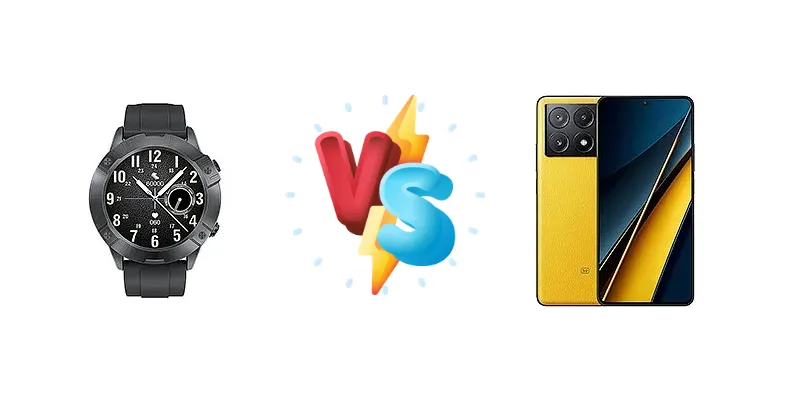
The Xiaomi Poco X6 Pro arrives as a compelling mid-range contender, boasting a flagship-level Dimensity 8300 Ultra chipset. However, the Cubot N1 presents a challenge – a lack of publicly available specifications makes a direct comparison difficult, forcing us to assess it based on brand positioning and market expectations. This comparison will focus on what the Poco X6 Pro *offers* and speculate on where the N1 might fit in.
🏆 Quick Verdict
For the average user seeking a powerful and well-specified smartphone, the Xiaomi Poco X6 Pro is the clear winner. Its Dimensity 8300 Ultra chipset, 67W fast charging, and measured 1148 nits peak brightness provide a tangible advantage over the currently unknown capabilities of the Cubot N1.
| Network |
|---|
| 2G bands | N/A | GSM 850 / 900 / 1800 / 1900 |
| 3G bands | N/A | HSDPA 850 / 900 / 1700(AWS) / 1900 / 2100 |
| 4G bands | N/A | 1, 2, 3, 4, 5, 7, 8, 18, 19, 20, 28, 38, 40, 41, 48, 66 |
| 5G bands | - | 1, 2, 3, 5, 7, 8, 20, 28, 38, 40, 41, 48, 77, 78 SA/NSA/Sub6 |
| EDGE | No | - |
| GPRS | No | - |
| Speed | No | HSPA, LTE, 5G |
| Technology | No cellular connectivity | GSM / HSPA / LTE / 5G |
| Launch |
|---|
| Announced | 2021 | 2024, January 11 |
| Status | Available. Released 2021 | Available. Released 2024, January 12 |
| Body |
|---|
| Build | - | Glass front (Gorilla Glass 5), plastic frame, plastic back or silicone polymer back (eco leather) |
| Dimensions | 49.5 x 49.5 x 14.5 mm (1.95 x 1.95 x 0.57 in) | 160.5 x 74.3 x 8.3 mm (6.32 x 2.93 x 0.33 in) |
| SIM | No | Nano-SIM + Nano-SIM |
| Weight | 55 g (1.94 oz) | 186 g or 190 g (6.56 oz) |
| Display |
|---|
| Protection | Scratch-resistant glass | Corning Gorilla Glass 5 |
| Resolution | 240 x 240 pixels (~265 ppi density) | 1220 x 2712 pixels, 20:9 ratio (~446 ppi density) |
| Size | 1.28 inches | 6.67 inches, 107.4 cm2 (~90.1% screen-to-body ratio) |
| Type | TFT LCD | AMOLED, 68B colors, 120Hz, 1920Hz PWM, HDR10+, Dolby Vision, 500 nits (typ), 1200 nits (HBM), 1800 nits (peak) |
| Platform |
|---|
| CPU | - | Octa-core (1x3.35 GHz Cortex-A715 & 3x3.20 GHz Cortex-A715 & 4x2.20 GHz Cortex-A510) |
| Chipset | - | Mediatek Dimensity 8300 Ultra (4 nm) |
| GPU | - | Mali G615-MC6 |
| OS | Proprietary OS | Android 14, up to 3 major Android upgrades, HyperOS |
| Memory |
|---|
| Card slot | No | No |
| Internal | - | 256GB 8GB RAM, 256GB 12GB RAM, 512GB 12GB RAM |
| Main Camera |
|---|
| Features | - | LED flash, HDR, panorama |
| Triple | - | 64 MP, f/1.7, 25mm (wide), 1/2.0", 0.7µm, PDAF, OIS
8 MP, f/2.2, 120˚ (ultrawide), 1/4.0", 1.12µm
2 MP (macro) |
| Video | - | 4K@24/30fps, 1080p@30/60fps, gyro-EIS |
| Selfie camera |
|---|
| Features | - | HDR, panorama |
| Single | - | 16 MP, f/2.4, (wide), 1/3.06", 1.0µm |
| Video | - | 1080p@30/60fps |
| Sound |
|---|
| 35mm jack | No | No |
| Loudspeaker | No | Yes, with dual speakers |
| Comms |
|---|
| Bluetooth | 5.0, A2DP, LE | 5.4, A2DP, LE, aptX HD |
| Infrared port | - | Yes |
| NFC | No | Yes (market/region dependent) |
| Positioning | No | GPS, GALILEO, GLONASS, QZSS, BDS (B1I+B1c) |
| Radio | No | No |
| USB | No | USB Type-C 2.0, OTG |
| WLAN | No | Wi-Fi 802.11 a/b/g/n/ac/6, dual-band, Wi-Fi Direct |
| Features |
|---|
| Sensors | Accelerometer, gyro, heart rate, SpO2 | Fingerprint (under display, optical), accelerometer, gyro, compass |
| Battery |
|---|
| Charging | - | 67W wired, QC2.0, PD3.0, 100% in 45 min |
| Type | 450 mAh | 5000 mAh |
| Misc |
|---|
| Colors | Black | Black, Yellow, Gray |
| Models | - | 2311DRK48G, 2311DRK48I |
| Price | - | € 195.30 / $ 209.79 / £ 274.99 / ₹ 21,999 |
| SAR EU | - | 0.99 W/kg (head) 1.00 W/kg (body) |
Cubot N1
- Unknown specs could offer surprising value.
- Potentially lower price point.
- May appeal to users seeking a less mainstream brand.
- Lack of publicly available specifications.
- Likely lower performance than the Poco X6 Pro.
- Uncertainty regarding software support and updates.
Xiaomi Poco X6 Pro
- Powerful Dimensity 8300 Ultra chipset.
- Fast 67W charging.
- Bright 1148 nit display.
- May be more expensive than the Cubot N1.
- Software experience can be heavily customized.
- Camera details are currently limited.
Display Comparison
The Poco X6 Pro features a display capable of reaching 1148 nits of peak brightness, ensuring excellent visibility even in direct sunlight. This is a significant advantage, as the Cubot N1’s display specifications are currently unknown. Without knowing the panel type (AMOLED vs. IPS) or resolution of the N1, it’s difficult to assess its color accuracy or viewing angles. The X6 Pro’s brightness level suggests a focus on outdoor usability, a key benefit for users who frequently use their phones on the go.
Camera Comparison
The Poco X6 Pro offers a photo/video camera system, but specific sensor details are missing. However, the presence of a camera system at all is a point of comparison, as the Cubot N1’s camera capabilities are entirely unknown. Without knowing the sensor size, aperture, or image stabilization features of either device, it’s impossible to make a definitive judgment. It’s reasonable to assume the X6 Pro will offer a more refined image processing pipeline and potentially better low-light performance, given Xiaomi’s experience in smartphone photography.
Performance
The Poco X6 Pro is powered by the Mediatek Dimensity 8300 Ultra (4nm), an octa-core processor with a configuration of 1x3.35 GHz Cortex-A715, 3x3.20 GHz Cortex-A715, and 4x2.20 GHz Cortex-A510. This 4nm process node is crucial, offering improved thermal efficiency compared to older, larger nodes, meaning sustained performance during demanding tasks like gaming. The Cubot N1’s chipset remains a mystery. Given Cubot’s typical market segment, it’s likely to feature a more modest processor, potentially a Mediatek Helio or Snapdragon 6-series chip, which would result in noticeably lower performance. The X6 Pro’s CPU architecture, with its high-clocked Cortex-A715 cores, is geared towards responsiveness and demanding applications.
Battery Life
The Poco X6 Pro achieves an active use battery score of 11 hours and 46 minutes. Coupled with 67W wired charging (supporting QC2.0 and PD3.0), it can reach 100% charge in just 45 minutes. The Cubot N1’s battery capacity and charging speed are currently unknown. While a larger battery capacity doesn’t always translate to longer real-world usage (software optimization plays a role), the X6 Pro’s combination of respectable capacity and fast charging provides a significant convenience advantage. Users who frequently find themselves needing to top up their phone will appreciate the X6 Pro’s rapid charging capabilities.
Buying Guide
Buy the Cubot N1 if you prioritize extreme budget-friendliness and are willing to compromise on performance and features, hoping for a surprisingly competitive offering. Buy the Xiaomi Poco X6 Pro if you demand a smooth, responsive experience for gaming, content creation, and everyday tasks, and value a bright, vibrant display coupled with rapid charging capabilities.
Frequently Asked Questions
❓ Given the lack of information on the Cubot N1, is it worth considering at all?
The Cubot N1 is a gamble. If you're on an extremely tight budget and willing to accept significant compromises in performance and features, it *might* be worth considering. However, the Poco X6 Pro offers a much more predictable and satisfying experience for a relatively small price premium.
❓ How does the Dimensity 8300 Ultra in the Poco X6 Pro handle graphically intensive games like Genshin Impact?
The Dimensity 8300 Ultra is exceptionally capable for gaming. Expect to run Genshin Impact at high settings with stable frame rates. The 4nm process node helps mitigate thermal throttling, allowing for sustained performance during extended gaming sessions. While specific frame rate numbers will vary based on settings, the X6 Pro is well-equipped to handle demanding titles.
❓ Does the Poco X6 Pro support expandable storage via microSD card?
Unfortunately, the Poco X6 Pro does *not* support microSD card expansion. Users will need to rely on the internal storage options available at the time of purchase. This is a common omission in phones at this price point, so it's important to choose a storage configuration that meets your needs.