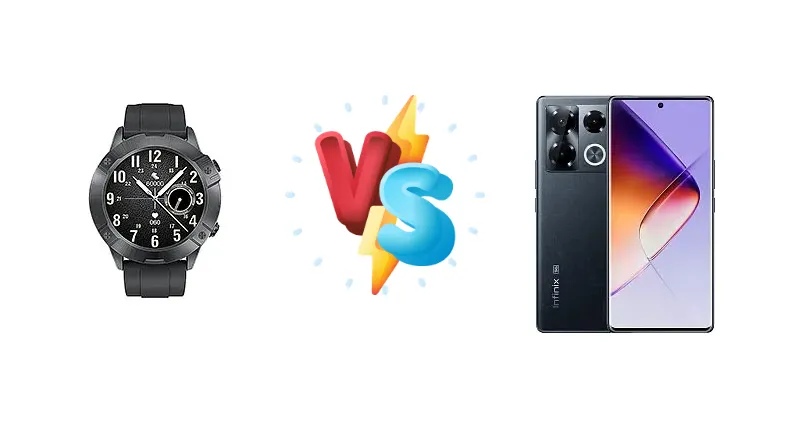
The smartphone market is flooded with options, but the Infinix Note 40 Pro+ and Cubot N1 represent distinct approaches. The Infinix aggressively targets the mid-range with its 100W charging and capable Dimensity 7020 chipset, while the Cubot N1 remains largely undefined, relying on brand recognition within the budget segment. This comparison aims to dissect the known strengths of the Infinix and extrapolate the potential positioning of the Cubot, given the limited available information.
🏆 Quick Verdict
For the average user prioritizing fast charging and proven performance, the Infinix Note 40 Pro+ is the clear winner. Its 100W charging, coupled with the Dimensity 7020, offers a tangible benefit over the currently unknown specifications of the Cubot N1. However, if the Cubot N1 arrives at a significantly lower price point, it could appeal to extremely budget-conscious buyers.
| Network |
|---|
| 2G bands | N/A | GSM 850 / 900 / 1800 / 1900 |
| 3G bands | N/A | HSDPA 850 / 900 / 1700(AWS) / 1900 / 2100 |
| 4G bands | N/A | 1, 2, 3, 4, 5, 7, 8, 12, 17, 20, 28, 38, 40, 41, 42, 66 |
| 5G bands | - | 1, 3, 5, 7, 8, 12, 20, 28, 38, 40, 41, 66, 77, 78 SA/NSA |
| EDGE | No | - |
| GPRS | No | - |
| Speed | No | HSPA, LTE, 5G |
| Technology | No cellular connectivity | GSM / HSPA / LTE / 5G |
| Launch |
|---|
| Announced | 2021 | 2024, March 18 |
| Status | Available. Released 2021 | Available. Released 2024, March 19 |
| Body |
|---|
| Build | - | Glass front, plastic frame, silicone polymer (eco leather) back |
| Dimensions | 49.5 x 49.5 x 14.5 mm (1.95 x 1.95 x 0.57 in) | 164.3 x 74.5 x 8.1 mm (6.47 x 2.93 x 0.32 in) |
| SIM | No | Nano-SIM + Nano-SIM |
| Weight | 55 g (1.94 oz) | 190 g or 196 g (6.70 oz) |
| Display |
|---|
| Protection | Scratch-resistant glass | Corning Gorilla Glass |
| Resolution | 240 x 240 pixels (~265 ppi density) | 1080 x 2436 pixels (~393 ppi density) |
| Size | 1.28 inches | 6.78 inches, 109.9 cm2 (~89.8% screen-to-body ratio) |
| Type | TFT LCD | AMOLED, 1B colors, 120Hz, 1300 nits (peak) |
| Platform |
|---|
| CPU | - | Octa-core (2x2.2 GHz Cortex-A78 & 6x2.0 GHz Cortex-A55) |
| Chipset | - | Mediatek Dimensity 7020 (6 nm) |
| GPU | - | IMG BXM-8-256 |
| OS | Proprietary OS | Android 14, up to 2 major Android upgrades, XOS 14 |
| Memory |
|---|
| Card slot | No | No |
| Internal | - | 256GB 12GB RAM, 512GB 12GB RAM |
| Main Camera |
|---|
| Features | - | Dual-LED flash, HDR, panorama |
| Triple | - | 108 MP, f/1.8, 24mm (wide), 1/1.67", 0.64µm, PDAF, OIS
2 MP, f/2.4
2 MP, f/2.4 |
| Video | - | 1440p@30fps, 1080p@30/60fps |
| Selfie camera |
|---|
| Features | - | Dual-LED flash |
| Single | - | 32 MP, f/2.2, (wide), 1/3.1", 0.7µm |
| Video | - | 1440p@30fps, 1080p@30/60fps |
| Sound |
|---|
| 35mm jack | No | No |
| Loudspeaker | No | Yes, with stereo speakers |
| Comms |
|---|
| Bluetooth | 5.0, A2DP, LE | Yes |
| Infrared port | - | Yes |
| NFC | No | Yes (market/region dependent) |
| Positioning | No | GPS |
| Radio | No | FM radio |
| USB | No | USB Type-C 2.0, OTG |
| WLAN | No | Wi-Fi 802.11 a/b/g/n/ac, dual-band |
| Features |
|---|
| Sensors | Accelerometer, gyro, heart rate, SpO2 | Fingerprint (under display, optical), accelerometer, gyro, proximity, compass |
| Battery |
|---|
| Charging | - | 100W wired, 50% in 12 min
20W wireless MagCharge
Reverse wired
Reverse wireless |
| Type | 450 mAh | 4600 mAh |
| Misc |
|---|
| Colors | Black | Obsidian Black, Vintage Green, Racing Edition |
| Models | - | X6851B |
| Price | - | About 290 EUR |
Cubot N1
- Blazing-fast 100W charging
- Capable Mediatek Dimensity 7020 processor
- Bright 1130 nit display
- MagCharge wireless charging support
- Specific camera details are currently unknown
- Price may be higher than ultra-budget alternatives
Infinix Note 40 Pro+
- Potentially very affordable price point
- May appeal to users on a strict budget
- Brand recognition within the budget segment
- Unknown specifications make a thorough comparison impossible
- Likely to offer lower performance and features than the Infinix
Display Comparison
The Infinix Note 40 Pro+ features a display capable of reaching 1130 nits of peak brightness, ensuring excellent visibility even in direct sunlight. This is a significant advantage for outdoor users. Without display specifications for the Cubot N1, it's reasonable to assume it will offer a lower peak brightness, potentially impacting outdoor usability. The Infinix's display technology is also likely to be more advanced, potentially including features like higher refresh rates or LTPO for improved efficiency, though this is unconfirmed.
Camera Comparison
Without camera specifications for the Cubot N1, a direct comparison is impossible. The Infinix Note 40 Pro+’s camera system is likely to be its strength, though details are missing. We can assume a primary sensor with a reasonable aperture for good low-light performance. The focus should be on the main sensor's size and image processing capabilities, rather than the inclusion of low-resolution auxiliary lenses often found in this price bracket. The absence of information on the Cubot N1 suggests a more basic camera setup.
Performance
The Infinix Note 40 Pro+ is powered by the Mediatek Dimensity 7020 (6nm), an octa-core processor featuring two high-performance Cortex-A78 cores clocked at 2.2 GHz and six efficiency cores at 2.0 GHz. This configuration provides a strong balance of performance and power efficiency. The 6nm process node is crucial, offering better thermal management compared to older, larger nodes. The Cubot N1's processor remains unknown, but given its likely price point, it will almost certainly utilize a less powerful chipset, potentially impacting multitasking and gaming performance. The Dimensity 7020's architecture will provide a smoother experience for demanding applications.
Battery Life
The Infinix Note 40 Pro+ excels in charging speed, offering 100W wired charging capable of reaching 50% charge in just 12 minutes. It also supports 20W MagCharge wireless charging and reverse wired/wireless charging. This is a significant convenience feature for users on the go. While the Cubot N1’s battery capacity and charging speed are unknown, it’s unlikely to match the Infinix’s rapid charging capabilities. The Infinix’s active use score of 12:23h demonstrates solid battery life, further enhanced by the efficient Dimensity 7020 chipset.
Buying Guide
Buy the Cubot N1 if you need an ultra-budget-friendly device and are willing to compromise on performance and features. Its appeal will hinge entirely on its price. Buy the Infinix Note 40 Pro+ if you prioritize fast charging, a responsive user experience thanks to the Dimensity 7020, and a brighter, more usable display. It's the better choice for users who actively use their phones throughout the day and need quick top-ups.
Frequently Asked Questions
❓ How does the Dimensity 7020 handle graphically intensive games like Genshin Impact on the Infinix Note 40 Pro+?
The Dimensity 7020 is a capable mid-range chipset. While it won't deliver flagship-level performance, it should be able to run Genshin Impact at medium settings with playable frame rates. The 6nm process node will help mitigate thermal throttling during extended gaming sessions, but expect some performance drop-off over time.
❓ Does the Infinix Note 40 Pro+ support video recording at 4K resolution?
While official specifications are needed to confirm, it's highly probable that the Infinix Note 40 Pro+ supports 4K video recording, given the capabilities of the Dimensity 7020 chipset and the target market. However, stabilization and video quality will depend on the specific camera sensors and image processing algorithms used.
❓ What type of USB port does the Infinix Note 40 Pro+ use?
The Infinix Note 40 Pro+ utilizes a USB Type-C port, which is standard for modern smartphones. This allows for fast data transfer and compatibility with a wide range of accessories.