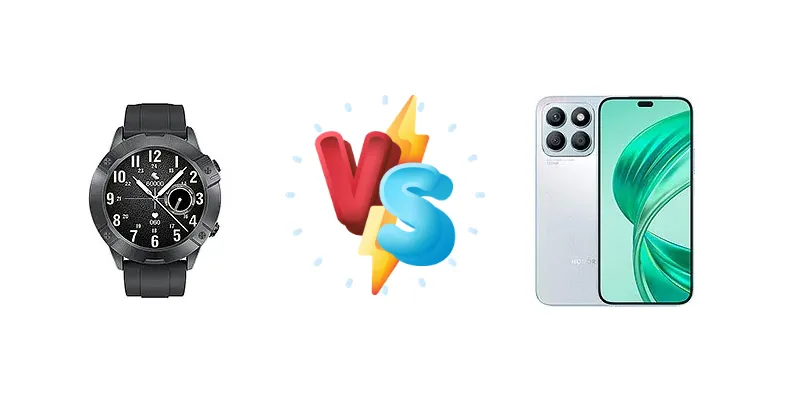
The sub-$200 smartphone market is fiercely competitive. The Honor X8b enters with a known quantity – Qualcomm’s Snapdragon 680 – while the Cubot N1 remains largely shrouded in mystery. This comparison aims to dissect the X8b’s strengths and extrapolate the N1’s potential based on brand positioning and market trends, helping you determine which device offers the best value.
🏆 Quick Verdict
For the average user prioritizing a reliable, well-documented experience, the Honor X8b is the clear winner. Its Snapdragon 680 chipset provides a known performance baseline and 35W charging offers a significant convenience advantage. The Cubot N1’s appeal rests solely on a potentially lower price point, but lacks concrete specifications to justify a recommendation.
| Network |
|---|
| 2G bands | N/A | GSM 850 / 900 / 1800 / 1900 |
| 3G bands | N/A | HSDPA 850 / 900 / 1900 / 2100 |
| 4G bands | N/A | LTE |
| EDGE | No | - |
| GPRS | No | - |
| Speed | No | HSPA, LTE |
| Technology | No cellular connectivity | GSM / HSPA / LTE |
| Launch |
|---|
| Announced | 2021 | 2023, December 14 |
| Status | Available. Released 2021 | Available. Released 2023, December 22 |
| Body |
|---|
| Dimensions | 49.5 x 49.5 x 14.5 mm (1.95 x 1.95 x 0.57 in) | 161.1 x 74.6 x 6.8 mm (6.34 x 2.94 x 0.27 in) |
| SIM | No | Nano-SIM + Nano-SIM |
| Weight | 55 g (1.94 oz) | 166 g (5.86 oz) |
| Display |
|---|
| Protection | Scratch-resistant glass | - |
| Resolution | 240 x 240 pixels (~265 ppi density) | 1080 x 2412 pixels, 20:9 ratio (~394 ppi density) |
| Size | 1.28 inches | 6.7 inches, 108.0 cm2 (~89.9% screen-to-body ratio) |
| Type | TFT LCD | AMOLED, 90Hz, 1200 nits (HBM), 2000 nits (peak) |
| Platform |
|---|
| CPU | - | Octa-core (4x2.4 GHz Kryo 265 Gold & 4x1.9 GHz Kryo 265 Silver) |
| Chipset | - | Qualcomm SM6225 Snapdragon 680 4G (6 nm) |
| GPU | - | Adreno 610 |
| OS | Proprietary OS | Android 13, MagicOS 7.2 |
| Memory |
|---|
| Card slot | No | No |
| Internal | - | 128GB 8GB RAM, 256GB 6GB RAM, 256GB 8GB RAM, 512GB 8GB RAM |
| Main Camera |
|---|
| Features | - | LED flash, HDR, panorama |
| Triple | - | 108 MP, f/1.8, 24mm (wide), 1/1.67", PDAF
5 MP, f/2.2, (ultrawide)
2 MP (macro) |
| Video | - | 1080p@30fps |
| Selfie camera |
|---|
| Features | - | LED flash |
| Single | - | 50 MP, f/2.1, (wide) |
| Video | - | 1080p@30fps |
| Sound |
|---|
| 35mm jack | No | No |
| Loudspeaker | No | Yes |
| Comms |
|---|
| Bluetooth | 5.0, A2DP, LE | 5.0, A2DP, LE |
| NFC | No | No |
| Positioning | No | GPS, GLONASS, GALILEO, BDS |
| Radio | No | No |
| USB | No | USB Type-C 2.0, OTG |
| WLAN | No | Wi-Fi 802.11 a/b/g/n/ac, dual-band, Wi-Fi Direct |
| Features |
|---|
| Sensors | Accelerometer, gyro, heart rate, SpO2 | Fingerprint (side-mounted), accelerometer, compass |
| Battery |
|---|
| Charging | - | 35W wired |
| Type | 450 mAh | Li-Po 4500 mAh |
| Misc |
|---|
| Colors | Black | Glamorous Green, Titanium Silver, Midnight Black, Blue |
| Models | - | LLY-LX1, LLY-LX2, LLY-LX3 |
| Price | - | $ 369.00 / € 219.99 |
Cubot N1
- Potentially lower price point
- May offer unique features not found on the X8b (unknown)
- Could have a larger battery capacity (speculation)
- Unknown specifications create uncertainty
- Potential for poor software support
- Likely weaker performance compared to the X8b
Honor X8b
- Reliable Snapdragon 680 processor
- Fast 35W wired charging
- Established brand with better software support
- May be slightly more expensive than the Cubot N1
- Likely uses an LCD panel instead of AMOLED
- Camera performance may be average for the price range
Display Comparison
Without specific display details for the Cubot N1, a direct comparison is difficult. The Honor X8b likely features an LCD panel, common in this price bracket. The focus here is on the X8b’s potential for adequate brightness for outdoor visibility, but it will likely lack the advanced features like LTPO or high refresh rates found in more expensive devices. Bezels are expected to be moderate on both, prioritizing cost-effectiveness over a premium aesthetic. Color accuracy will likely be standard for the segment, leaning towards vibrant rather than color-accurate.
Camera Comparison
The Honor X8b’s camera system is likely centered around a primary sensor, but details are missing. Without specifications for the Cubot N1, it’s impossible to make a direct comparison. However, budget phones often prioritize megapixel count over sensor size and image processing quality. The X8b’s image processing will likely focus on enhancing colors and contrast for social media sharing. The inclusion of a 35W charger suggests Honor is targeting users who actively use their phone’s camera, needing quick top-ups throughout the day. Any 2MP macro or depth sensors on either device should be considered marketing features rather than significant photographic tools.
Performance
The Honor X8b’s Qualcomm Snapdragon 680 (6nm) is the defining performance factor. Its octa-core configuration, split between 2.4 GHz Kryo 265 Gold and 1.9 GHz Kryo 265 Silver cores, provides a solid foundation for everyday tasks and light multitasking. The 6nm process node is crucial, offering improved power efficiency compared to older 14nm or 12nm chips. The Cubot N1’s chipset is unknown, but given its price point, it’s likely to be a MediaTek Helio G-series or another entry-level Snapdragon, potentially offering less processing power and efficiency. The X8b’s advantage translates to smoother app launches and a more responsive user experience. RAM speed (likely LPDDR4X on both) will be a secondary factor, but the chipset itself is the primary differentiator.
Battery Life
The Honor X8b’s 35W wired charging is a significant advantage. This allows for a substantial charge in a short amount of time, minimizing downtime. While the battery capacity is unknown for both devices, the X8b’s faster charging mitigates the impact of a potentially smaller battery. The Snapdragon 680’s 6nm efficiency also contributes to better battery life compared to less efficient chipsets. The Cubot N1’s charging speed is unknown, but likely slower, requiring longer periods plugged into a power source.
Buying Guide
Buy the Cubot N1 if you absolutely need the cheapest possible smartphone and are willing to gamble on unknown specifications and potential software support. Buy the Honor X8b if you prioritize a dependable processor, fast charging, and a brand with a more established track record, even if it means spending slightly more.
Frequently Asked Questions
❓ Is the Snapdragon 680 in the Honor X8b capable of handling demanding games like PUBG Mobile?
The Snapdragon 680 can run PUBG Mobile, but expect to play at medium settings with moderate frame rates. It’s not a gaming powerhouse, but it provides a playable experience for casual gamers. The 6nm process helps mitigate thermal throttling during extended gaming sessions, but don't expect flagship-level performance.
❓ What kind of software updates can I expect on the Honor X8b?
Honor has improved its software update commitment in recent years. While not on par with Google or Samsung, the X8b is likely to receive at least one major Android version update and several security patches. Cubot, historically, has a less consistent track record for software updates, making the X8b a safer bet for long-term support.
❓ Given the Cubot N1's lack of published specs, what's the biggest risk in buying it?
The primary risk is uncertainty. Without knowing the chipset, RAM, storage, and display quality, you're essentially buying a lottery ticket. You might get a surprisingly capable phone for the price, but you're equally likely to end up with a sluggish and frustrating experience. The lack of brand recognition and potential for limited software support further exacerbate this risk.