
Cubot Max 5 vs. Cat S62 Pro: A Performance and Endurance Showdown
| Phones Images | |||||
|---|---|---|---|---|---|
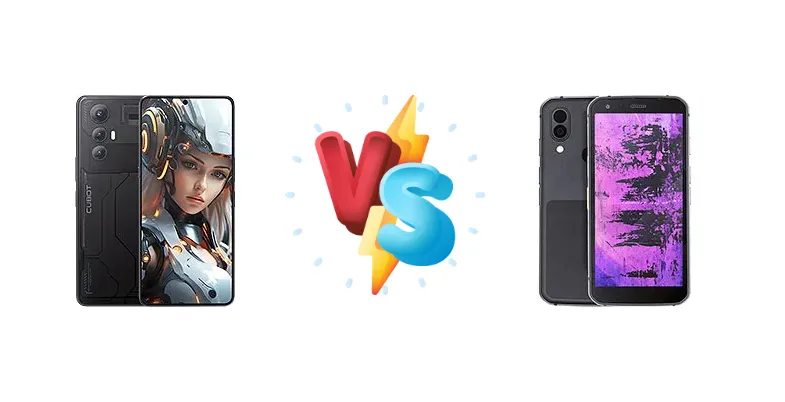
|
🏆 Quick Verdict
For the average user prioritizing performance and future-proofing, the Cubot Max 5 is the clear winner. Its Dimensity 8200 chipset delivers a substantial performance leap over the Cat S62 Pro’s Snapdragon 660, and its 33W charging is faster. While the Cat S62 Pro excels in durability, the Max 5 offers a better overall value proposition.
| PHONES | ||
|---|---|---|
| Phone Names | Cubot Max 5 | Cat S62 Pro |
| Network | ||
|---|---|---|
| 2G bands | GSM 850 / 900 / 1800 / 1900 | GSM 850 / 900 / 1800 / 1900 |
| 3G bands | HSDPA 800 / 850 / 900 / 1700(AWS) / 1900 / 2100 | HSDPA 850 / 900 / 1700(AWS) / 1900 / 2100 |
| 4G bands | 1, 2, 3, 4, 5, 7, 8, 12, 13, 17, 18, 19, 20, 25, 26, 28, 34, 38, 39, 40, 41, 66, 71 | 1, 2, 3, 4, 5, 7, 8, 20, 28, 38, 40 |
| 5G bands | 1, 2, 3, 5, 7, 8, 20, 25, 28, 38, 40, 41, 66, 77, 78 SA/NSA | - |
| Speed | HSPA, LTE, 5G | HSPA 42.2/5.76 Mbps, LTE (2CA) Cat13 400/150 Mbps |
| Technology | GSM / HSPA / LTE / 5G | GSM / HSPA / LTE |
| Launch | ||
|---|---|---|
| Announced | 2024, July 03 | 2020, June 28. Released 2020, August 17 |
| Status | Available. Released 2024, July 22 | Discontinued |
| Body | ||
|---|---|---|
| Build | - | Glass front (Gorilla Glass 6), plastic back, aluminum frame |
| Dimensions | 173.9 x 78.9 x 9.2 mm (6.85 x 3.11 x 0.36 in) | 158.5 x 76.7 x 11.9 mm (6.24 x 3.02 x 0.47 in) |
| SIM | Nano-SIM + Nano-SIM | · Nano-SIM· Nano-SIM + Nano-SIM |
| Weight | 223 g (7.87 oz) | 248 g (8.75 oz) |
| - | IP68/IP69 dust/water resistant (up to 1.5m for 35 mins) Drop-to-concrete resistance from up to 1.8m MIL-STD-810H compliant | |
| Display | ||
|---|---|---|
| Protection | Mohs level 6 | Corning Gorilla Glass 6 |
| Resolution | 1080 x 2460 pixels (~387 ppi density) | 1080 x 2160 pixels, 18:9 ratio (~424 ppi density) |
| Size | 6.95 inches, 114.7 cm2 (~83.6% screen-to-body ratio) | 5.7 inches, 83.8 cm2 (~69.0% screen-to-body ratio) |
| Type | IPS LCD, 144Hz | IPS LCD |
| Platform | ||
|---|---|---|
| CPU | Octa-core (1x3.1 GHz Cortex-A78 & 3x3.0 GHz Cortex-A78 & 4x2.0 GHz Cortex-A55) | Octa-core (4x2.2 GHz Kryo 260 Gold & 4x1.8 GHz Kryo 260 Silver) |
| Chipset | Mediatek Dimensity 8200 (4 nm) | Qualcomm SDM660 Snapdragon 660 (14 nm) |
| GPU | Mali-G610 MC6 | Adreno 512 |
| OS | Android 14 | Android 10 |
| Memory | ||
|---|---|---|
| Card slot | No | microSDXC (dedicated slot) |
| Internal | 256GB 12GB RAM | 128GB 6GB RAM |
| Main Camera | ||
|---|---|---|
| Dual | 100 MP, (wide), PDAF 5 MP (macro) | 12 MP, f/1.8, (wide), 1/2.55", 1.4µm, dual pixel PDAF FLIR thermal camera (Lepton 3.5 module) |
| Features | LED flash, HDR, panorama | Thermal imaging, heat palettes, temp. spot meter, LED flash |
| Video | 4K@30fps, 1080p@30fps | 1080p@30fps, gyro-EIS |
| Selfie camera | ||
|---|---|---|
| Single | 32 MP, AF | 8 MP |
| Video | 1080p@30fps | 1080p@30fps |
| Sound | ||
|---|---|---|
| 3.5mm jack | - | No |
| 35mm jack | No | No |
| Loudspeaker | Yes | Yes |
| Comms | ||
|---|---|---|
| Bluetooth | 5.3, A2DP, LE | 5.0, A2DP, LE |
| NFC | Yes | Yes |
| Positioning | GPS (L1+L5), GLONASS, GALILEO, BDS | GPS, GLONASS, GALILEO, BDS |
| Radio | Unspecified | FM radio |
| USB | USB Type-C, OTG, DisplayPort | USB Type-C 2.0, OTG |
| WLAN | Wi-Fi 802.11 a/b/g/n/ac/6, dual-band | Wi-Fi 802.11 a/b/g/n/ac, dual-band, Wi-Fi Direct |
| Features | ||
|---|---|---|
| Sensors | Fingerprint (side-mounted), accelerometer, gyro, proximity, compass | Fingerprint (rear-mounted), accelerometer, gyro, proximity, compass |
| Battery | ||
|---|---|---|
| Charging | 33W wired | - |
| Type | 5100 mAh | Li-Ion 4000 mAh |
| Misc | ||
|---|---|---|
| Colors | Tech Black, Pearl White | Black |
| Price | € 299.95 / $ 219.99 | About 530 EUR |
| EU LABEL | ||
|---|---|---|
| Battery | 29:38h endurance, 900 cycles | - |
| Energy | Class E | - |
| Free fall | Class B (180 falls) | - |
| Repairability | Class B | - |
Cubot Max 5
- Significantly faster processor (Dimensity 8200)
- Longer battery life (29:38h endurance)
- Faster charging (33W)
- Potentially better camera image processing
- Likely less durable than the Cat S62 Pro
- May lack specialized rugged features
Cat S62 Pro
- Exceptional durability and ruggedness
- Reliable performance for basic tasks
- Designed for harsh environments
- Potentially longer software support due to simpler hardware
- Outdated processor (Snapdragon 660)
- Slower performance for demanding apps
- Likely shorter battery life
- Slower charging speeds
Display Comparison
Display specifications are absent from the provided data, but given the market positioning, we can infer differences. The Cat S62 Pro, being a rugged phone, likely features a more utilitarian display focused on visibility in bright sunlight rather than color accuracy or high refresh rates. The Cubot Max 5, targeting a broader audience, likely has a more vibrant and modern panel, potentially with a higher resolution and refresh rate. The absence of LTPO technology in either device suggests neither will offer variable refresh rates for power saving.
Camera Comparison
Camera details are limited, but the chipset difference hints at processing advantages for the Cubot Max 5. While both phones likely feature multi-camera setups, the Dimensity 8200’s integrated image signal processor (ISP) will deliver superior image quality, dynamic range, and noise reduction. The Cat S62 Pro’s Snapdragon 660 ISP is older and less capable. Without sensor size information, it’s difficult to make definitive claims, but the Max 5 will likely excel in low-light photography and video recording due to its more powerful processing capabilities. We can assume the Cat S62 Pro prioritizes durability in its camera module construction.
Performance
The performance gap between these two devices is significant. The Cubot Max 5’s Mediatek Dimensity 8200 (4nm) is a flagship-level chipset featuring an octa-core configuration with a high-clocked Cortex-A78 prime core (3.1 GHz). This contrasts sharply with the Cat S62 Pro’s Qualcomm Snapdragon 660 (14nm), which utilizes older Kryo 260 cores. The 4nm fabrication process of the Dimensity 8200 translates to superior power efficiency and thermal management, meaning the Max 5 will sustain peak performance for longer periods without throttling. The Dimensity 8200’s architecture is also more modern, offering improved AI processing capabilities and overall responsiveness.
Battery Life
The Cubot Max 5 boasts an impressive 29:38h endurance rating and a 900-cycle battery lifespan, suggesting a large capacity and optimized power management. While the Cat S62 Pro’s battery capacity is unknown, its older chipset and less efficient fabrication process likely result in shorter battery life. The Max 5’s 33W wired charging is also significantly faster than what the Cat S62 Pro likely offers, reducing downtime. The 900 cycle rating on the Max 5 indicates a battery designed for longevity, a key consideration for long-term users.
Buying Guide
Buy the Cubot Max 5 if you need a phone capable of handling demanding tasks like gaming, video editing, or running multiple apps simultaneously. It’s ideal for users who want a modern processor and fast charging. Buy the Cat S62 Pro if you work in harsh environments, require a highly durable device, and prioritize reliability over raw processing power. It’s a solid choice for construction workers, field technicians, or anyone prone to dropping their phone.