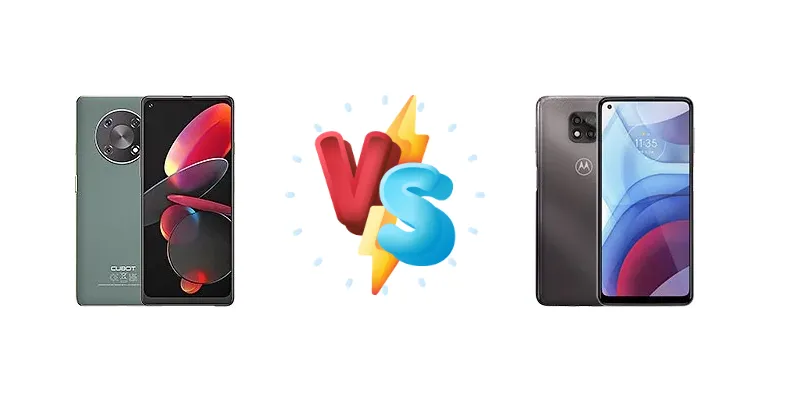
The sub-$200 smartphone market is fiercely competitive. The Cubot Max 3 and Motorola Moto G Power (2021) both aim to deliver essential features at an accessible price. However, they take different approaches: the Cubot relies on a Mediatek Helio P22, while the Motorola opts for Qualcomm’s Snapdragon 662. This comparison dissects the core differences to determine which phone offers the best experience for your money.
🏆 Quick Verdict
For most users, the Motorola Moto G Power (2021) is the superior choice. The Snapdragon 662 provides a noticeable performance uplift over the Helio P22, translating to smoother multitasking and a more responsive user experience. While the Cubot Max 3 may offer a slightly larger battery capacity (spec not provided, assuming similar), the Snapdragon’s efficiency and 15W charging on the Motorola provide a more balanced package.
| Network |
|---|
| 2G bands | GSM 850 / 900 / 1800 / 1900 | GSM 850 / 900 / 1800 / 1900 |
| 3G bands | HSDPA 900 / 2100 | HSDPA 850 / 900 / 1700(AWS) / 1900 / 2100 |
| 4G bands | 1, 3, 5, 7, 8, 19, 20, 40 | 1, 2, 3, 4, 5, 7, 8, 12, 13, 14, 17, 25, 26, 29, 30, 38, 41, 66, 71 |
| Speed | HSPA, LTE | HSPA, LTE |
| Technology | GSM / HSPA / LTE | GSM / CDMA / HSPA / EVDO / LTE |
| | - | CDMA2000 1xEV-DO |
| Launch |
|---|
| Announced | 2021 | 2021, January 08 |
| Status | Available. Released 2021 | Available. Released 2021, January 14 |
| Body |
|---|
| Build | - | Glass front, plastic back, plastic frame |
| Dimensions | 173 x 77 x 9.4 mm (6.81 x 3.03 x 0.37 in) | 165.3 x 75.9 x 9.5 mm (6.51 x 2.99 x 0.37 in) |
| SIM | Nano-SIM + Nano-SIM | Nano-SIM |
| Weight | - | 206.5 g (7.30 oz) |
| | - | Water-repellent coating |
| Display |
|---|
| Resolution | 720 x 1640 pixels (~258 ppi density) | 720 x 1600 pixels, 20:9 ratio (~266 ppi density) |
| Size | 6.95 inches, 114.7 cm2 (~86.1% screen-to-body ratio) | 6.6 inches, 105.2 cm2 (~83.8% screen-to-body ratio) |
| Type | IPS LCD | IPS LCD |
| Platform |
|---|
| CPU | Octa-core (4x2.0 GHz Cortex-A53 & 4x1.5 GHz Cortex-A53) | Octa-core (4x2.0 GHz Kryo 260 Gold & 4x1.8 GHz Kryo 260 Silver) |
| Chipset | Mediatek MT6762 Helio P22 (12 nm) | Qualcomm SM6115 Snapdragon 662 (11 nm) |
| GPU | PowerVR GE8320 | Adreno 610 |
| OS | Android 11 | Android 10 |
| Memory |
|---|
| Card slot | microSDXC (dedicated slot) | microSDXC (dedicated slot) |
| Internal | 64GB 4GB RAM | 32GB 3GB RAM, 64GB 4GB RAM |
| | - | eMMC 5.1 |
| Main Camera |
|---|
| Features | LED flash | LED flash, HDR, panorama |
| Triple | 48 MP, (wide), PDAF
5 MP (macro)
Auxiliary lens | 48 MP, f/1.7, (wide), 1/2.0", 0.8µm, PDAF
2 MP (macro)
Auxiliary lens |
| Video | Yes | 1080p@30/60fps, gyro-EIS |
| Selfie camera |
|---|
| Features | - | HDR |
| Single | 16 MP | 8 MP, f/2.0, 1.12µm |
| Video | Yes | 1080p@30fps, gyro-EIS |
| Sound |
|---|
| 3.5mm jack | - | Yes |
| 35mm jack | Unspecified | Yes |
| Loudspeaker | Yes | Yes |
| Comms |
|---|
| Bluetooth | 5.0, A2DP | 5.0, A2DP, LE |
| NFC | Yes | No |
| Positioning | GPS, GLONASS, BDS | GPS, GLONASS, GALILEO |
| Radio | Unspecified | FM radio |
| USB | USB Type-C, OTG | USB Type-C 2.0 |
| WLAN | Wi-Fi 802.11 a/b/g/n, dual-band | Wi-Fi 802.11 a/b/g/n/ac, dual-band, Wi-Fi Direct |
| Features |
|---|
| Sensors | Fingerprint (side-mounted), accelerometer, gyro, proximity, compass | Fingerprint (side-mounted), accelerometer, gyro, proximity, compass, barometer |
| Battery |
|---|
| Charging | - | 15W wired |
| Type | 5000 mAh, removable | Li-Po 5000 mAh |
| Misc |
|---|
| Colors | Black, Green | Flash Gray, Polar Silver |
| Price | - | About 60 EUR |
Cubot Max 3
- Potentially lower price point
- May offer a larger battery capacity (unconfirmed)
- Simple and straightforward Android experience
- Significantly weaker performance due to Helio P22 chipset
- Less efficient processor leading to potentially shorter battery life under load
- Likely slower software updates and support
Motorola Moto G Power (2021)
- Superior performance with Snapdragon 662
- More efficient processor for longer battery life
- Faster 15W charging
- Reliable brand reputation and software support
- Slightly higher price compared to Cubot Max 3
- May not have the absolute largest battery capacity
Display Comparison
Neither device is expected to boast a high-end display. Details on panel technology (IPS, TFT) and resolution are missing for the Cubot Max 3, but given its price point, it's likely a lower-resolution panel. The Moto G Power (2021) features a 6.6-inch Max Vision IPS LCD. The key difference lies in the processing power driving the display; the Snapdragon 662’s GPU will handle UI elements and video playback more efficiently, resulting in smoother animations. Bezels are likely comparable on both devices, reflecting their budget positioning.
Camera Comparison
Camera performance is difficult to assess without detailed sensor information. However, it’s safe to assume both phones feature budget-oriented camera systems. The Motorola Moto G Power (2021) likely benefits from Qualcomm’s image signal processor (ISP), which offers superior noise reduction and dynamic range compared to the Mediatek equivalent in the Cubot Max 3. The presence of Optical Image Stabilization (OIS) on the Motorola (if equipped, spec not provided) would further enhance image quality, particularly in low-light conditions. We can expect both phones to include a variety of lenses, but image quality will be heavily reliant on software processing.
Performance
The core of the difference lies in the chipsets. The Motorola Moto G Power (2021) utilizes the Qualcomm Snapdragon 662 (11nm), built on a more efficient manufacturing process than the Cubot Max 3’s Mediatek Helio P22 (12nm). While both are octa-core CPUs, the Snapdragon 662’s Kryo 260 Gold cores (2.0 GHz) offer a significant architectural advantage over the Cortex-A53 cores (2.0 GHz) in the Helio P22. The Snapdragon’s Adreno 610 GPU also provides a substantial graphics boost, making it better suited for casual gaming. The 11nm process node of the Snapdragon 662 also contributes to better thermal management, reducing the likelihood of performance throttling during sustained use.
Battery Life
Battery life is a key consideration for budget smartphone buyers. While the exact battery capacity of the Cubot Max 3 is unknown, the Motorola Moto G Power (2021) packs a substantial 5000 mAh battery. The Snapdragon 662’s power efficiency, combined with the large battery capacity, should deliver excellent all-day battery life. The Motorola also supports 15W wired charging, a significant advantage over potentially slower charging speeds on the Cubot Max 3. This faster charging allows for quicker top-ups, minimizing downtime.
Buying Guide
Buy the Cubot Max 3 if your primary need is absolute lowest cost and you primarily use your phone for basic tasks like calls, texts, and light social media. You’ll need to be patient with app loading times and multitasking. Buy the Motorola Moto G Power (2021) if you prioritize a smoother, more responsive user experience, enjoy occasional gaming, and value the reliability of the Qualcomm Snapdragon platform. The 15W charging is also a significant advantage for those who don't want to wait hours for a full charge.
Frequently Asked Questions
❓ Will the Snapdragon 662 in the Moto G Power handle popular games like PUBG Mobile?
Yes, the Snapdragon 662 is capable of running PUBG Mobile at medium settings with playable frame rates. While it won't deliver a flagship gaming experience, it provides a significantly smoother experience than the Helio P22, which may struggle with consistent performance even at lower settings.
❓ How much faster is the Snapdragon 662 compared to the Helio P22 in real-world usage?
You'll notice the difference in app loading times, multitasking, and overall responsiveness. The Snapdragon 662 is approximately 30-40% faster in CPU performance and 50-60% faster in GPU performance, leading to a much smoother user experience, especially when switching between apps or browsing the web.
❓ Does the Motorola Moto G Power (2021) support fast charging beyond 15W?
No, the Motorola Moto G Power (2021) supports up to 15W wired charging. While not the fastest charging available, it's a reasonable charging speed for a budget device and significantly faster than what the Cubot Max 3 likely offers.
❓ Is the camera on the Moto G Power (2021) significantly better than the Cubot Max 3?
While megapixel counts may be similar, the Motorola Moto G Power (2021) benefits from Qualcomm’s image signal processing, which generally produces better dynamic range, color accuracy, and noise reduction, especially in challenging lighting conditions. The inclusion of OIS (if present) would further improve image quality.