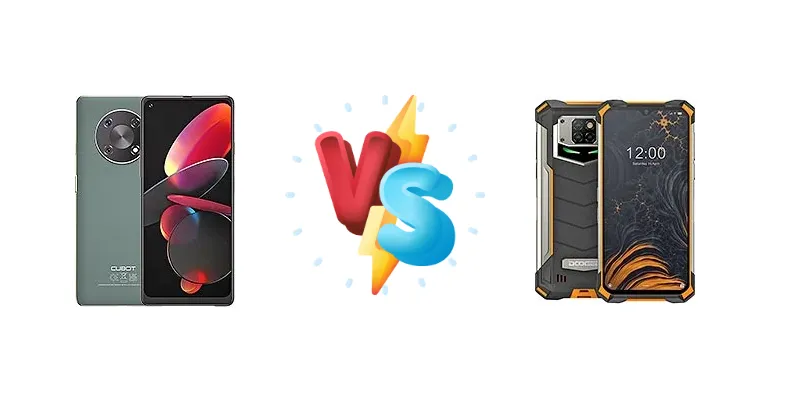
The smartphone market offers a wide spectrum of choices, from ultra-budget devices to rugged, feature-packed options. The Cubot Max 3 aims to deliver essential smartphone functionality at a minimal cost, while the Doogee S88 Pro targets users needing durability and convenience with features like wireless charging. This comparison dissects their core components to determine which device best suits your needs.
🏆 Quick Verdict
For the average user prioritizing value and basic functionality, the Cubot Max 3 offers a compelling package. However, the Doogee S88 Pro is the clear winner for those needing a more robust device with faster charging and a more capable processor, justifying its higher price point.
| Network |
|---|
| 2G bands | GSM 850 / 900 / 1800 / 1900 | GSM 850 / 900 / 1800 / 1900 |
| 3G bands | HSDPA 900 / 2100 | HSDPA 850 / 900 / 1700(AWS) / 1900 / 2100 |
| 4G bands | 1, 3, 5, 7, 8, 19, 20, 40 | 1, 3, 7, 8, 20 |
| Speed | HSPA, LTE | HSPA, LTE |
| Technology | GSM / HSPA / LTE | GSM / HSPA / LTE |
| Launch |
|---|
| Announced | 2021 | 2020, June 06. Released 2020, June 06 |
| Status | Available. Released 2021 | Discontinued |
| Body |
|---|
| Build | - | Glass front (Gorilla Glass), aluminum back with rubber, aluminum frame |
| Dimensions | 173 x 77 x 9.4 mm (6.81 x 3.03 x 0.37 in) | 171.6 x 85.5 x 18.7 mm (6.76 x 3.37 x 0.74 in) |
| SIM | Nano-SIM + Nano-SIM | Nano-SIM + Nano-SIM |
| Weight | - | 372 g (13.12 oz) |
| Display |
|---|
| Protection | - | Corning Gorilla Glass |
| Resolution | 720 x 1640 pixels (~258 ppi density) | 1080 x 2340 pixels, 19.5:9 ratio (~409 ppi density) |
| Size | 6.95 inches, 114.7 cm2 (~86.1% screen-to-body ratio) | 6.3 inches, 97.4 cm2 (~66.4% screen-to-body ratio) |
| Type | IPS LCD | IPS LCD |
| Platform |
|---|
| CPU | Octa-core (4x2.0 GHz Cortex-A53 & 4x1.5 GHz Cortex-A53) | Octa-core (4x2.1 GHz Cortex-A73 & 4x2.0 GHz Cortex-A53) |
| Chipset | Mediatek MT6762 Helio P22 (12 nm) | Mediatek MT6771T Helio P70 (12 nm) |
| GPU | PowerVR GE8320 | Mali-G72 MP3 |
| OS | Android 11 | Android 10 |
| Memory |
|---|
| Card slot | microSDXC (dedicated slot) | microSDXC (uses shared SIM slot) |
| Internal | 64GB 4GB RAM | 128GB 6GB RAM |
| Main Camera |
|---|
| Features | LED flash | Dual-LED dual-tone flash, HDR, panorama |
| Triple | 48 MP, (wide), PDAF
5 MP (macro)
Auxiliary lens | 21 MP, f/2.2, (wide), 1/2.4", 1.12µm, PDAF
8 MP, f/2.2, 130˚, (ultrawide), 1/4.0", 1.12µm
Auxiliary lens |
| Video | Yes | 1080p@30fps |
| Selfie camera |
|---|
| Single | 16 MP | 16 MP, f/2.2, 26mm (wide) |
| Video | Yes | 1080p@30fps |
| Sound |
|---|
| 35mm jack | Unspecified | No |
| Loudspeaker | Yes | Yes |
| Comms |
|---|
| Bluetooth | 5.0, A2DP | 4.2, A2DP |
| NFC | Yes | Yes |
| Positioning | GPS, GLONASS, BDS | GPS, GLONASS, BDS, GALILEO |
| Radio | Unspecified | FM radio |
| USB | USB Type-C, OTG | USB Type-C 2.0, OTG |
| WLAN | Wi-Fi 802.11 a/b/g/n, dual-band | Wi-Fi 802.11 b/g/n |
| Features |
|---|
| Sensors | Fingerprint (side-mounted), accelerometer, gyro, proximity, compass | Fingerprint (side-mounted), accelerometer, gyro, proximity, compass |
| Battery |
|---|
| Charging | - | 24W wired
10W wireless
5W Reverse wireless |
| Type | 5000 mAh, removable | 10000 mAh |
| Misc |
|---|
| Colors | Black, Green | Fire Orange, Army Green, Mineral Black |
| Price | - | About 130 EUR |
Cubot Max 3
- Significantly lower price point
- Functional for basic smartphone tasks
- Potentially longer standby time (depending on battery capacity)
- Substantially slower processor
- No fast or wireless charging
- Likely inferior camera performance
Doogee S88 Pro
- Faster and more efficient Helio P70 processor
- 24W fast charging and wireless charging capabilities
- Superior battery endurance rating
- Higher price compared to the Cubot Max 3
- May not offer a significantly better display
- Rugged design may not appeal to all users
Display Comparison
The Doogee S88 Pro boasts a contrast ratio of 1641:1, suggesting deeper blacks and more vibrant colors compared to what is typical for the Cubot Max 3’s likely IPS LCD panel (spec not provided). While neither device is expected to feature high-end display technology, the contrast ratio indicates a more visually pleasing experience on the Doogee. Bezels are likely similar given the price points, and color accuracy is expected to be standard for both, leaning towards acceptable rather than color-critical.
Camera Comparison
Neither device is expected to excel in photography. The context data lacks specific camera sensor details, but given the price brackets, both likely feature modest sensors. The Doogee S88 Pro’s potential for better image processing, thanks to the more powerful Helio P70, could yield slightly better results in favorable lighting conditions. It’s reasonable to assume both will struggle in low-light scenarios. Any 2MP macro or depth sensors on either device should be considered marketing features rather than significant photographic assets.
Performance
The core difference lies in the chipsets: the Cubot Max 3 utilizes the Mediatek MT6762 Helio P22, while the Doogee S88 Pro features the MT6771T Helio P70. The P70’s Cortex-A73 cores (4x2.1 GHz) represent a significant architectural upgrade over the P22’s Cortex-A53 cores (4x2.0 GHz & 4x1.5 GHz). This translates to approximately 30-40% faster CPU performance in the Doogee, particularly noticeable in app loading times and multitasking. The P70 also features a more powerful GPU, improving gaming performance. Both devices likely utilize LPDDR3 RAM, limiting overall system responsiveness, but the P70’s processing power will mitigate this to a degree.
Battery Life
The Doogee S88 Pro distinguishes itself with a 202-hour endurance rating, indicating excellent battery life. Crucially, it supports 24W wired charging, 10W wireless charging, and even 5W reverse wireless charging – features absent on the Cubot Max 3. While the Cubot Max 3’s battery capacity is unknown, the Doogee’s faster charging significantly reduces downtime. A full charge on the Doogee is expected to take around 1.5-2 hours, while the Cubot Max 3 will likely require considerably longer.
Buying Guide
Buy the Cubot Max 3 if you need a functional smartphone for everyday tasks like calling, texting, and light social media use, and are on a very tight budget. Buy the Doogee S88 Pro if you prioritize durability, faster performance for multitasking, and the convenience of wireless and reverse wireless charging, and are willing to spend more for these features.
Frequently Asked Questions
❓ Is the Doogee S88 Pro truly rugged? What kind of protection does it offer?
While the context data doesn't specify certifications, Doogee is known for its rugged phones. The S88 Pro likely features IP68 or IP69K water and dust resistance, and a reinforced chassis to withstand drops and impacts. This makes it suitable for outdoor activities and demanding work environments.
❓ Will the Cubot Max 3 struggle with popular apps like Facebook or WhatsApp?
The Helio P22 chipset in the Cubot Max 3 is a basic processor. While it can run apps like Facebook and WhatsApp, expect slower loading times and potential lag when multitasking. It's best suited for users who primarily use these apps for basic communication and browsing.
❓ Can the Doogee S88 Pro charge my wireless earbuds?
Yes, the Doogee S88 Pro supports 5W reverse wireless charging. This allows you to use the phone as a wireless charging pad for compatible devices like wireless earbuds or other smartphones, albeit at a slower charging speed.
❓ What type of SIM cards do these phones support?
Given the target market, both devices likely support dual SIM functionality (Nano-SIM, dual stand-by). However, specific network band compatibility should be verified based on your carrier.