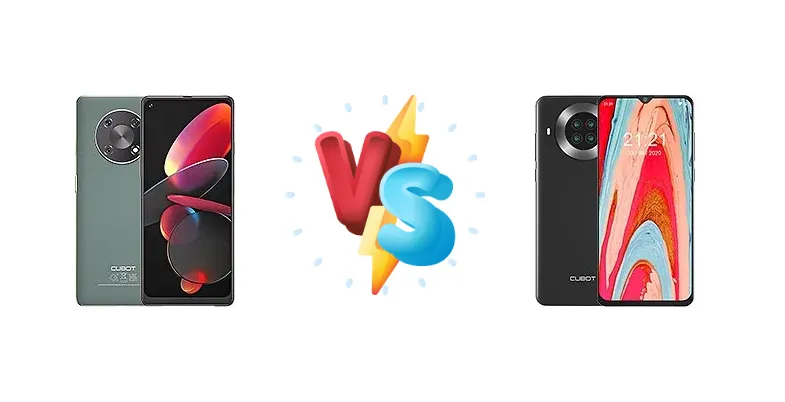
Cubot offers two compelling options in the ultra-budget smartphone space: the Max 3 and the Note 20 Pro. While both aim to deliver affordability, they differ significantly under the hood. This comparison focuses on the core performance differences stemming from their respective MediaTek Helio chipsets, helping you determine which device best suits your needs.
🏆 Quick Verdict
For most users, the Cubot Note 20 Pro is the better choice. Its Helio P60 chipset, featuring Cortex-A73 cores, provides a noticeable performance uplift over the Max 3’s Helio P22, resulting in smoother multitasking and a more responsive user experience. The price difference is likely small enough to justify the upgrade.
| Network |
|---|
| 2G bands | GSM 850 / 900 / 1800 / 1900 | GSM 850 / 900 / 1800 / 1900 |
| 3G bands | HSDPA 900 / 2100 | HSDPA 900 / 2100 |
| 4G bands | 1, 3, 5, 7, 8, 19, 20, 40 | 1, 3, 7, 8, 19, 20 |
| Speed | HSPA, LTE | HSPA, LTE |
| Technology | GSM / HSPA / LTE | GSM / HSPA / LTE |
| Launch |
|---|
| Announced | 2021 | 2020. Released 2020 |
| Status | Available. Released 2021 | Discontinued |
| Body |
|---|
| Dimensions | 173 x 77 x 9.4 mm (6.81 x 3.03 x 0.37 in) | 162.8 x 75.4 x 9.1 mm (6.41 x 2.97 x 0.36 in) |
| SIM | Nano-SIM + Nano-SIM | Nano-SIM + Nano-SIM |
| Weight | - | 200 g (7.05 oz) |
| Display |
|---|
| Resolution | 720 x 1640 pixels (~258 ppi density) | 720 x 1600 pixels, 20:9 ratio (~270 ppi density) |
| Size | 6.95 inches, 114.7 cm2 (~86.1% screen-to-body ratio) | 6.5 inches, 102.0 cm2 (~83.1% screen-to-body ratio) |
| Type | IPS LCD | IPS LCD |
| Platform |
|---|
| CPU | Octa-core (4x2.0 GHz Cortex-A53 & 4x1.5 GHz Cortex-A53) | Octa-core (4x2.0 GHz Cortex-A73 & 4x2.0 GHz Cortex-A53) |
| Chipset | Mediatek MT6762 Helio P22 (12 nm) | Mediatek MT6771 Helio P60 (12 nm) |
| GPU | PowerVR GE8320 | Mali-G72 MP3 |
| OS | Android 11 | Android 10 |
| Memory |
|---|
| Card slot | microSDXC (dedicated slot) | microSDXC (dedicated slot) |
| Internal | 64GB 4GB RAM | 128GB 8GB RAM |
| Main Camera |
|---|
| Features | LED flash | LED flash |
| Quad | - | 12 MP, (wide), 1/2.9", AF
20 MP, (depth), 1/2.78"
Auxiliary lenses |
| Triple | 48 MP, (wide), PDAF
5 MP (macro)
Auxiliary lens | - |
| Video | Yes | Yes |
| Selfie camera |
|---|
| Single | 16 MP | 8 MP |
| Video | Yes | Yes |
| Sound |
|---|
| 35mm jack | Unspecified | Yes |
| Loudspeaker | Yes | Yes |
| Comms |
|---|
| Bluetooth | 5.0, A2DP | 4.2, A2DP |
| NFC | Yes | Yes |
| Positioning | GPS, GLONASS, BDS | GPS |
| Radio | Unspecified | Unspecified |
| USB | USB Type-C, OTG | microUSB, OTG |
| WLAN | Wi-Fi 802.11 a/b/g/n, dual-band | Wi-Fi 802.11 a/b/g/n |
| Features |
|---|
| Sensors | Fingerprint (side-mounted), accelerometer, gyro, proximity, compass | Accelerometer, gyro, proximity, compass |
| Battery |
|---|
| Type | 5000 mAh, removable | 4200 mAh, removable |
| Misc |
|---|
| Colors | Black, Green | Black, Blue, Green |
Cubot Max 3
- Likely the more affordable option.
- Sufficient for basic smartphone tasks.
- Potentially longer battery life due to less demanding processor (depending on battery capacity).
- Noticeably slower performance compared to the Note 20 Pro.
- Less responsive user interface.
- May struggle with demanding apps and games.
Cubot Note 20 Pro
- Faster and more responsive performance thanks to the Helio P60.
- Smoother multitasking and app loading times.
- Better suited for gaming and streaming.
- Likely slightly more expensive than the Max 3.
- Potentially slightly shorter battery life (depending on battery capacity).
Display Comparison
Neither Cubot provides detailed display specifications in the provided data. However, given their price points, both likely utilize IPS LCD panels. The real difference lies in the processing power driving the display. A faster chipset, like the P60 in the Note 20 Pro, can contribute to smoother animations and faster app loading times, indirectly improving the perceived display experience. Expect both to have 720p or 1080p resolution, typical for this segment.
Camera Comparison
Without detailed camera specifications, a direct comparison is difficult. However, the chipset plays a role in image processing speed. The Helio P60’s more powerful CPU and potentially better ISP (Image Signal Processor) will likely result in faster image capture and processing times compared to the Helio P22. This could manifest as quicker HDR processing and improved low-light performance. It's reasonable to assume both phones will feature a multi-camera setup, but the quality will heavily depend on the sensor sizes and lens apertures, which are not provided.
Performance
The core distinction between these devices is the chipset. The Cubot Max 3 utilizes the MediaTek MT6762 Helio P22, featuring an octa-core CPU comprised of four 2.0 GHz Cortex-A53 cores and four 1.5 GHz Cortex-A53 cores. The Note 20 Pro steps up to the MT6771 Helio P60, boasting a more powerful configuration: four 2.0 GHz Cortex-A73 cores paired with four 2.0 GHz Cortex-A53 cores. The Cortex-A73 cores in the P60 represent a significant architectural improvement over the A53, offering substantially better single-core performance and improved efficiency. This translates to faster app launches, smoother scrolling, and a more responsive overall experience. While both are 12nm chips, the P60’s superior core design provides a clear advantage.
Battery Life
Battery capacity isn't specified, making a direct comparison challenging. However, the Helio P60 in the Note 20 Pro is generally more power-efficient than the Helio P22. This means the Note 20 Pro could potentially offer similar or even better battery life despite having the same battery capacity as the Max 3. Charging wattage is also unknown, but a more efficient chipset can reduce the time needed to reach a full charge.
Buying Guide
Buy the Cubot Max 3 if you prioritize extreme affordability and only need a phone for basic tasks like calls, texts, and light social media. It’s a suitable option for first-time smartphone users or as a reliable backup device. Buy the Cubot Note 20 Pro if you want a more capable device for everyday use, including moderate gaming, streaming, and multitasking. The improved processor will translate to a significantly better user experience.
Frequently Asked Questions
❓ Will the Cubot Note 20 Pro handle popular games like PUBG Mobile smoothly?
The Helio P60 in the Note 20 Pro is capable of running PUBG Mobile, but expect to play at medium settings for a consistently smooth experience. The A73 cores provide a performance boost over the Max 3, but it's not a flagship-level gaming chipset. Frame rate stability will depend on the specific device configuration and game settings.
❓ Is the difference in performance between the Helio P22 and Helio P60 noticeable in everyday tasks?
Yes, the difference is quite noticeable. The Helio P60’s Cortex-A73 cores offer a significant improvement in single-core performance, which directly impacts app launch speeds, scrolling smoothness, and overall responsiveness. You’ll experience less lag and a more fluid user experience with the Note 20 Pro.
❓ Which phone is better for someone who primarily uses their phone for social media and web browsing?
The Cubot Note 20 Pro is still the better choice, even for basic tasks. While the Max 3 can handle social media and browsing, the Note 20 Pro will do so more smoothly and efficiently, providing a more enjoyable experience. The extra processing power ensures faster page loading and smoother scrolling.