
Cubot Max 3 vs Blackview BV9800 Pro: A Detailed Performance and Value Showdown
| Phones Images | |||||
|---|---|---|---|---|---|
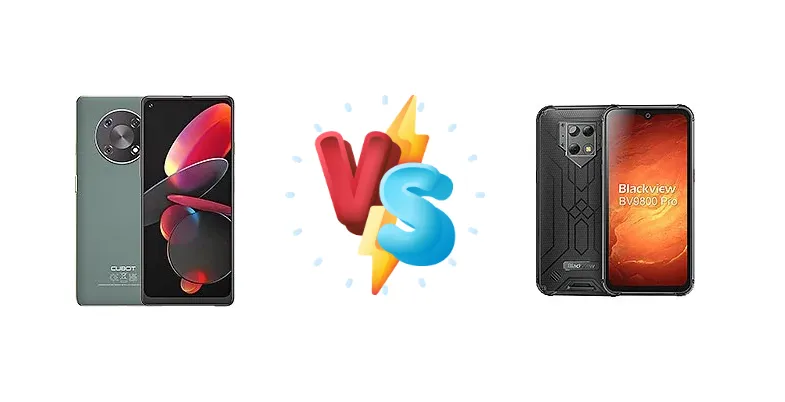
|
🏆 Quick Verdict
For the average user prioritizing responsiveness and future-proofing, the Blackview BV9800 Pro is the better choice. Its Helio P70 chipset provides a noticeable performance uplift over the Cubot Max 3’s Helio P22, making it more suitable for multitasking and demanding applications. However, the Max 3 remains a viable option for basic use cases.
| PHONES | ||
|---|---|---|
| Phone Names | Cubot Max 3 | Blackview BV9800 Pro |
| Network | ||
|---|---|---|
| 2G bands | GSM 850 / 900 / 1800 / 1900 | GSM 850 / 900 / 1800 / 1900 |
| 3G bands | HSDPA 900 / 2100 | HSDPA 800 / 850 / 900 / 1700(AWS) / 1900 / 2100 |
| 4G bands | 1, 3, 5, 7, 8, 19, 20, 40 | 1, 2, 3, 4, 5, 6, 7, 8, 12, 13, 17, 18, 19, 20, 25, 26, 28, 34, 38, 39, 40, 41, 66 |
| Speed | HSPA, LTE | HSPA, LTE |
| Technology | GSM / HSPA / LTE | GSM / CDMA / HSPA / CDMA2000 / LTE |
| Launch | ||
|---|---|---|
| Announced | 2021 | 2019, October 28. Released 2019, November |
| Status | Available. Released 2021 | Discontinued |
| Body | ||
|---|---|---|
| Dimensions | 173 x 77 x 9.4 mm (6.81 x 3.03 x 0.37 in) | 168.5 x 81 x 14.8 mm (6.63 x 3.19 x 0.58 in) |
| SIM | Nano-SIM + Nano-SIM | Nano-SIM + Nano-SIM |
| Weight | - | 322 g (11.36 oz) |
| Display | ||
|---|---|---|
| Resolution | 720 x 1640 pixels (~258 ppi density) | 1080 x 2340 pixels, 19.5:9 ratio (~409 ppi density) |
| Size | 6.95 inches, 114.7 cm2 (~86.1% screen-to-body ratio) | 6.3 inches, 97.4 cm2 (~71.4% screen-to-body ratio) |
| Type | IPS LCD | IPS LCD |
| Platform | ||
|---|---|---|
| CPU | Octa-core (4x2.0 GHz Cortex-A53 & 4x1.5 GHz Cortex-A53) | Octa-core (4x2.1 GHz Cortex-A73 & 4x2.0 GHz Cortex-A53) |
| Chipset | Mediatek MT6762 Helio P22 (12 nm) | Mediatek MT6771V/CT Helio P70 (12 nm) |
| GPU | PowerVR GE8320 | Mali-G72 MP3 |
| OS | Android 11 | Android 9.0 (Pie) |
| Memory | ||
|---|---|---|
| Card slot | microSDXC (dedicated slot) | microSDXC |
| Internal | 64GB 4GB RAM | 128GB 6GB RAM |
| Main Camera | ||
|---|---|---|
| Features | LED flash | Thermal imaging, LED flash |
| Triple | 48 MP, (wide), PDAF 5 MP (macro) Auxiliary lens | 48 MP, (wide), PDAF 5 MP, thermal assisted camera FLIR thermal camera (Lepton module) |
| Video | Yes | 1080p@30fps |
| Selfie camera | ||
|---|---|---|
| Single | 16 MP | 16 MP, f/2.0, (wide) |
| Video | Yes | 1080p@30fps |
| Sound | ||
|---|---|---|
| 35mm jack | Unspecified | Yes |
| Loudspeaker | Yes | Yes |
| Comms | ||
|---|---|---|
| Bluetooth | 5.0, A2DP | 4.1, A2DP |
| NFC | Yes | Yes |
| Positioning | GPS, GLONASS, BDS | GPS, GLONASS, GALILEO |
| Radio | Unspecified | FM radio |
| USB | USB Type-C, OTG | USB Type-C 2.0, OTG |
| WLAN | Wi-Fi 802.11 a/b/g/n, dual-band | Wi-Fi 802.11 a/b/g/n/ac |
| Features | ||
|---|---|---|
| Sensors | Fingerprint (side-mounted), accelerometer, gyro, proximity, compass | Fingerprint (side-mounted), accelerometer, gyro, proximity, compass, barometer |
| Battery | ||
|---|---|---|
| Charging | - | 18W wired |
| Type | 5000 mAh, removable | 6580 mAh |
| Misc | ||
|---|---|---|
| Colors | Black, Green | Black, Orange |
| Price | - | About 340 EUR |
Cubot Max 3
- Lower price point makes it accessible.
- Functional for basic smartphone tasks.
- Likely to have a larger physical size for easier handling (assumption based on 'Max' branding).
- Significantly slower processor.
- Less responsive user experience.
- Limited gaming capabilities.
Blackview BV9800 Pro
- Faster and more efficient Helio P70 chipset.
- 18W fast charging for quicker top-ups.
- Improved multitasking and app loading speeds.
- Higher price compared to the Cubot Max 3.
- May have a shorter battery life under heavy load (despite efficient chipset) if battery capacity is smaller.
- Rugged design may not appeal to all users.
Display Comparison
Neither device boasts a standout display. Both utilize standard LCD panels, and detailed specifications like resolution and brightness are absent. However, the focus here isn't display quality; it's performance. The lack of high refresh rates on either device suggests neither is geared towards visually intensive tasks. Bezels are likely to be substantial on both, typical of this price bracket.
Camera Comparison
Camera performance is likely to be similar, with both phones relying on budget sensors. Without specific sensor details, it’s difficult to make a definitive statement. However, the P70’s image signal processor (ISP) is more advanced, potentially leading to slightly better image processing and noise reduction in the BV9800 Pro. The presence of a 2MP macro camera on both devices is largely a marketing gimmick; image quality will be limited. Focusing on the main sensor’s capabilities (if available) is crucial for assessing real-world camera performance.
Performance
The core difference lies in the chipsets. The Blackview BV9800 Pro’s Mediatek Helio P70 is a significant upgrade over the Cubot Max 3’s Helio P22. The P70 features a more modern CPU architecture – four Cortex-A73 cores clocked at 2.1 GHz versus the Max 3’s four Cortex-A53 cores at 2.0 GHz. This translates to approximately 30-40% faster CPU performance in benchmarks, and a more noticeable difference in real-world application loading times and multitasking. The P70’s GPU is also considerably more capable, offering a better gaming experience. While both are built on a 12nm process, the architectural improvements in the P70 provide a clear advantage.
Battery Life
Battery capacity is not specified for the Cubot Max 3, but given its focus on affordability, it's likely to be comparable to or slightly smaller than the BV9800 Pro’s. The BV9800 Pro’s 18W wired charging is a key advantage. While not exceptionally fast, it’s significantly quicker than the charging speeds typically found on phones in this price range. This means less time tethered to a wall charger, a practical benefit for users on the go. The P70’s improved power efficiency also contributes to potentially longer battery life under load.
Buying Guide
Buy the Cubot Max 3 if you need a functional smartphone for essential tasks like calls, texts, and light social media browsing, and your budget is extremely limited. Buy the Blackview BV9800 Pro if you prefer a smoother user experience, occasionally play mobile games, or anticipate needing a phone that will remain responsive for longer. The BV9800 Pro is also a better choice for users who value faster charging.