
Cubot KingKong X Pro vs. Samsung Galaxy XCover Pro: A Deep Dive into Rugged Performance
| Phones Images | |||||
|---|---|---|---|---|---|
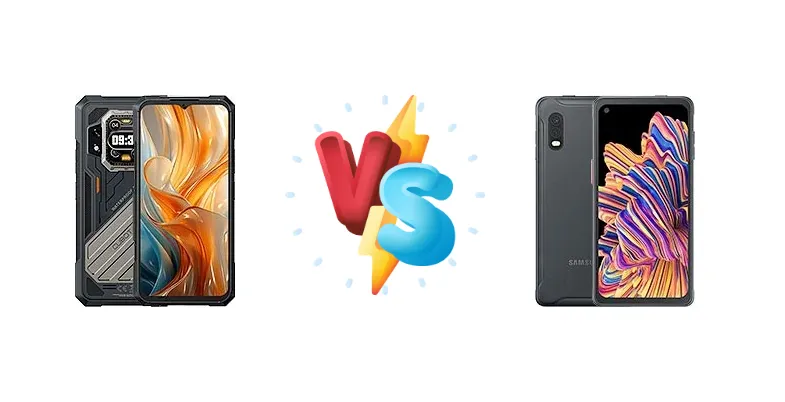
|
🏆 Quick Verdict
For the average user prioritizing performance and longevity, the Cubot KingKong X Pro is the clear winner. Its Dimensity 8200 chipset offers significantly faster processing speeds and superior efficiency compared to the XCover Pro’s Exynos 9611. While the Samsung benefits from brand recognition and software support, the X Pro’s 88:59h battery endurance and faster charging make it the more practical choice.
| PHONES | ||
|---|---|---|
| Phone Names | Cubot KingKong X Pro | Samsung Galaxy XCover Pro |
| Network | ||
|---|---|---|
| 2G bands | GSM 850 / 900 / 1800 / 1900 | GSM 850 / 900 / 1800 / 1900 |
| 3G bands | HSDPA 800 / 850 / 900 / 1700(AWS) / 1900 / 2100 | HSDPA 850 / 900 / 1900 / 2100 - International |
| 4G bands | 1, 2, 3, 4, 5, 7, 8, 12, 13, 17, 18, 19, 20, 25, 26, 28, 34, 38, 39, 40, 41, 66, 71 | 1, 2, 3, 5, 7, 8, 20, 28, 38, 40, 41 - International |
| 5G bands | 1, 2, 3, 5, 7, 8, 20, 25, 28, 38, 40, 41, 66, 77, 78 SA/NSA | - |
| Speed | HSPA, LTE, 5G | HSPA 42.2/5.76 Mbps, LTE (3CA) Cat11 600/50 Mbps |
| Technology | GSM / HSPA / LTE / 5G | GSM / HSPA / LTE |
| - | 1, 2, 3, 4, 5, 7, 12, 13, 14, 20, 29, 38, 40, 41, 66 - Canada | |
| Launch | ||
|---|---|---|
| Announced | 2024, November 01 | 2020, January |
| Status | Available. Released 2024, November | Available. Released 2020, January |
| Body | ||
|---|---|---|
| Dimensions | 175.9 x 83.3 x 18.4 mm (6.93 x 3.28 x 0.72 in) | 159.9 x 76.7 x 10 mm (6.30 x 3.02 x 0.39 in) |
| SIM | Nano-SIM + Nano-SIM | · Nano-SIM· Nano-SIM + Nano-SIM |
| Weight | 392 g (13.83 oz) | 218 g (7.69 oz) |
| - | IP68 dust/water resistant (up to 1.5m for 35 min) Drop-to-concrete resistance from up to 1.5m MIL-STD-810G compliant* *does not guarantee ruggedness or use in extreme conditions | |
| Display | ||
|---|---|---|
| Protection | Mohs level 7 | Corning Gorilla Glass 5 |
| Resolution | 1080 x 2400 pixels, 20:9 ratio (~392 ppi density) | 1080 x 2340 pixels, 19.5:9 ratio (~409 ppi density) |
| Size | 6.72 inches, 109.0 cm2 (~74.4% screen-to-body ratio) | 6.3 inches, 97.4 cm2 (~79.4% screen-to-body ratio) |
| Type | IPS LCD, 144Hz | IPS LCD |
| Platform | ||
|---|---|---|
| CPU | Octa-core (1x3.1 GHz Cortex-A78 & 3x3.0 GHz Cortex-A78 & 4x2.0 GHz Cortex-A55) | Octa-core (4x2.3 GHz Cortex-A73 & 4x1.7 GHz Cortex-A53) |
| Chipset | Mediatek Dimensity 8200 (4 nm) | Exynos 9611 (10 nm) |
| GPU | Mali-G610 MC6 | Mali-G72 MP3 |
| OS | Android 14 | Android 10, upgradable to Android 13, One UI 5 |
| Memory | ||
|---|---|---|
| Card slot | microSDXC (uses shared SIM slot) | microSDXC (dedicated slot) |
| Internal | 256GB 12GB RAM, 256GB 24GB RAM | 64GB 4GB RAM |
| Main Camera | ||
|---|---|---|
| Dual | 100 MP, (wide), PDAF 5 MP (macro), AF | 25 MP, f/1.7, 26mm (wide), PDAF 8 MP, f/2.2, 123˚ (ultrawide), 1/4.0", 1.12µm |
| Features | LED flash | Dual-LED flash, HDR, panorama |
| Video | Yes | 1080p@30fps |
| Selfie camera | ||
|---|---|---|
| Features | - | HDR |
| Single | 32 MP | 13 MP, f/2.0, (wide), 1/3.1", 1.12µm |
| Video | Yes | 1080p@30fps |
| Sound | ||
|---|---|---|
| 3.5mm jack | - | Yes |
| 35mm jack | No | Yes |
| Loudspeaker | Yes | Yes |
| Comms | ||
|---|---|---|
| Bluetooth | 5.3, A2DP, LE | 5.0, A2DP, LE |
| NFC | Yes | Yes |
| Positioning | GPS (L1+L5), GALILEO, GLONASS, BDS | GPS, GLONASS, GALILEO, BDS |
| Radio | Unspecified | FM radio (market/region dependent) |
| USB | USB Type-C, OTG | USB Type-C 2.0 |
| WLAN | Wi-Fi 802.11 a/b/g/n/ac/6, dual-band | Wi-Fi 802.11 a/b/g/n/ac/k/v/r, dual-band, Wi-Fi Direct |
| Features | ||
|---|---|---|
| Sensors | Fingerprint (side-mounted), accelerometer, gyro, proximity, compass | Fingerprint (side-mounted), accelerometer, gyro, proximity, compass |
| - | ANT+ | |
| Battery | ||
|---|---|---|
| Charging | 33W wired | 15W wired |
| Type | 10200 mAh | Li-Po 4050 mAh, removable |
| Misc | ||
|---|---|---|
| Colors | Black | Black |
| Models | - | SM-G715FN/DS, SM-G715FN, SM-G715F, SM-G715W, SM-G715U, SM-G715U1 |
| Price | € 349.95 | About 120 EUR |
| SAR EU | - | 0.47 W/kg (head) 1.23 W/kg (body) |
| EU LABEL | ||
|---|---|---|
| Battery | 88:59h endurance, 1400 cycles | - |
| Energy | Class C | - |
| Free fall | Class A (270 falls) | - |
| Repairability | Class C | - |
Cubot KingKong X Pro
- Significantly faster processor with the Dimensity 8200
- Exceptional battery endurance (88:59h)
- Faster 33W wired charging
- More modern CPU architecture
- Brand recognition is lower than Samsung
- Software support longevity is uncertain
Samsung Galaxy XCover Pro
- Established brand with a reputation for reliability
- Potential for enterprise-focused software features
- Simpler, more streamlined software experience
- Samsung Knox security platform
- Outdated Exynos 9611 chipset
- Slow 15W charging
- Lower performance for demanding tasks
- Less efficient power consumption
Display Comparison
Neither device's display specifications are provided, so a direct comparison is limited. However, given the XCover Pro's focus on work environments, it likely prioritizes visibility under sunlight. The X Pro, aiming for broader appeal, may have a more vibrant panel. The lack of information on refresh rates or panel technology (LTPO) is a significant omission, but the X Pro's more powerful chipset suggests it *could* support a higher refresh rate if implemented.
Camera Comparison
Camera details are absent beyond the fact that both phones have cameras. Given the XCover Pro’s enterprise focus, its camera is likely tuned for accurate documentation rather than artistic flair. The X Pro, targeting a wider audience, may offer more advanced image processing features. Without sensor size or aperture information, it’s difficult to make a definitive judgment, but the X Pro’s more powerful ISP (Image Signal Processor) within the Dimensity 8200 chipset suggests superior image quality and faster processing speeds.
Performance
The performance gap between these two devices is substantial. The Cubot KingKong X Pro’s Mediatek Dimensity 8200 (4nm) is a flagship-level chipset featuring an octa-core configuration with a high-clocked Cortex-A78 prime core (3.1 GHz). This is a significant leap over the Samsung Galaxy XCover Pro’s Exynos 9611 (10nm), which utilizes older Cortex-A73 cores peaking at 2.3 GHz. The 4nm fabrication process of the Dimensity 8200 translates to better thermal efficiency and power consumption, meaning the X Pro will likely sustain peak performance for longer periods without throttling. The X Pro’s CPU architecture is also more modern, offering improved instructions per clock (IPC) for faster overall responsiveness.
Battery Life
The Cubot KingKong X Pro boasts an impressive 88:59h endurance rating, indicating exceptional battery life. While the capacity isn't specified, this endurance, combined with 33W wired charging, suggests a well-optimized power management system. The Samsung Galaxy XCover Pro, with its 15W charging, will take considerably longer to fully charge. The X Pro’s faster charging speed is a significant advantage for users who need to quickly top up their battery during breaks.
Buying Guide
Buy the Cubot KingKong X Pro if you need a rugged phone that can handle demanding tasks like gaming, video editing, or running multiple apps simultaneously. Its powerful chipset and long battery life are ideal for professionals in the field or anyone who pushes their phone to the limit. Buy the Samsung Galaxy XCover Pro if you prefer a more established brand with a focus on enterprise features and a simpler software experience, and your workload is primarily focused on communication and basic productivity tasks.