
Cubot KingKong Power vs. Ulefone Armor 17 Pro: A Rugged Performance Showdown
| Phones Images | |||||
|---|---|---|---|---|---|
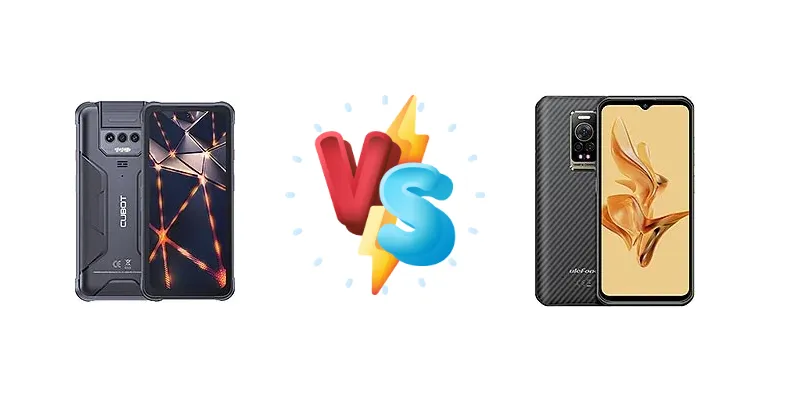
|
🏆 Quick Verdict
For most users, the Ulefone Armor 17 Pro is the superior choice. Its Helio G99 chipset provides a noticeable performance uplift over the KingKong Power’s MT8788V, and the 66W charging significantly reduces downtime. While the KingKong Power offers reverse wired charging, the Armor 17 Pro’s overall speed and efficiency win out.
| PHONES | ||
|---|---|---|
| Phone Names | Cubot KingKong Power | Ulefone Armor 17 Pro |
| Network | ||
|---|---|---|
| 2G bands | GSM 850 / 900 / 1800 / 1900 | GSM 850 / 900 / 1800 / 1900 |
| 3G bands | HSDPA 800 / 850 / 900 / 1700(AWS) / 1900 / 2100 | HSDPA 800 / 850 / 900 / 1700(AWS) / 1900 / 2100 |
| 4G bands | 1, 2, 3, 4, 5, 7, 8, 12, 13, 17, 18, 19, 20, 26, 28, 38, 39, 40, 41, 66 | 1, 2, 3, 4, 5, 7, 8, 12, 13, 17, 18, 19, 20, 25, 26, 28, 34, 38, 39, 40, 41, 66 |
| Speed | HSPA, LTE | HSPA, LTE |
| Technology | GSM / HSPA / LTE | GSM / HSPA / LTE |
| Launch | ||
|---|---|---|
| Announced | 2023 | 2022, October 31 |
| Status | Available. Released 2023 | Available. Released 2022, October 31 |
| Body | ||
|---|---|---|
| Dimensions | 169.9 x 80.2 x 20 mm (6.69 x 3.16 x 0.79 in) | 172.7 x 80.4 x 12.5 mm (6.80 x 3.17 x 0.49 in) |
| SIM | Nano-SIM + Nano-SIM | Nano-SIM + Nano-SIM |
| Weight | 382 g (13.47 oz) | 290 g (10.23 oz) |
| - | IP68/IP69K dust/water resistant (up to 1.5m for 30 min) Drop-to-concrete resistance from up to 1.5m MIL-STD-810G compliant | |
| Display | ||
|---|---|---|
| Protection | - | Corning Gorilla Glass 5 |
| Resolution | 1080 x 2400 pixels, 20:9 ratio (~405 ppi density) | 1080 x 2408 pixels, 20:9 ratio (~401 ppi density) |
| Size | 6.5 inches, 102.0 cm2 (~74.9% screen-to-body ratio) | 6.58 inches, 104.3 cm2 (~75.1% screen-to-body ratio) |
| Type | IPS LCD | IPS LCD, 120Hz |
| Platform | ||
|---|---|---|
| CPU | Octa-core (4x2.0 GHz Cortex-A73 & 4x2.0 GHz Cortex-A53) | Octa-core (2x2.2 GHz Cortex-A76 & 6x2.0 GHz Cortex-A55) |
| Chipset | Mediatek MT8788V/WA | Mediatek Helio G99 (6 nm) |
| GPU | - | Mali-G57 MC2 |
| OS | Android 13 | Android 12 |
| Memory | ||
|---|---|---|
| Card slot | microSDXC (uses shared SIM slot) | microSDXC (dedicated slot) |
| Internal | 256GB 8GB RAM | 256GB 8GB RAM |
| Main Camera | ||
|---|---|---|
| Features | LED flash | Triple-LED flash, HDR, panorama |
| Single | - | 16 MP, f/2.2, (wide), 1.0µm |
| Triple | 48 MP, (wide), PDAF 20 MP, (night vision camera), 2 IR emitters 2 MP (macro) | 108 MP, f/1.9, (wide), 1/1.52”, 0.7µm, PDAF 8 MP, f/2.2, 119˚, (ultrawide), 1/4.0", 1.12µm 8 MP, (night vision), 2 infrared night vision lights |
| Video | Yes | 1440p@30fps, 1080p@30fps |
| Selfie camera | ||
|---|---|---|
| Single | 16 MP | 16 MP, f/2.2, (wide), 1.0µm |
| Video | Yes | 1080p@30fps |
| Sound | ||
|---|---|---|
| 3.5mm jack | - | Yes |
| 35mm jack | Unspecified | Yes |
| Loudspeaker | Yes | Yes |
| Comms | ||
|---|---|---|
| Bluetooth | 4.2, A2DP | 5.2, A2DP, LE |
| NFC | Yes | Yes |
| Positioning | GPS, GLONASS, GALILEO | GPS, GLONASS, GALILEO, BDS |
| Radio | Unspecified | Wireless FM radio, RDS, recording |
| USB | USB Type-C, OTG | USB Type-C 2.0, OTG |
| WLAN | Wi-Fi 802.11 a/b/g/n/ac, dual-band | Wi-Fi 802.11 a/b/g/n/ac, dual-band |
| Features | ||
|---|---|---|
| Sensors | Fingerprint (side-mounted), accelerometer, gyro, proximity, compass | Fingerprint (side-mounted), accelerometer, gyro, proximity, compass |
| - | MagSafe compatible accessories | |
| Battery | ||
|---|---|---|
| Charging | 33W wired Reverse wired | 66W wired, 53% in 15 min 15W wireless Wireless reversed |
| Type | 10600 mAh | Li-Po 5380 mAh |
| Misc | ||
|---|---|---|
| Colors | Black | Black |
| Price | About 210 EUR | About 260 EUR |
Cubot KingKong Power
- Lower price point makes it more accessible.
- Reverse wired charging for accessories.
- Rugged design provides excellent durability.
- Older MT8788V chipset offers limited performance.
- Slower 33W charging.
- Likely less refined camera system.
Ulefone Armor 17 Pro
- Faster and more efficient Helio G99 chipset.
- 66W wired charging with 15W wireless charging.
- Reverse wireless charging adds convenience.
- Higher price compared to the Cubot KingKong Power.
- Rugged design may add bulk.
- Software experience may vary.
Display Comparison
Neither device’s display specifications are provided, so a direct comparison is limited. However, given the Armor 17 Pro’s positioning, it likely features a higher-quality panel with better color accuracy and potentially higher peak brightness. The KingKong Power, aiming for affordability, may utilize a more basic LCD. Bezels are likely comparable given the rugged design constraints of both.
Camera Comparison
Without detailed camera specifications, a precise comparison is difficult. However, the Armor 17 Pro’s higher price point suggests a more sophisticated camera system. The G99 chipset also includes a more capable ISP (Image Signal Processor) for improved image processing. While both phones likely feature multiple rear cameras, the Armor 17 Pro is more likely to have a larger main sensor with optical image stabilization (OIS), resulting in better low-light performance and sharper images. We can assume both will include standard features like HDR, but the Armor 17 Pro will likely offer more advanced computational photography features.
Performance
The Ulefone Armor 17 Pro’s Mediatek Helio G99 (6nm) represents a significant architectural leap over the Cubot KingKong Power’s MT8788V/WA. The G99 utilizes two Cortex-A76 cores clocked at 2.2 GHz, offering substantially better single-core performance than the KingKong Power’s Cortex-A73 cores at 2.0 GHz. The G99’s 6nm process also translates to improved power efficiency and reduced thermal throttling during sustained workloads. While both are octa-core CPUs, the G99’s core design and fabrication process give it a clear advantage in gaming and demanding applications. The Armor 17 Pro will likely exhibit smoother multitasking and faster app loading times.
Battery Life
Both devices offer substantial battery life expected of rugged phones. However, the Ulefone Armor 17 Pro’s 66W wired charging is a game-changer. The advertised 53% charge in 15 minutes drastically reduces downtime compared to the KingKong Power’s 33W charging. The Armor 17 Pro also adds 15W wireless charging and reverse wireless charging, offering greater flexibility. While the KingKong Power offers reverse *wired* charging, the Armor 17 Pro’s faster overall charging speeds and wireless capabilities provide a more convenient user experience. The actual battery capacity of both devices is not provided, but the charging speed advantage of the Armor 17 Pro is significant.
Buying Guide
Buy the Cubot KingKong Power if you prioritize a lower upfront cost and need reverse *wired* charging for accessories. It’s a solid option for basic tasks and users who don’t heavily rely on demanding applications. Buy the Ulefone Armor 17 Pro if you value faster performance for gaming or multitasking, and appreciate the convenience of 66W wired and 15W wireless charging, alongside reverse wireless charging. It’s the better choice for power users and those needing a more responsive experience.